
Reviewed · WORKSHOPS
Goris: Beekeeping Traditions & Beeswax Balm Making Workshop
Beeswax makes a fine Armenian souvenir. This small workshop in Goris pairs 50 years of beekeeping experience with a hands-on balm recipe, so you learn a local craft rather than simply buy a jar. I especially like the setting in a 120-year-old house and the tea break with homemade gata. The main consideration is that people with bee, insect, or animal allergies should avoid it or contact the provider before booking.
The 90-minute visit stays focused and friendly. You’ll meet Grisha, a master beekeeper, hear how bees and honey fit into Syunik traditions, and make a 50-gram jar of balm to take home. A booking note also praises Raisa as a memorable part of the experience, so the welcome may involve more than one member of the host team.
In This Review
- Key points at a glance
- Why this Goris workshop feels personal
- Meeting Grisha, the master beekeeper
- Making balm from beeswax and a family recipe
- Tea, gata, and the pause while the balm cools
- What the $15 price really covers
- Who should book this experience
- Meeting point and practical planning
- Should you book the beeswax workshop?
- FAQ
- Where does the workshop meet?
- How long does the experience last?
- How much does it cost?
- What will I make during the workshop?
- Is food included?
- Is the workshop suitable for people with allergies?
Key points at a glance
- A 120-year-old Goris home: The workshop takes place at Yeghevnut Hotel, with the activity beginning in the yard of an old house.
- Grisha’s half-century of beekeeping: You learn from a practitioner with more than 50 years of experience, not from a generic craft instructor.
- A grandmother’s beeswax recipe: You prepare a natural balm based on an ancestral family formula.
- Tea, mountain herbs, and gata: The waiting time becomes part of the experience, with homemade Armenian sweetbread and herbal tea.
- A useful 50-gram souvenir: You leave with your own jar of balm, not just a story and a few photographs.
- A low price for a personal activity: At $15 per person, the workshop offers strong value if you enjoy food, craft, and local traditions.
Why this Goris workshop feels personal
Goris is a place where old stone houses, family customs, and practical skills still shape daily life. This activity gives you a small window into that world through beeswax, honey, tea, and one host family’s recipe.
I like the scale. You are not being marched through a large attraction with a long script. You meet a beekeeper in the yard of a century-old home, hear about his work, and then make something with your own hands. That makes the experience feel more like a visit than a standard sightseeing stop.
The activity also connects two sides of Armenian life. Beekeeping is presented as an old rural tradition in Syunik, while the balm shows how beeswax can be used at home. You hear about raw honey and traditional natural remedies, then take part in a simple preparation that turns those ideas into something practical.
The setting matters. A 120-year-old house gives the workshop a sense of place that a modern classroom would not provide. You may be more interested in the balm than the architecture, but the house helps explain why this experience feels rooted in Goris rather than copied from a craft studio elsewhere.
A few more options to weigh up in Armenia
- Yerevan: Traditional Armenian Cuisine Private Cooking Class
★ 4.8 · 13 reviews - Day trip to Sevan, Tsaghkadzor, Fish Making Masterclass
★ 5.0 · 8 reviews - Masterclass of Armenian food with a local family in Yerevan
★ 5.0 · 7 reviews
Meeting Grisha, the master beekeeper
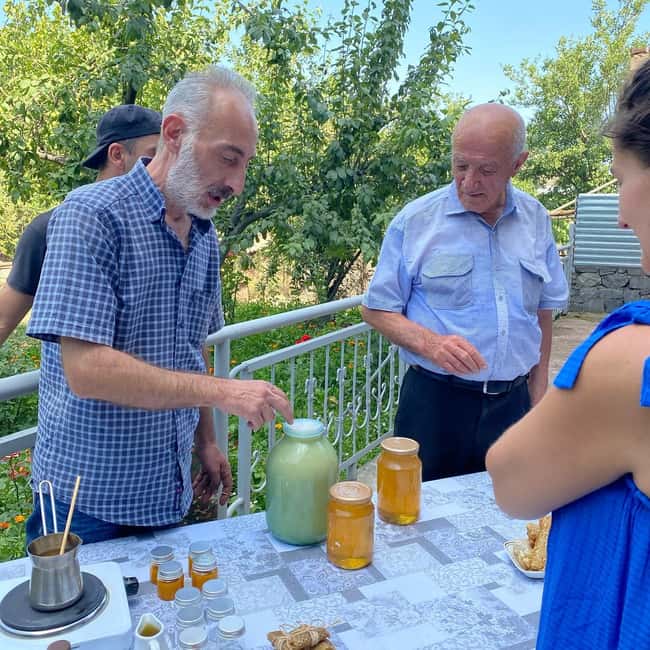
Your introduction begins in the yard at Yeghevnut Hotel in Goris. The activity provider identifies Grisha as a master beekeeper with more than 50 years of experience, which is the strongest reason to book this instead of trying to make balm from an online recipe.
You’ll wear protective beekeeping clothing during the experience. That gives you a closer connection to the work and helps you understand the care required around hives, honey, and beeswax. The clothing is provided, so you do not need to bring special equipment.
The workshop is not described as a full hive inspection or a honey-harvesting session. That distinction matters. You should book it for the stories, the introduction to Syunik beekeeping traditions, and the balm-making activity, not for an extended outdoor encounter with active colonies.
Grisha’s long experience gives the conversation a human center. Beekeeping is not just an abstract custom here. It is a trade practiced over decades, with knowledge passed through families and communities. I like that the activity lets you hear about this tradition before asking you to make anything.
The language options are Armenian, Russian, and English. That makes the workshop workable for a wide range of visitors, although the amount of detail you receive may depend on the language used for your group and the style of interpretation on the day.
Making balm from beeswax and a family recipe
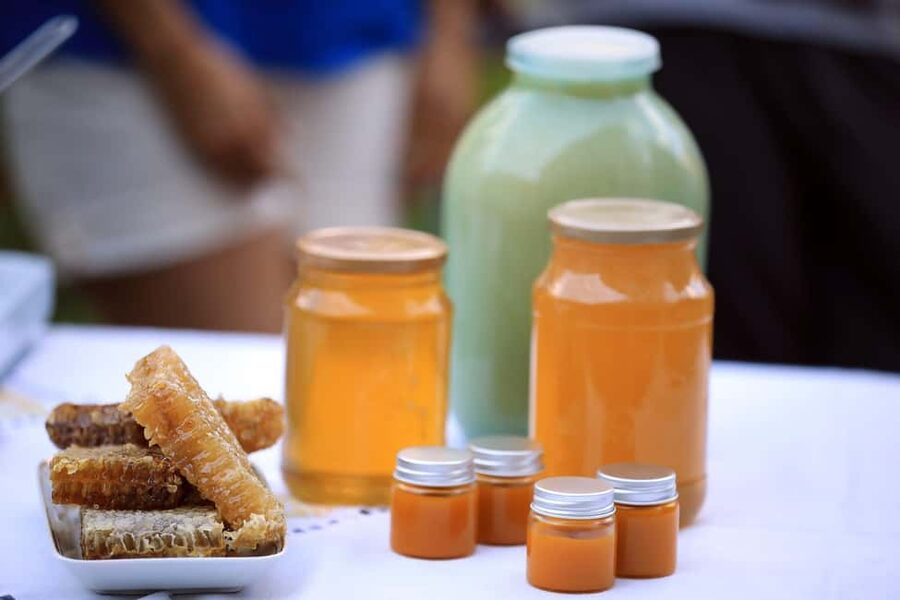
The hands-on part follows the introduction. You prepare a natural beeswax balm using a recipe passed down from the host’s grandmother. The information provided describes the balm as useful for dry skin, burns, and cuts, but you should treat it as a traditional home remedy, not a replacement for medical care.
This is the part that gives the activity lasting value. A lecture about beeswax would be pleasant, but making your own balm helps you remember how the material is used. You see the mixture prepared, wait for it to cool and solidify, and then receive a 50-gram jar for your own use or as a compact souvenir.
All ingredients and materials are included. You do not have to shop for beeswax, oils, containers, or protective clothing before arriving. That makes the $15 price especially appealing, since the fee covers both the activity and a finished item to take home.
The balm also travels well compared with fragile Armenian handicrafts. A small jar takes little room in your luggage and carries a clear story: it was made during a beekeeping workshop in Goris. Check your own airline and border rules for carrying creams or natural products, but the modest size is convenient.
One practical point is worth keeping in mind. The balm is made with beeswax, so people with insect, animal, or bee allergies should not treat this as a casual craft class. The provider specifically asks people with allergies to inform them in advance, and the activity is listed as unsuitable for people with insect or animal allergies.
Tea, gata, and the pause while the balm cools
While the balm cools and firms up, you sit down for a traditional tea break. This is not filler added to stretch a short class. It gives you time to enjoy the old house, talk with the host, and let the workshop slow down.
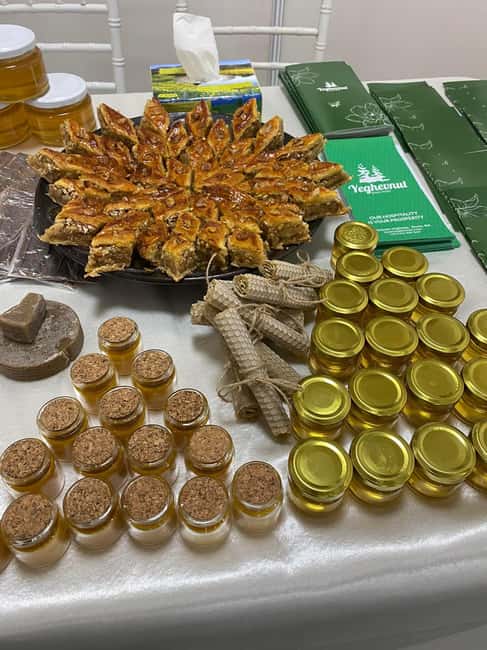
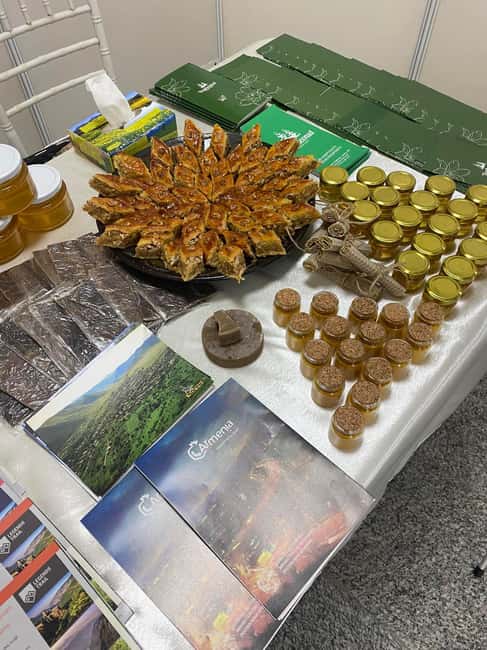
The food is homemade gata, an Armenian sweetbread. Gata is a fitting choice for this setting because it is a familiar local treat rather than a generic packaged snack. The tea includes herbal blends sourced from nearby mountains, tying the refreshment to the same local interest in plants and natural household remedies.
I like this pause because it makes the activity social. You are not rushed from explanation to mixing bowl to departure. Tea gives you a chance to ask questions about beekeeping, honey, the balm, or life in Syunik.
The wording does not specify the exact herbs or the kind of gata served on a particular day. If those details matter to you, ask your host when you arrive. The important point is that refreshments are included, and the break forms part of the cultural experience.
A completely different kind of day:
- Day Trip to Armenia Including Homemade Lunch
★ 5.0 · 1,162 reviews - From Tbilisi: Day Trip to Armenia Including Homemade Lunch
★ 4.9 · 1,084 reviews - Group Tour: Garni, Symphony of Stones, Geghard, Lavash Baking
★ 5.0 · 1,042 reviews - Group Tour: Lake Sevan (Sevanavank), Dilijan (Goshavank, Haghartsin)
★ 5.0 · 1,036 reviews
What the $15 price really covers
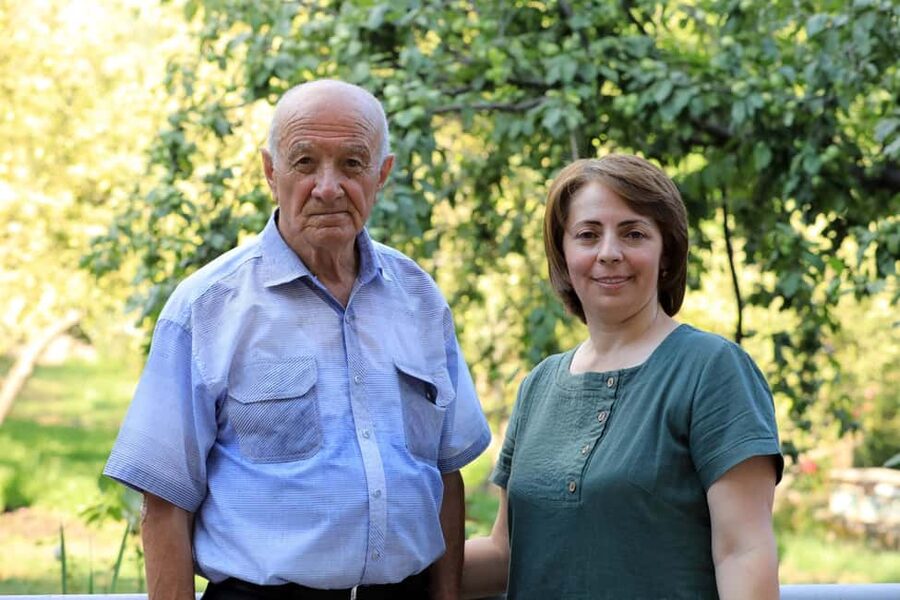
At $15 per person, this is one of the easier Goris activities to recommend on value. You receive a 90-minute hosted experience, instruction from a beekeeper with over five decades of practice, all balm-making supplies, protective clothing, tea, homemade gata, and a 50-gram jar of finished balm.
That is more than a short demonstration. You get a conversation, a craft session, food, and a physical keepsake. If you were buying a small natural balm and paying separately for a cultural activity, the combined cost would likely be higher, though no separate retail prices are provided here.
The value is strongest for people who prefer small local encounters to major ticketed sights. Families, couples, solo visitors, and anyone interested in food or traditional remedies can fit the workshop into a Goris day without spending much money or time.
It is less useful if you want a full-day beekeeping course. Ninety minutes is enough for an introduction and one simple product, but not for a detailed study of hive management, seasonal work, honey extraction, or commercial beekeeping. I would see it as a thoughtful side activity, not a complete training session.
The booking terms also reduce the financial risk. You can reserve now and pay later, and cancellation is allowed up to 24 hours in advance for a full refund. Starting times vary, so check availability before building it into your Goris schedule.
Who should book this experience
I would recommend this workshop to you if you enjoy meeting local makers, learning a practical skill, and bringing home a small souvenir with a story. It is also a good choice if you have limited time in Goris and want an activity that lasts only 90 minutes.
Families may appreciate the simple structure, but children must be accompanied by a parent for safety. The protective clothing and hands-on format can make the subject easier for children to understand, though the allergy warning should be taken seriously.
Food-minded visitors should enjoy the tea and gata. The refreshment is modest, but it adds a local touch and gives you a chance to sit in an old Armenian home rather than spend the whole visit standing around a worktable.
This activity also suits visitors who care about natural products. You learn how beeswax has been used in traditional remedies and make a balm yourself. Just remember that traditional use is not the same as medical proof, and the balm should not be presented as professional treatment.
You may want to skip it if you dislike insects, react to animal products, or want a busy itinerary with several major sights. The workshop is quiet and personal. Its appeal comes from the host, the house, and the craft.
Meeting point and practical planning
All participants should go directly to Yeghevnut Hotel in Goris city. The meeting point is not described as a separate downtown office or a pickup location, so plan to arrive at the hotel itself.
The activity is listed as wheelchair accessible. If you have specific mobility needs, it is still sensible to contact the provider in advance, since the experience includes a yard, an old house, clothing, and a hands-on preparation area.
English, Armenian, and Russian are available. That language range is useful in Syunik, where you may not find English used everywhere. Confirm your preferred language when booking if detailed explanations are important to you.
The experience is offered at different starting times depending on availability. Since it includes a tea break and a balm that needs time to cool, allow the full 90 minutes rather than planning another appointment immediately afterward.
A verified booking from Germany, dated August 3, 2025, gave the activity five stars and singled out Raisa as a wonderful part of the visit. That praise is useful because it points to the personal welcome as a major strength. The host connection appears to matter as much as the recipe.
Should you book the beeswax workshop?
Book it if you want a low-cost, human-scale activity in Goris. For $15, you meet a veteran beekeeper, learn about Syunik customs, make a family balm, eat gata, drink mountain herbal tea, and take home a 50-gram jar.
I would not choose it as your only introduction to Armenian history or as a serious beekeeping course. It is a short cultural workshop with a practical souvenir, not a broad tour of the region.
For most visitors who have an open 90-minute slot, the balance is excellent. The old home, Grisha’s long experience, and the warmly praised presence of Raisa give the activity a personal quality that is hard to create in a formal class. Avoid it if you have relevant allergies, and book it if you want to leave Goris with something made by you rather than something picked from a shop shelf.
FAQ
Where does the workshop meet?
You should go directly to Yeghevnut Hotel in Goris city.
How long does the experience last?
The workshop lasts 90 minutes.
How much does it cost?
The price is $15 per person.
What will I make during the workshop?
You will make a natural beeswax balm using a recipe passed down from the host’s grandmother. You will take home a 50-gram jar.
Is food included?
Yes. The experience includes a traditional tea break with homemade gata and herbal teas sourced from nearby mountains.
Is the workshop suitable for people with allergies?
No. The activity is listed as unsuitable for people with bee, insect, or animal allergies. You should inform the provider in advance about any allergy concerns.
Just added in Armenia
- Armenia: Wine Tasting and Vineyard Lunch at Voskeni Winery★ 5.0 · 1 review
- YerevanCard: 3-Day City Pass★ 5.0 · 1 review
- Yerevan: Walking Tour With an Architect
- Yerevan: Museum of Illusions Entry Ticket★ 5.0 · 3 reviews
- Yerevan to Tbilisi Day Tour: Unveiling Transcultural Wonders★ 4.8 · 2 reviews
- Yerevan: Urban Hike through Aygestan and Old Nork★ 5.0 · 1 review
- Yerevan: Brandy Tasting Experience with Local Delicacies★ 5.0 · 1 review
- Yerevan City Tour: Discover an Old and New Yerevan★ 5.0 · 2 reviews
Workshops, compared.
Traditional Armenian Cuisine Private Cooking Class
Read our review →
Day trip to Sevan, Tsaghkadzor, Fish Making Masterclass
Read our review →Masterclass of Armenian food with a local family in Yerevan
Read our review →Khachkar Crafting Masterclass: Unveiling Armenia’s Heritage
Read our review →
Traditional Vegetarian Food & Village Dance Masterclass
Read our review →Browse the lists this tour appears in