
Reviewed · FOOD AND DRINK TOURS IN YEREVAN
Yerevan Private Walking Food Tour
Come hungry, leave better oriented. The Yerevan Private Walking Food Tour links six food stops with stories about Armenian culture, migration, and daily life. I like the private format, which lets you ask questions and set the pace, and I like that the menu moves beyond familiar kebabs to wild greens, Artsakh pastries, dolma, dumplings, and Armenian sweets. The main drawback is the $220 per-person price, which is high for a three-and-a-half-hour food walk unless you value one-on-one attention.
The route begins at the Alexander Tamanian Statue and ends there, making it easy to fit into a day of sightseeing. Guides such as Anna, Ana, Ellen, and Lusine have been praised for their warmth, English, and ability to connect food with Armenian history, architecture, and society. I would book this early, especially since it is often reserved about a month ahead.
In This Review
- Key things to know before you book
- Why this Yerevan food walk works as a first activity
- Cascade Complex: cheese, greens, and lavash
- Teryan Street: an Artsakh herb-filled pastry
- Sayat-Nova Avenue: Armenian lahmajoun
- Ghazar Parpetsi Street: dolma in more than one tradition
- Isahakyan Street: dumplings from the Old Silk Road
- Mesrop Mashtots Avenue: choose your final sweet
- What $220 per person gets you
- Guides who make the difference
- Timing, meeting point, and practical details
- Who should book this food tour
- Should you book the Yerevan Private Walking Food Tour?
- FAQ
- How long does the Yerevan Private Walking Food Tour last?
- Where does the tour begin and end?
- What food is included on the tour?
- Is the tour private?
- Are drinks included?
- Can I cancel for a full refund?
Key things to know before you book
- Six food-focused stops cover Armenian dishes influenced by local customs, Artsakh traditions, the Middle East, East Asia, and Eastern Europe.
- A private group setting gives you personal attention rather than a fixed group pace.
- The walk begins at the Alexander Tamanian Statue on Moskovyan Street and returns to the same meeting point.
- Afternoon and evening tours finish differently, with a donut in the afternoon or a sweet stuffed bread in the evening.
- Water, snacks, and gratuities are included, but alcoholic drinks are not.
- The strongest feature is the guide, with Anna, Ana, Ellen, and Lusine all praised for combining food with cultural context.
Why this Yerevan food walk works as a first activity
Food is a practical way to get your bearings in Yerevan. Instead of sitting in one restaurant and hearing a list of dish names, you walk between several parts of the city and see how Armenian cooking fits into urban life.
I like the balance of sightseeing and eating. The Cascade Complex gives you a famous Yerevan landmark at the start, while Teryan Street, Sayat-Nova Avenue, Ghazar Parpetsi Street, Isahakyan Street, and Mesrop Mashtots Avenue turn the rest of the route into a series of short neighborhood stops.
Each stop lasts about 30 minutes. That is enough time to taste a dish and hear its background without turning the tour into a long, heavy meal. Six stops can still add up to plenty of food, so arrive hungry and avoid planning a large lunch or dinner immediately afterward.
The guide is central to the quality of the outing. Anna and Ana are praised for their enthusiasm and cultural knowledge, Ellen for her command of English and broad understanding of Armenian art and architecture, and Lusine for her grasp of food and history. Your assigned guide may differ, but the experience is clearly built around conversation, not just delivery of plates.
More Food and Drink Tours in Yerevan
- Khor Virap, Noravank and Birds’ Cave Trip with Wine Tasting
★ 4.8 · 845 reviews - Cultural Walking Tour in Yerevan with Armenian food Tastings
★ 5.0 · 334 reviews - Khor Virap, Noravank & Birds’ Cave Day Trip with Wine Tasting
★ 5.0 · 320 reviews
Cascade Complex: cheese, greens, and lavash

The first stop begins near the Cascade Complex, one of Yerevan’s best-known public spaces. Here, the food lesson starts with a basic Armenian combination: cheese and wild greens wrapped in lavash.
This is a smart opening dish because it introduces the simple structure behind many Armenian meals. Fresh ingredients, flatbread, herbs, and dairy do much of the work. You are not starting with a rich main course. You are starting with the way a meal begins.
The wild greens also point to Armenia’s connection with foraged food. The important idea is not just what is on the plate, but how ordinary plants and local produce fit into the food culture. Your guide can place the dish in that wider setting while you get your first taste of lavash, the thin bread that appears throughout the region.
The Cascade is also a useful meeting point because it gives the tour an immediate visual anchor. If you arrive early, you can recognize the Alexander Tamanian Statue at 10 Moskovyan Street without much trouble. The admission for the stop is free, and the tour does not require separate attraction tickets.
Teryan Street: an Artsakh herb-filled pastry
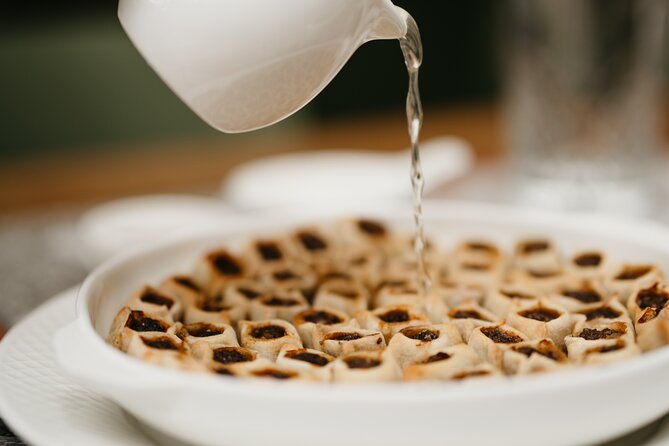
The second stop introduces a recipe from Artsakh, also known as Nagorno-Karabakh. Up to 20 wild herbs are stuffed into dough, then grilled.
This is the kind of food you might not order on your own simply because the description does not tell the whole story. The appeal comes from the mix of herbs, the dough, and the smoky finish from grilling. It is also a dish with a clear regional identity, giving your guide a chance to explain how Armenian food traditions vary from place to place.
I especially like this stop for the contrast with the first. The opening bite is built around cheese, greens, and lavash. This one takes herbs and turns them into a filling. You begin to see that Armenian food is not one fixed menu. It includes village cooking, regional recipes, and dishes shaped by movement across borders.
The 30-minute stop should allow time for both tasting and explanation. If you do not usually eat wild herbs, ask your guide what flavors to notice. The tour is private, so you have room to ask such questions without holding up a large group.
Sayat-Nova Avenue: Armenian lahmajoun
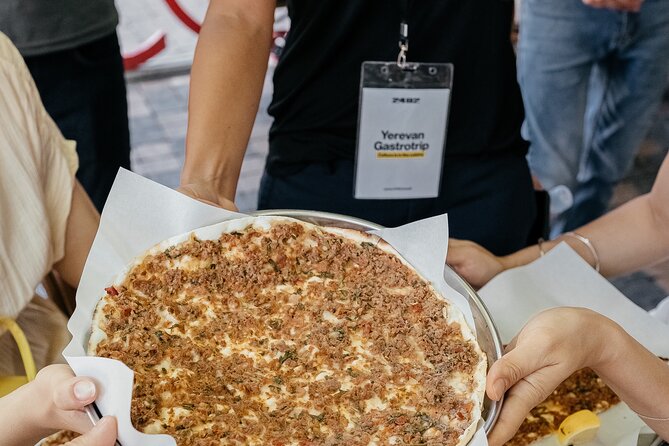
On Sayat-Nova Avenue, you try an Armenian version of a round flatbread topped with minced meat. It became popular through repatriates from the Middle East and is often associated with lahmajoun.
This stop adds an important part of the Armenian story: food brought home by people who had lived elsewhere. Armenia’s cuisine has been shaped not only by its geography, but also by migration and return. A familiar dish can carry several layers of identity, and this flatbread is a good example.
The dish is usually thin, savory, and easy to share, though the tour is designed around individual tasting portions rather than a formal meal. It offers a change in texture after the herb-filled pastry and gives you one of the more recognizable regional foods on the route.
If you are already familiar with lahmajoun from other Middle Eastern cuisines, listen for the Armenian angle. The value here is not simply trying a flatbread. It is learning how a food travels, changes, and becomes part of another country’s everyday cooking.
A completely different kind of day:
- Group Tour: Garni, Symphony of Stones, Geghard, Lavash Baking
★ 5.0 · 1,042 reviews - Group Tour: Lake Sevan (Sevanavank), Dilijan (Goshavank, Haghartsin)
★ 5.0 · 1,036 reviews - Yerevan: Garni, Geghard, Symphony of Stones & Lavash Baking
★ 4.8 · 758 reviews - From Yerevan: Garni, Geghard, & Symphony of Stones Day Trip
★ 4.8 · 687 reviews
Ghazar Parpetsi Street: dolma in more than one tradition
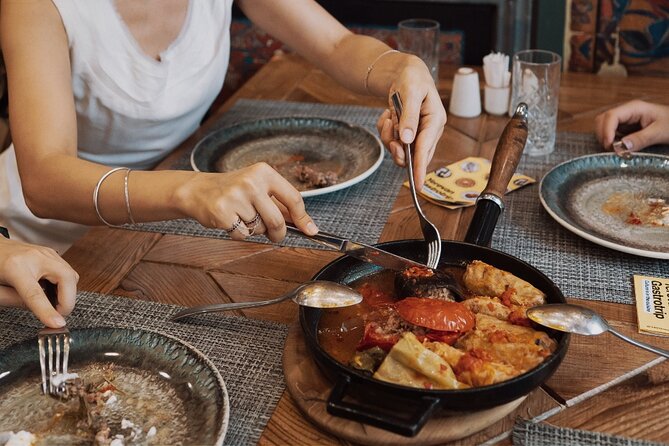
The fourth stop focuses on stuffed grape or cabbage leaves. The filling may include minced meat, vegetables, and rice. In Armenia, the dish is known as dolma, though similar preparations appear across the region under different recipes and names.
This is a useful point in the tour because it avoids a narrow view of national food. Many dishes in the Caucasus, the Middle East, and nearby regions overlap. What changes are the herbs, fillings, wrapping leaves, cooking methods, and family traditions.
Your guide can help explain those differences without pretending that food belongs to only one modern border. That regional context adds real value, especially if you plan to eat in Armenia for several days and want to understand what you are ordering.
Dolma can also be more filling than the earlier tastings. By the midpoint, you will have tried bread, herbs, cheese, and meat or vegetable fillings. The steady pace matters. You are not being rushed from one bite to the next, but six stops still make this a substantial food outing.
Isahakyan Street: dumplings from the Old Silk Road
The fifth stop brings crispy dumplings filled with meat or spinach. They reached Armenia from East Asia by way of the Old Silk Road and are served with a fragrant sauce and yogurt.
This is one of the most interesting dishes on the route because it shows how far a recipe can travel while taking on a local character. The crisp exterior gives the dumpling a different feel from the soft dough served earlier. Sauce and yogurt add another layer, balancing the browned shell and savory filling.
The dish also broadens your idea of Armenian cooking. You may arrive expecting only breads, grilled meat, and stuffed vegetables. This stop makes the point that Armenian food has long been connected to wider trade routes and neighboring cultures.
I would pay attention to how the dumplings are served, not just what is inside. The sauce and yogurt are part of the eating experience, and the guide’s explanation helps connect the plate to the movement of people and goods across Asia.
Mesrop Mashtots Avenue: choose your final sweet
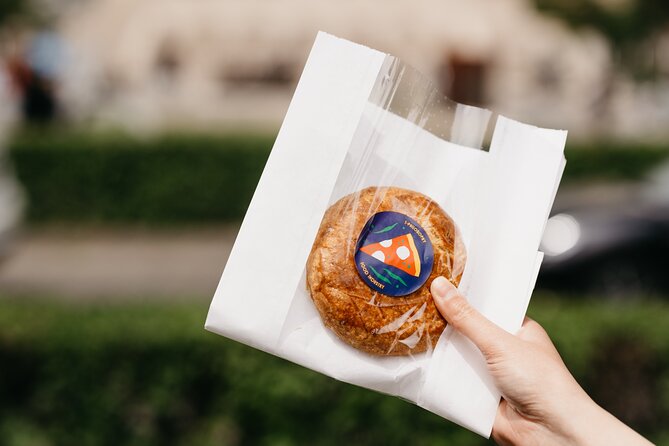
The last stop changes with the tour time. On an afternoon tour, the finish is a fried donut originally from Eastern Europe. On an evening tour, you end with a wheel of bread filled with sugar, flour, and butter.
This is a pleasant way to close the walk because the final food is clearly different from the savory dishes before it. The donut gives the afternoon tour a familiar snack-like finish. The evening bread sounds more substantial and traditional in its use of a sweet, rich filling.
The timing matters if you have a preference. The information provided does not indicate that you can choose the dessert, so select the departure time with the expected ending in mind. An afternoon departure finishes with the donut, while an evening departure offers the sweet stuffed bread.
Mesrop Mashtots Avenue also brings the route back toward the starting area. After roughly 30 minutes here, the activity ends at the same meeting point where you began. That makes planning easier than a tour that leaves you on the opposite side of the city.
What $220 per person gets you
At $220 per person, this is not a cheap way to eat in Yerevan. You could spend far less by ordering Armenian dishes independently. The price makes more sense if you want a private guide, a planned sequence of tastings, cultural explanation, and the freedom to ask questions throughout the walk.
The private format is the key value. Only your group participates, so the guide can adjust the pace and spend more time on subjects that interest you. If you want to ask about Armenian history, food traditions, architecture, or daily life, you are not competing with 20 other people for attention.
The price includes gratuities, bottled water, and snacks. Alcohol is not included, so do not expect wine, beer, or spirits to be part of the package. Six food stops are included in the route, though the exact serving sizes are not specified. Treat this as a tasting walk, not a six-course restaurant dinner.
Group discounts may improve the value for larger parties. For a couple or solo visitor, the cost is harder to justify unless private guiding is a priority. For a family or small group sharing the attention of one guide, the experience may feel more reasonable.
Guides who make the difference
The most praised part of this experience is the human side. Anna is repeatedly described as warm, enthusiastic, and proud of Armenia. Ana is praised for adding cultural context and making unfamiliar dishes easier to approach.
Ellen brings a broader city tour into the food walk. Her background in Armenian history, art, architecture, and social life makes the walks between stops useful in their own right. Her strong English and friendly manner are especially helpful if you want more than a quick explanation of each dish.
Lusine is described as an expert in Armenian food and history, with an insider’s view of Armenian people and culture. The six stops are presented as a considered selection of food traditions, not random restaurant visits.
You may not receive one of these exact guides, so I would not treat a specific name as guaranteed. Still, the repeated praise points to the tour’s main strength: the guide is expected to explain why the food matters, not simply tell you what it is called.
Timing, meeting point, and practical details
The tour lasts about three hours and 30 minutes. Each of the six stops is planned for roughly 30 minutes, with the remaining time used for walking and conversation.
Meet at the Alexander Tamanian Statue, 10 Moskovyan pokhoc, Yerevan 0009, Armenia. The activity ends back at that same point. It is near public transportation, which helps if you are staying elsewhere in Yerevan.
The tour is offered in English. Most people can participate, though the information does not provide a detailed mobility statement or a precise walking distance. If you have concerns about long walks, standing, or food restrictions, ask the provider before booking.
Confirmation is normally sent at booking. If you book within one day of departure, confirmation comes as soon as possible and depends on availability. Free cancellation is available until 24 hours before the start time. Cancellations or changes made inside that 24-hour window are not accepted for a refund.
Because the tour is often booked 29 days ahead, I would reserve before arrival if your schedule is tight. The private format means there are fewer places than on a large group outing.
Who should book this food tour
I would recommend it most strongly if you are new to Yerevan and want an introduction that combines eating with orientation. The route gives you several dishes to remember, plus a framework for understanding Armenian food during the rest of your trip.
It also suits curious eaters. Several dishes may not be the first things you would choose from a menu, especially the wild herb pastry and the dumplings with yogurt and sauce. A guide makes it easier to try something unfamiliar without guessing.
This is a good fit for couples, families, and small groups who want a private pace. It is also useful for anyone who values conversation about history and culture as much as the food itself.
I would hesitate if your main goal is an inexpensive meal, a nightlife outing, or a tour focused on alcohol. Drinks are not included, and the price is designed around private guiding rather than bargain dining.
Should you book the Yerevan Private Walking Food Tour?
Book it if you want a polished first look at Yerevan through food and prefer personal attention to a large group. The six-stop route has real range, from lavash and wild greens to regional pastries, lahmajoun, dolma, Silk Road dumplings, and a sweet final bite.
Skip it if $220 per person feels too high for tastings you could order yourself. But if you want a guide who can connect Armenian dishes with migration, regional customs, architecture, and daily life, the price buys more than food. It buys a useful introduction to the city, with Anna, Ana, Ellen, and Lusine representing the warm, conversational style this tour is praised for.
FAQ
How long does the Yerevan Private Walking Food Tour last?
The tour lasts approximately three hours and 30 minutes. Each of the six stops is planned for about 30 minutes, with additional time for walking.
Where does the tour begin and end?
It begins at the Alexander Tamanian Statue at 10 Moskovyan pokhoc, Yerevan 0009, Armenia. The activity ends back at the same meeting point.
What food is included on the tour?
The tastings include cheese and wild greens in lavash, an Artsakh herb-filled grilled pastry, an Armenian minced-meat flatbread, stuffed grape or cabbage leaves, crispy meat or spinach dumplings, and a final sweet. The last item is a fried donut on the afternoon tour or sweet stuffed bread on the evening tour.
Is the tour private?
Yes. Only your group participates, and the tour is designed to provide personalized attention.
Are drinks included?
Bottled water is included. Alcoholic beverages are not included.
Can I cancel for a full refund?
Yes, if you cancel at least 24 hours before the experience start time. Cancellations or changes made less than 24 hours before the start time are not accepted for a refund.
More Walking Tours in Yerevan
- Private sightseeing and walking tour in Yerevan
★ 5.0 · 78 reviews - Yerevan: Highlights and Culture Walking Tour with tastings
★ 4.8 · 28 reviews - Evening walking tour in Yerevan
★ 5.0 · 19 reviews - Walking Yerevan City Tour with 5 Wine & 10 years-old brandy
★ 5.0 · 17 reviews
Just added in Yerevan
- YerevanCard: 3-Day City Pass★ 5.0 · 1 review
- Yerevan: Walking Tour With an Architect
- Yerevan: Museum of Illusions Entry Ticket★ 5.0 · 3 reviews
- Yerevan: Urban Hike through Aygestan and Old Nork★ 5.0 · 1 review
- Yerevan City Tour: Discover an Old and New Yerevan★ 5.0 · 2 reviews
- Yerevan: Brandy Tasting Experience with Local Delicacies★ 5.0 · 1 review
- Wine, Jazz and Magic: A Night at Malkhaz Jazz Club★ 5.0 · 2 reviews
- The Stalin car Yerevan city tour Armenia★ 5.0 · 2 reviews
Food and Drink Tours in Yerevan, compared.
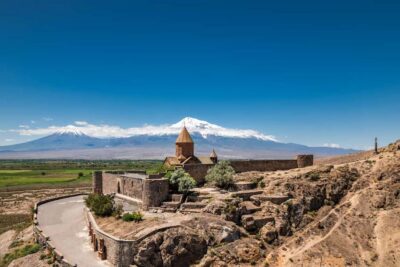
Khor Virap, Noravank and Birds’ Cave Trip with Wine Tasting
Read our review →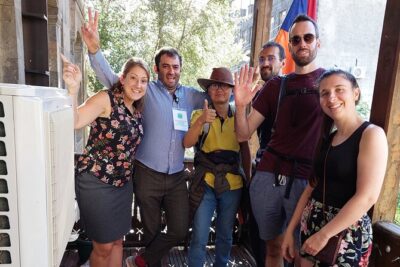
Cultural Walking Tour in Yerevan with Armenian food Tastings
Read our review →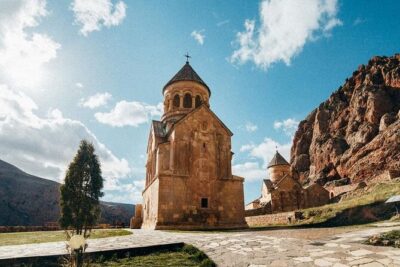
Khor Virap, Noravank & Birds’ Cave Day Trip with Wine Tasting
Read our review →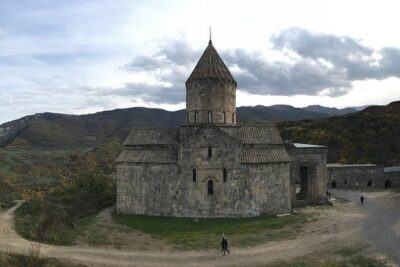
Tatev & Shaki Waterfall Guided Group Tour with Wine Tasting
Read our review →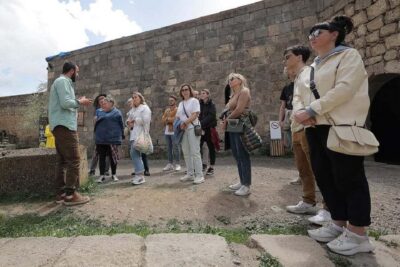
Tatev Day Trip with Shaki Waterfall & Wine Tasting
Read our review →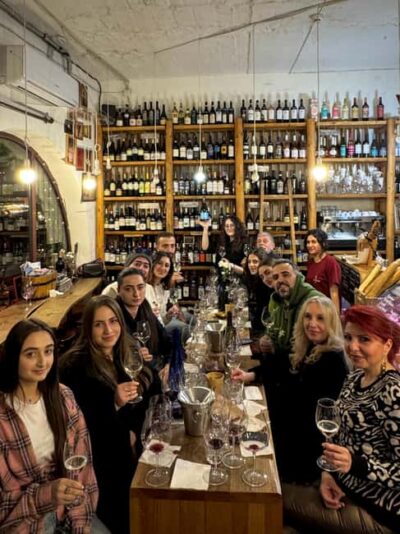
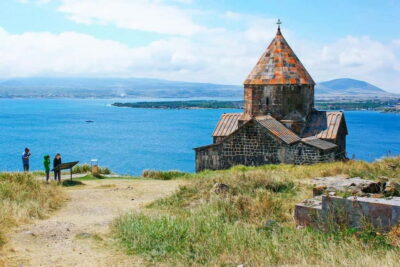
Tour Transfer to/from Tbilisi with Lake Sevan & Wine tasting
Read our review →
Khor Virap, Noravank Private Tour with Optional Wine Tasting
Read our review →Browse the lists this tour appears in