
Reviewed · FOOD AND DRINK TOURS IN YEREVAN
Cultural Walking Tour in Yerevan with Armenian food Tastings
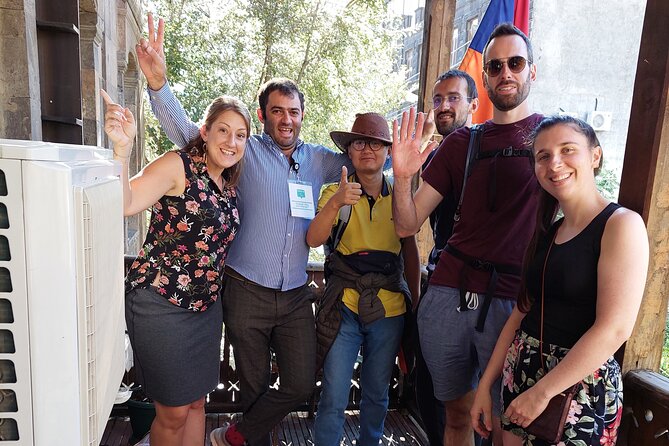
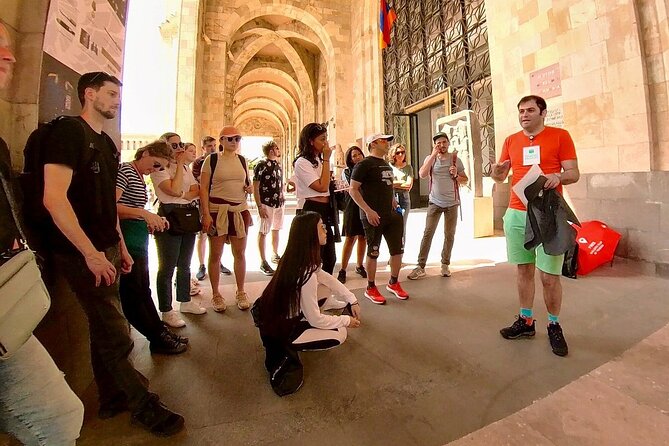
Yerevan reveals itself on foot. This four-hour walk links Republic Square, Vernissage Market, the Opera House, and the Cascade, while guides such as Tigran and Ioanna add stories about Armenian history and daily life. I especially like the mix of major sights and quieter corners, plus the chance to sample local food and sea buckthorn juice. The main drawback is its length: four hours and roughly 4 kilometers may feel slow if you want only a quick introduction.
The route ends near the Cascade after beginning at the Singing Fountains, so you get a useful northward sweep through central Yerevan without having to study a map first. The group can reach 35 people, which may make listening harder near traffic or construction, and one past participant found the guide’s speaking volume and jokes frustrating. Still, the 4.9 rating from 334 reviews and 98 percent recommendation rate point to a consistently popular experience.
In This Review
- Key points to know before you book
- Why this walk works well on a first day in Yerevan
- Republic Square sets the historical stage
- Shahumyan, Soviet memory, and the city’s political story
- Mirzoyan Library brings a quieter artistic pause
- Tufenkian carpets connect craft with Armenian identity
- Vernissage Market and the story of Armenian cross-stones
- Charles Aznavour Square and a taste of sea buckthorn
- Missak Manouchian Park and the meaning of khachkars
- The Opera House shows Yerevan’s Soviet ambition
- The Cascade is a strong finish
- Food tastings add value, but know what you are buying
- Pace, group size, and guide style
- Who should book this Yerevan tour?
- Should you book it?
- FAQ
- How long does the Cultural Walking Tour in Yerevan last?
- Where does the tour begin?
- Where does the tour end?
- What food and drink are included?
- Is the tour offered in English?
- What happens if the tour is canceled because of bad weather?
Key points to know before you book
- A four-hour introduction to central Yerevan: The route covers nine stops, from Republic Square to the Cascade.
- History comes through stories: Expect discussion of Soviet Yerevan, Armenian architecture, national figures, cross-stones, and the country’s difficult political past.
- Food is part of the tour: Tastings include local snacks and sea buckthorn juice, enough for some people to count as a light lunch.
- The route mixes famous and less obvious places: You see the Opera House and Cascade, but also Mirzoyan Library, alleyways, khachkars, and design-focused spaces.
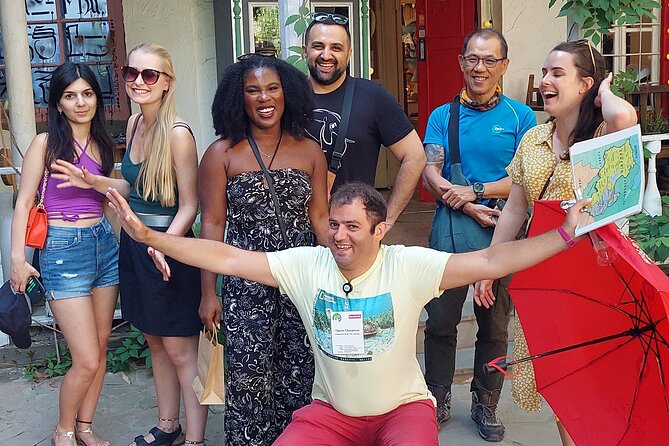
- Tigran and Ioanna receive especially warm praise: Both guides are described as friendly, energetic, flexible, and well informed.
- It is walking, not sightseeing by vehicle: Wear comfortable shoes and expect a steady half-day outdoors.
Why this walk works well on a first day in Yerevan
Yerevan is easy to explore on foot, but a first visit can still leave you unsure how the pieces fit together. This tour gives you a simple route through the city center, beginning at the Singing Fountains on Republic Square and finishing beside the statue of Alexander Tamanyan near the Cascade.
I like that the walk does not treat Yerevan as a string of photo stops. The guide uses the buildings, statues, markets, and public spaces to explain how the city changed over time. You hear about Armenia before the Soviet period, the Soviet construction of Yerevan, and the country’s modern political setting.
Tigran receives repeated praise for his energy, humor, punctuality, and ability to explain Armenian history in clear English. Ioanna is also singled out for her charm, flexibility, and ability to lead people into places that are easy to miss on your own. The guide can make a big difference here because several stops are more meaningful with context than with a quick photograph.
The tradeoff is pace. This is not a brisk checklist. Guides may spend 10 to 15 minutes discussing a wall, alley, monument, or historical detail. If you enjoy stories, that is part of the appeal. If you want the main sights only, you may prefer a shorter walk and extra time exploring independently.
More Food and Drink Tours in Yerevan
- Khor Virap, Noravank and Birds’ Cave Trip with Wine Tasting
★ 4.8 · 845 reviews - Khor Virap, Noravank & Birds’ Cave Day Trip with Wine Tasting
★ 5.0 · 320 reviews - Tatev & Shaki Waterfall Guided Group Tour with Wine Tasting
★ 5.0 · 266 reviews
Republic Square sets the historical stage
The tour begins at the Singing Fountains on Republic Square, one of Yerevan’s key civic spaces. The square is oval, with a stone pattern in its center designed to resemble a traditional Armenian rug.
The 30-minute stop gives the guide time to explain the setting rather than simply point out the fountains. This is a good place to start because the square helps you understand Yerevan as a planned capital, with broad public spaces and carefully matched stone architecture.
You should expect free admission throughout the route. The price covers the guided experience and tastings, not entrance tickets to paid museums or performances. Since the walk begins in a central public area, it is also a practical meeting point for visitors staying in central Yerevan.
Shahumyan, Soviet memory, and the city’s political story
A short stop at the Stepan Shahumyan statue follows. The monument is described as the first officially installed monument in Yerevan, created by sculptor Sergey Merkurov and architect Ivan Zholtovsky.
This is where the tour starts bringing Soviet-era history into the walk. Rather than presenting Yerevan as an old city frozen in time, the guide explains the political forces that shaped its streets and public art.
The route later returns to this theme at the Garegin Nzhdeh statue near Vernissage Market. There, the guide discusses Armenia’s geopolitical position and important events beginning in the 19th century. That broader discussion is useful, especially if you know little about the region and want more than a city-center orientation.
The subject matter can be serious. Armenia’s past includes foreign rule, Soviet power, national identity, and cultural loss. A guide can help connect these themes, though the amount of detail depends on the day’s group and the guide’s speaking style.
Mirzoyan Library brings a quieter artistic pause
Mirzoyan Library is one of the route’s more unusual stops. It contains books and journals about design and photography, along with a bar and gallery. The space is described as peaceful, so it provides a welcome change from monuments and busy streets.
I like this stop because it shows a creative side of Yerevan that a standard city walk could easily miss. It is not just another historic building. It gives you a sense of the city’s interest in photography, design, and contemporary cultural life.
You spend about 30 minutes here. That is enough time for the guide to explain the place and for you to look around, but it also contributes to the tour’s slower pace. If you prefer architecture and cultural spaces to long historical lectures, this may be one of your favorite stops.
A completely different kind of day:
- Group Tour: Garni, Symphony of Stones, Geghard, Lavash Baking
★ 5.0 · 1,042 reviews - Group Tour: Lake Sevan (Sevanavank), Dilijan (Goshavank, Haghartsin)
★ 5.0 · 1,036 reviews - Yerevan: Garni, Geghard, Symphony of Stones & Lavash Baking
★ 4.8 · 758 reviews - From Yerevan: Garni, Geghard, & Symphony of Stones Day Trip
★ 4.8 · 687 reviews
Tufenkian carpets connect craft with Armenian identity
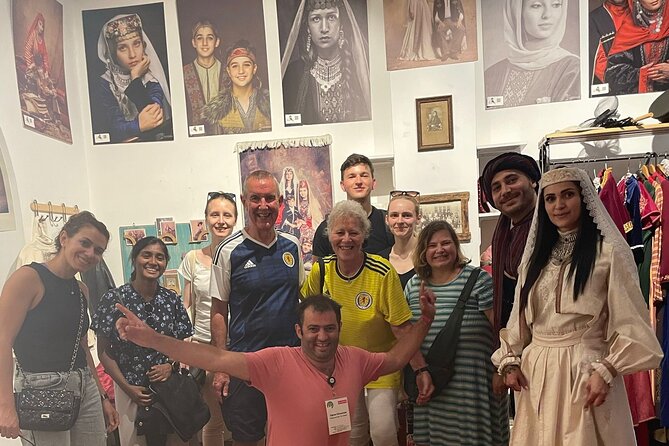
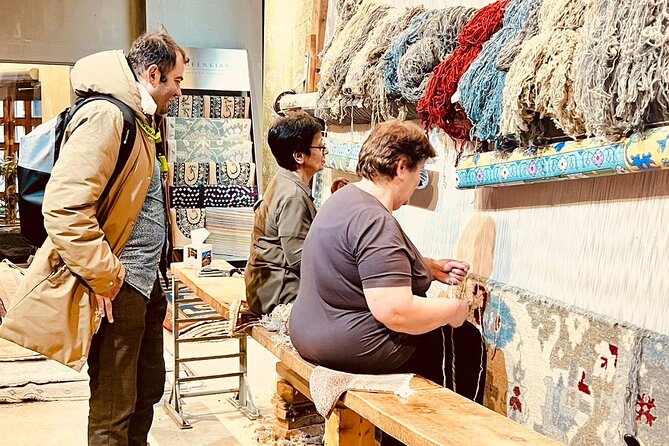
At Tufenkian Heritage Hotels, the focus turns to designer carpets and hand-crafted rugs. The stop is tied to Armenian textile traditions and the continuing importance of skilled handwork.
Carpets are an effective way to understand Armenian culture because patterns and materials can carry family, regional, and religious meaning. The stop also adds texture to a tour that could otherwise focus too heavily on monuments and Soviet buildings.
The itinerary allows about 30 minutes here. You should not assume that this is a full shopping visit or a formal workshop, since the available details describe the location as a source for quality rugs rather than promising a demonstration. Still, it gives you a chance to see how traditional craft remains part of modern Yerevan.
Vernissage Market and the story of Armenian cross-stones
Vernissage Market is one of the route’s most useful stops for understanding everyday Yerevan. The market is associated with art, crafts, souvenirs, and local objects, though the tour’s focus also includes the Garegin Nzhdeh statue, a cultural genocide park, Armenian cross-stones, and the Republic Square Metro station.
The cross-stones, called khachkars, are carved memorial stones bearing a cross. They often include rosettes, interlaced designs, and plant forms. The guide connects them with early medieval Armenian art, giving you a chance to look closely at details that might otherwise blur into the background.
The discussion of cultural genocide is one of the more serious parts of the tour. It offers historical context for Armenia’s cultural identity and the importance of preserving monuments, language, faith, and artistic traditions.
The metro stop adds a practical urban detail. You learn about Armenian metro design and see how the underground system fits into the capital’s Soviet-era planning. This is a good example of the tour’s broad approach: national history, public art, religion, transportation, and modern city life all appear within one walk.
Charles Aznavour Square and a taste of sea buckthorn
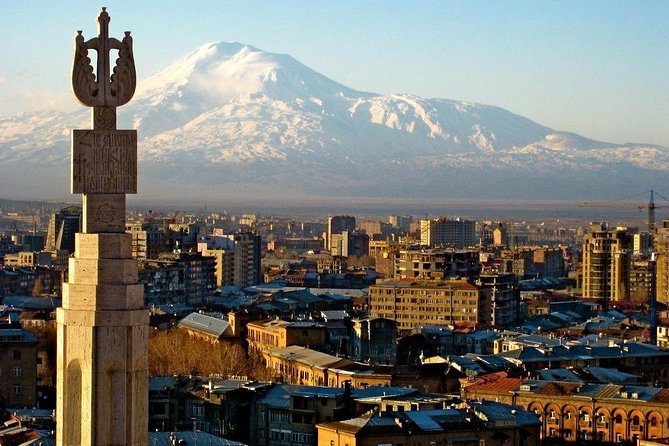
Charles Aznavour Square brings the group to one of Yerevan’s attractive public spaces and the Grand Hotel Yerevan, which opened in 1926. Its facade is decorated with black Armenian tuff stone, a volcanic stone widely associated with the city’s architecture.
This stop helps explain why Yerevan is often called a city of pink stone, although the hotel’s darker tuff gives it a different look. The building also provides a link between the pre-Soviet and Soviet periods, since it opened during a time when the city was being reshaped under Soviet rule.
Here you try sea buckthorn juice. The fruit has been used for food, traditional medicine, and skin treatment in China, Russia, and northern Europe. Its sharp flavor gives the tasting a distinct regional character, and it is more memorable than a generic soft drink.
The food tastings are not meant to replace a full meal. One person described the included snacks as enough for a light lunch, while the juice adds a refreshing pause. I would still eat something beforehand if you usually need a substantial midday meal.
Missak Manouchian Park and the meaning of khachkars
The walk continues through Missak Manouchian Park, where the subject of Armenian cross-stones returns. A khachkar is not simply a decorative slab. It can serve as a memorial, a religious marker, or a work of early medieval art.
This stop works best when you take time to look at the carving. Notice the cross, the looping patterns, and the plant-like forms. The guide’s explanation gives these details meaning and helps you understand why khachkars remain important symbols of Armenian culture.
The stop lasts about 15 minutes, so it is brief but focused. It also gives the route a more reflective pause before the major architectural sights later in the afternoon.
The Opera House shows Yerevan’s Soviet ambition
The Armenian National Academic Theater of Opera and Ballet, named after Alexander Spendiaryan, is given about 30 minutes. Construction began on November 28, 1930, during celebrations marking the tenth anniversary of Soviet Armenia. The building officially opened on January 20, 1933.
Even if you are not attending a performance, the Opera House helps you read the city’s public architecture. Its creation reflects the Soviet aim to build grand cultural institutions, while its continuing role connects that past with present-day Yerevan.
This is one of the stops where a guide adds real value. Dates alone are easy to forget, but the story of why the theater was built and what it represented makes the building easier to place in the city’s development.
The tour does not include an opera or ballet ticket. You view the building and learn about its history from outside or around the public area.
The Cascade is a strong finish
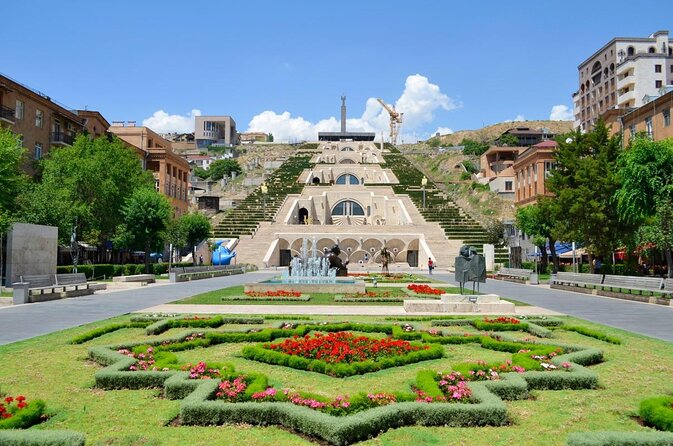
The route ends at the Cafesjian Center for the Arts and the Yerevan Cascade. The Cascade is a massive staircase complex with fountains, while the art center presents contemporary art and Armenian culture.
Ending here makes practical sense. The Cascade is one of Yerevan’s most recognizable sights, and the broad stairway gives you a final major view after several hours on foot. The stop itself is listed as 15 minutes, so this is more of an introduction than a full art museum visit.
You finish near the Alexander Tamanyan statue on Moskovyan Street. From there, you can continue exploring the Cascade area at your own speed. If you are tired, you can stop the sightseeing day here. If you still have energy, the location makes it easy to spend more time with the art, fountains, and city views.
Food tastings add value, but know what you are buying
At $55 per person, the tour is priced above a basic free walking tour, but it includes a guide for about four hours, several food and drink tastings, and a route that covers much of central Yerevan.
The tastings matter because they turn the walk into more than an architecture lesson. You try something local, pause during the route, and get a small introduction to Armenian food culture without committing to a full restaurant meal.
The value is strongest for a first visit. You receive a city orientation, historical background, cultural details, and food suggestions in one half-day. It can also save you time and confusion, especially if you are not comfortable navigating unfamiliar streets.
The value is weaker if you already know central Yerevan well or prefer to spend four hours inside museums. Several stops are viewed from public areas, and the tour does not include paid admissions or a full lunch.
Pace, group size, and guide style
The walk covers about 4 kilometers, according to one participant, and most people can take part. It is offered in English, with mobile tickets and access to public transportation near the route. Service animals are allowed.
A maximum of 35 people is fairly large for a walking tour. Tigran is praised for keeping the group on time and explaining the material with humor, while Ioanna is praised for making the walk friendly and flexible. These comments suggest that the guide can make a larger group feel personal when communication works well.
You should pay attention to the practical downside. One person found that the guide spoke too softly near traffic and construction and felt that some jokes did not translate well into English. That experience was clearly much less positive than the others, but it points to a real issue: in a group of up to 35 people, your ability to hear may depend on where you walk and where you stand.
If you have trouble hearing, stay near the guide and ask for repetition early. The route includes busy streets, open squares, and possible construction noise, so this small step can improve the experience.
Who should book this Yerevan tour?
I would recommend it most strongly to first-time visitors who want a broad introduction before exploring alone. It is also a good match if you like history, public art, Soviet architecture, Armenian religious symbols, local crafts, and small food samples in equal measure.
You will probably enjoy it if you:
- Want an organized route through central Yerevan
- Prefer stories and context to sightseeing alone
- Like walking at a steady, moderate pace
- Want food tastings without booking a full food tour
- Are curious about Armenian history and national identity
- Have only a short stay in the capital
I would hesitate if you dislike long walks, large groups, or extended explanations in alleyways and public spaces. You may also prefer a shorter tour if your priority is simply seeing Republic Square, the Opera House, and the Cascade.
Book at least a day ahead if your plans are fixed. The tour is often reserved well in advance, with an average booking lead time of 24 days. Free cancellation is available up to 24 hours before the start time. Poor weather or failure to meet the minimum group size can lead to a new date or a full refund.
Should you book it?
Book this tour if you want Yerevan explained as a living city rather than presented as a list of monuments. The combination of Republic Square, khachkars, carpets, Soviet buildings, the Opera House, food tastings, and the Cascade gives you a useful first picture of Armenia’s capital.
I would treat the four hours as a feature, not a promise of speed. Guides such as Tigran and Ioanna appear to be a major strength, but a large group and outdoor noise can affect how well you hear. If you have the time and enjoy a thoughtful walking tour, $55 is a fair price. If you want only the headline sights, choose a shorter independent walk instead.
FAQ
How long does the Cultural Walking Tour in Yerevan last?
The tour lasts approximately four hours and covers about 4 kilometers of walking.
Where does the tour begin?
The meeting point is at the Singing Fountains on Republic Square in Yerevan.
Where does the tour end?
The tour ends at the Cascade area on Moskovyan Street, next to the Alexander Tamanyan statue.
What food and drink are included?
The tour includes food tastings from local eateries and sea buckthorn juice at Charles Aznavour Square. The snacks may be enough for a light lunch, but a full meal is not specified.
Is the tour offered in English?
Yes. The experience is offered in English.
What happens if the tour is canceled because of bad weather?
You will be offered a different date or a full refund. The same applies if the minimum number of participants is not reached.
More Walking Tours in Yerevan
- Private sightseeing and walking tour in Yerevan
★ 5.0 · 78 reviews - Yerevan Private Walking Food Tour
★ 5.0 · 31 reviews - Yerevan: Highlights and Culture Walking Tour with tastings
★ 4.8 · 28 reviews - Evening walking tour in Yerevan
★ 5.0 · 19 reviews
Just added in Yerevan
- YerevanCard: 3-Day City Pass★ 5.0 · 1 review
- Yerevan: Walking Tour With an Architect
- Yerevan: Urban Hike through Aygestan and Old Nork★ 5.0 · 1 review
- Yerevan: Museum of Illusions Entry Ticket★ 5.0 · 3 reviews
- Yerevan: Brandy Tasting Experience with Local Delicacies★ 5.0 · 1 review
- Yerevan City Tour: Discover an Old and New Yerevan★ 5.0 · 2 reviews
- Wine, Jazz and Magic: A Night at Malkhaz Jazz Club★ 5.0 · 2 reviews
- The Stalin car Yerevan city tour Armenia★ 5.0 · 2 reviews
Food and Drink Tours in Yerevan, compared.
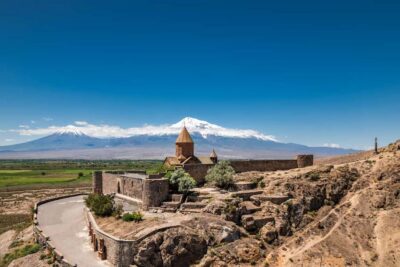
Khor Virap, Noravank and Birds’ Cave Trip with Wine Tasting
Read our review →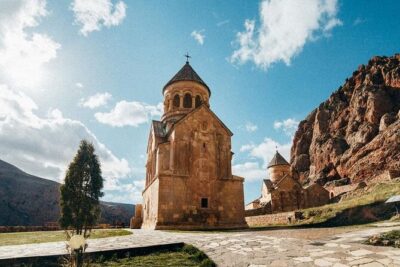
Khor Virap, Noravank & Birds’ Cave Day Trip with Wine Tasting
Read our review →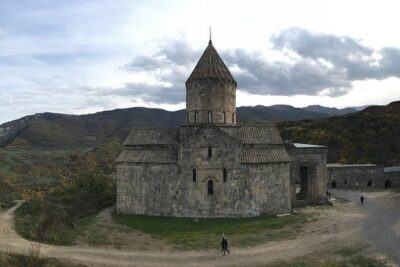
Tatev & Shaki Waterfall Guided Group Tour with Wine Tasting
Read our review →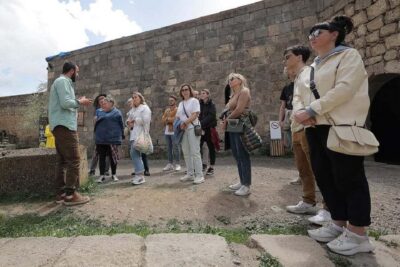
Tatev Day Trip with Shaki Waterfall & Wine Tasting
Read our review →
Tour Transfer to/from Tbilisi with Lake Sevan & Wine tasting
Read our review →

Khor Virap, Noravank Private Tour with Optional Wine Tasting
Read our review →Browse the lists this tour appears in