
Reviewed · GYUMRI TOURS
Museum of Illusions Tour
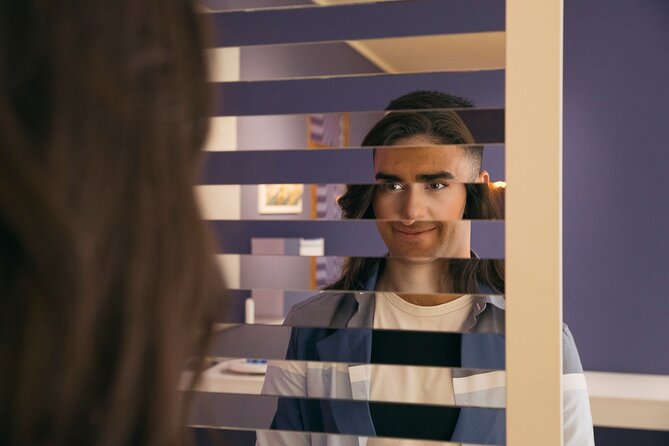
Your eyes will not tell the whole story. The Museum of Illusions in Gyumri turns ordinary rooms into a playful lesson in perception, with more than 60 exhibits built around light, color, mirrors, movement, size, and shape. I like the mix of hands-on fun and simple science, and I also like the warm, active guidance from staff members such as Emily, Anushik, Ruzanna, Seda, and Samvel. The main drawback is its short running time: you may finish in 40 to 50 minutes, though a slower visit can last up to 90 minutes.
This is a strong pick for families, couples, and anyone who wants a break from traditional sightseeing. You can take plenty of unusual photos, but the visit is not only a photo stop. The guide explains why each trick works, giving the experience a useful educational edge. At $12 per person, I find it good value, especially when the staff help you get the best angle for each illusion.
In This Review
- Key points at a glance
- What makes the Gyumri museum different
- Your route through more than 60 illusions
- Why the guide matters
- The photo factor: fun without feeling forced
- A good family stop in Gyumri
- Timing, location, and ease of access
- Is $12 a fair price?
- Who should book this experience?
- My booking advice
- FAQ
- How much does the Museum of Illusions Gyumri tour cost?
- How long does the experience last?
- How many exhibits are at the museum?
- Is the tour offered in English?
- Is the museum suitable for children?
- Can I cancel for a full refund?
Key points at a glance
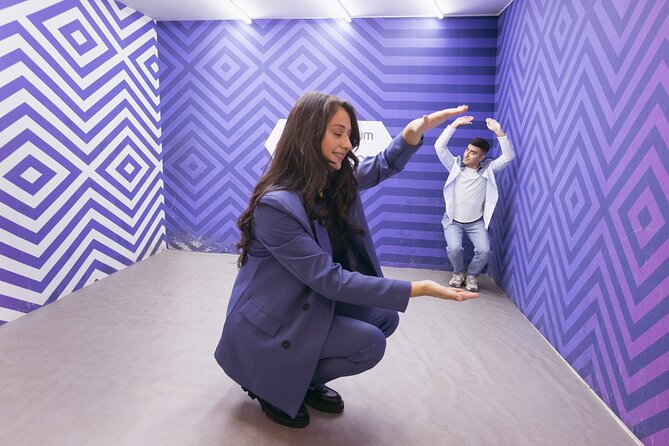
- More than 60 interactive exhibits: Expect visual tricks involving mirrors, shadows, color, movement, size, shape, and apparent weight.
- Guided explanations in English: A local guide helps you understand the science instead of leaving you to guess at every display.
- Excellent for family photos: Staff can suggest funny poses and camera angles, so you are not limited to ordinary snapshots.
- A short, flexible visit: Plan for 45 minutes to an hour, but allow up to 90 minutes if you enjoy testing each exhibit.
- A central Gyumri stop: The museum is described as a short walk from the main square and close to public transportation.
- Good all-age appeal: Children, parents, couples, solo visitors, and groups can all take part in most of the activities.
What makes the Gyumri museum different
A museum of illusions succeeds when it lets you do more than look. Here, you are encouraged to test your own senses, pose inside the displays, and ask questions before the guide explains the trick. That makes the visit feel closer to a friendly science demonstration than a silent gallery.
The exhibits play with familiar parts of daily life. Light can alter what you think you see. Mirrors can multiply a figure or make a room feel different. Changes in perspective can affect your sense of size and distance. Objects may appear to float or shift, even though the real explanation is simple once it is pointed out.
I like this approach because you do not need a background in physics or psychology. The guide gives you enough information to follow the idea without turning the visit into a classroom lecture. You can first enjoy the surprise, then learn why your eyes and brain were fooled.
The museum also has a social side. A single visitor can experiment alone, but groups have more fun comparing what each person sees. Families can take turns posing, holding the camera, and trying to explain the trick to one another. The result is usually a lot of laughter, plus a few photographs that look far stranger than the actual room.
More Museum Tours in Armenia:
- Group Tour: Gyumri (Urban Life museum, Black fortress, old town), Harichavank
★ 5.0 · 280 reviews - Yerevan Card Including Free 30+ Museums, 5+ Tours & Discounts
★ 5.0 · 91 reviews - Group Tour: Sightseeing in Yerevan, Erebuni Museum and Fortress
★ 5.0 · 42 reviews
Your route through more than 60 illusions

The visit takes place at the Museum of Illusions Gyumri, the only scheduled stop. That sounds simple, but it is useful to know what it means: there is no long transfer, outdoor walk, or complicated sequence to manage. You arrive, meet the local guide, and move through the exhibits at a relaxed pace.
At the start, you receive an introduction to the idea behind the museum. The guide helps you understand that the displays are not magic tricks in the traditional sense. They are carefully arranged examples of how perception can be shaped by visual information.
From there, you move through a series of rooms and installations. The exact order may vary, but you can expect displays based on:
- Light and shadow
- Color and visual contrast
- Mirrors and reflections
- Movement and changing viewpoints
- Size and distance
- Shapes and perspective
- Apparent levitation
- Optical images that seem to change or contradict one another
You are given time to work out each effect for yourself. That small pause matters. If a guide explains everything immediately, you only receive the answer. Here, you get the pleasure of being briefly confused first, then seeing the logic behind the illusion.
The guide is also important for the photographs. Many displays work best from a particular position, and a staff member can tell you where to stand or how to pose. This is one of the most praised parts of the experience. Friendly staff members have been singled out for being patient, supportive, and full of ideas, especially when families want funny pictures.
Do not rush through the rooms simply to count the exhibits. The value comes from trying them. If you stop for photographs and ask questions, the visit may take close to 90 minutes. If you move briskly and focus on the main effects, 40 to 50 minutes may be enough.
Why the guide matters
The guide adds real value here. Without explanations, the museum could become a collection of amusing backdrops. With a guide, the displays become small lessons in how your senses interpret information.
You can ask questions as you go, and the staff are there to explain the reason behind each phenomenon. The tone appears to be informal and friendly rather than stiff. That suits the subject. Illusions are easier to understand when you are laughing and experimenting instead of trying to memorize technical terms.
The named staff members, including Emily, Anushik, Ruzanna, Seda, and Samvel, are praised for their warmth and energy. Anush and Emilia are also noted for being friendly and professional. Since different guides may lead different sessions, you should not expect one specific person every time, but the overall strength of the experience is clearly the human welcome.
I especially value the help with photography. Many people can take a picture in front of an exhibit, but a good guide can turn it into a visual joke. A clever pose or camera position makes the illusion easier to understand and gives you a much better souvenir.
English is offered, which makes the scientific explanations accessible to English-speaking visitors. If you are traveling with children, the ability to ask questions in English can help keep the visit engaging rather than confusing.
The photo factor: fun without feeling forced
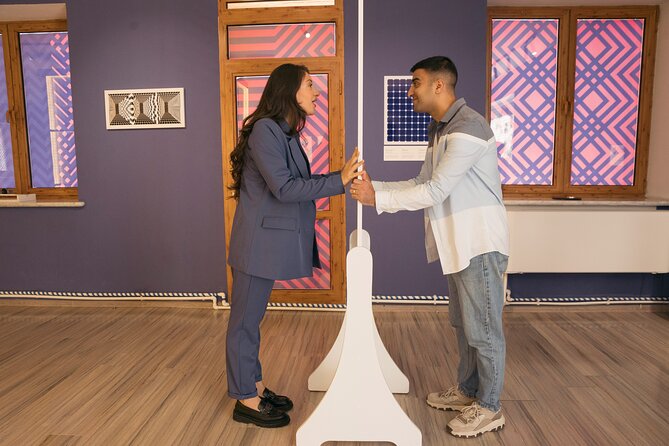
You will find plenty of opportunities for playful photographs. That is part of the museum’s appeal, but it is worth setting the right expectation. The pictures are not simply decorations around the edge of the visit. They are tied to the way the exhibits work.
A photo may make it look as if one person is floating, shrinking, multiplying, or interacting with an impossible room. To get the effect, you may need to stand in a particular spot or hold your body at a certain angle. The staff can help you find that position, which removes much of the guesswork.
I would bring a phone with enough battery and storage for repeated attempts. That is practical advice based on the kind of visit this is, not a claim that special equipment is required. The experience includes a mobile ticket, but your phone is also likely to become the main camera for the day.
Solo visitors can still enjoy the exhibits, though some effects are naturally more entertaining with a partner or family member. Couples can take turns posing. Parents can help younger children understand that the room is not really changing, even when the picture suggests otherwise.
The best photographs usually come after you understand the trick. Take one picture quickly for the surprise, then listen to the guide and try again with a better pose. That turns a simple snapshot into a small memory of how the illusion works.
More things to do in Gyumri:
- Private tour to Gyumri old town and Marmashen monastery
★ 5.0 · 26 reviews - Paint Your Own Traditional Doll
★ 5.0 · 10 reviews - Gyumri: Private Guided Walking Tour By A Local Guide
★ 5.0 · 6 reviews - Group Tour to Gyumri: City tour, Monasteries and Culture
★ 4.4 · 6 reviews
A good family stop in Gyumri
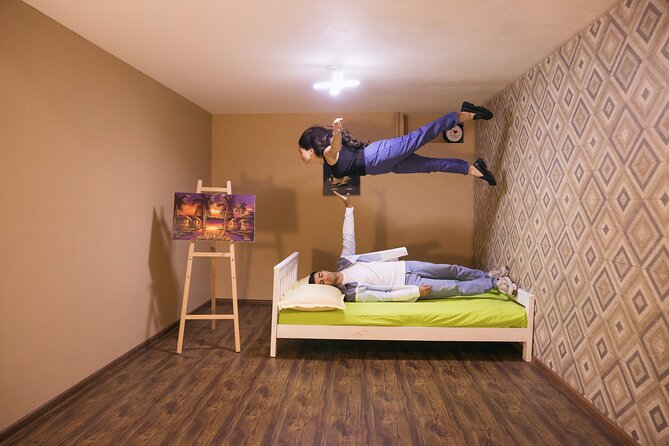
The museum is particularly well suited to families with school-age children. Children around seven and ten have enjoyed the displays, and the hands-on format gives them something to do at every stage. They are not expected to remain quiet while looking at objects behind glass.
Parents also get something from the visit. You can ask the guide questions, compare your own reactions with your children’s, and use the exhibits to talk about how the brain processes visual information. It is entertainment, but it also gives you an easy way to introduce ideas about perception.
The museum works for mixed-age groups because the experience operates on several levels. A young child may enjoy the strange picture. An older child may want to know how the trick works. An adult may appreciate the design, photography, or science. Everyone can take part without needing the same level of interest.
There is one practical limitation. Some children may want to race from one display to the next, while the best experience requires a little patience. Encourage them to test each illusion, listen to the explanation, and try a second photograph. That makes the visit last longer and gives it more substance.
Timing, location, and ease of access

The museum is a short walk from Gyumri’s main square, making it easy to add to a day in the city. It is also near public transportation, so you do not need to build a complicated travel plan around it.
The advertised duration ranges from 45 minutes to 1 hour 30 minutes. In practical terms, I would reserve about an hour. Add extra time if you are visiting with children, taking many photos, or asking the guide about the science behind the displays.
The duration makes the museum easy to fit between other Gyumri activities. It can serve as a light indoor stop during a full day of sightseeing, or as a focused outing when you want something more active than another historic building.
Confirmation is provided at booking, and admission is included in the experience. Service animals are allowed, and most people can participate. These details make the visit fairly straightforward, though anyone with particular mobility or sensory concerns should confirm their needs before booking because no further accessibility information is provided.
Is $12 a fair price?
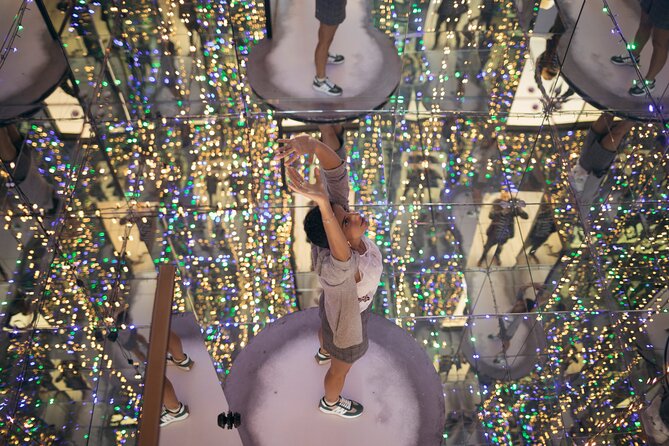
At $12 per person, the museum offers solid value for a short guided activity. You receive admission to more than 60 exhibits, an English-language explanation, time to take photographs, and help from staff. That is more than you get from a quick walk through a self-guided photo room.
The value depends on how you use the time. If you rush in, take two pictures, and leave after 20 minutes, the price will feel less attractive. If you test the illusions, listen to the explanations, and make use of the guide’s photography tips, the cost feels reasonable.
For a family, the total price will rise with each person, so expectations matter. This is not a full-day attraction. It is a compact, interactive experience that works best as one part of a Gyumri itinerary.
I would compare it with the cost of other paid activities in the city, but the main strength here is variety. You are not paying for one large display. You are paying for many small experiments, along with the help needed to understand and photograph them.
Who should book this experience?

I would recommend the museum to families, couples, and groups of friends who enjoy playful activities. It is also a good choice for solo visitors who like visual puzzles and do not mind asking staff for help with photographs.
It suits you especially well if you want:
- A short activity near the center of Gyumri
- Something suitable for several age groups
- A guided experience in English
- A place to take unusual social media photographs
- Entertainment that also explains basic science
- An indoor break from walking around the city
You may want to skip it if you dislike posing for pictures, interactive displays, or visual puzzles. The museum’s appeal comes from participation. It is not designed for quiet observation.
The visit is also less satisfying if you only want a long, traditional museum experience. This is a bright, playful attraction built around surprise and movement. Go in expecting to touch, test, laugh, and take pictures, and you will have the right frame of mind.
My booking advice
I would book the Museum of Illusions Gyumri if you want an easy, family-friendly activity with a clear sense of fun and a little learning. The friendly staff, useful explanations, and help with photographs are the strongest reasons to go.
Book it as part of a wider day in Gyumri rather than as your only activity. Allow an hour, keep your phone ready, and do not rush past the explanations. You can cancel for a full refund up to 24 hours before the start time, but changes or cancellations inside that period are not accepted.
FAQ
How much does the Museum of Illusions Gyumri tour cost?
The price is $12 per person, with admission included.
How long does the experience last?
The visit lasts approximately 45 minutes to 1 hour 30 minutes. A shorter visit may take around 40 to 50 minutes, while a slower visit with photographs and questions can last longer.
How many exhibits are at the museum?
The museum has more than 60 exhibitions and interactive illusions involving light, shadows, color, movement, size, shapes, and other visual effects.
Is the tour offered in English?
Yes. The experience is offered in English, and a local guide explains the science and secrets behind the illusions.
Is the museum suitable for children?
Yes. Most people can participate, and the experience is suitable for families. Children around seven and ten have enjoyed the exhibits, photographs, and interactive activities.
Can I cancel for a full refund?
Yes. You can cancel at least 24 hours before the experience start time for a full refund. Cancellations or changes made less than 24 hours before the start time are not accepted.
Just added in Armenia
- Armenia: Wine Tasting and Vineyard Lunch at Voskeni Winery★ 5.0 · 1 review
- YerevanCard: 3-Day City Pass★ 5.0 · 1 review
- Yerevan: Walking Tour With an Architect
- Yerevan: Museum of Illusions Entry Ticket★ 5.0 · 3 reviews
- Yerevan to Tbilisi Day Tour: Unveiling Transcultural Wonders★ 4.8 · 2 reviews
- Yerevan: Urban Hike through Aygestan and Old Nork★ 5.0 · 1 review
- Yerevan: Brandy Tasting Experience with Local Delicacies★ 5.0 · 1 review
- Yerevan City Tour: Discover an Old and New Yerevan★ 5.0 · 2 reviews
Gyumri Tours, compared.

Gyumri (Urban Life museum, Black fortress, old town), Harichavank
Read our review →
Private tour to Gyumri old town and Marmashen monastery
Read our review →

Group Tour to Gyumri: City tour, Monasteries and Culture
Read our review →
Gyumri: Private Guided Walking Tour By A Local Guide
Read our review →
3 Day Private Tour with an Exclusive Visit to Gyumri
Read our review →
Private tour to Gyumri, Dzitoghtsyan Museum, Black Fortress
Read our review →Browse the lists this tour appears in