
Reviewed · HISTORY TOURS IN YEREVAN
3 Day UNESCO Heritage Private Tour in Armenia from Yerevan
Armenia packs centuries into three busy days. This private tour links the country’s best-known monasteries, pagan ruins, mountain views, and memorial sites, with a driver handling the long road stretches between them. I especially like the chance to see Mount Ararat from Khor Virap and ride the Wings of Tatev cableway, while the private format gives your group more control than a large coach tour.
The main drawback is the pace. You cover a great deal of ground, and Day 3 reaches far into Syunik Province before returning to Yerevan. The $288 price buys private transport, hotel pickup and drop-off, air conditioning, Wi-Fi, water, and a driver, but entrance fees, meals, and drinks cost extra.
In This Review
- Key points to know before booking
- Why this three-day route works
- Day 1: Khor Virap and Armenia’s Christian heart
- Khor Virap and the view of Mount Ararat
- Etchmiadzin Cathedral, Saint Hripsime, and Zvartnots
- Tsitsernakaberd and a difficult chapter
- Day 2: Garni, the Symphony of Stones, and Lake Sevan
- Garni, the only preserved pagan temple
- The Symphony of Stones
- Geghard and the canyon setting
- Lake Sevan and Sevanavank
- Day 3: Noravank, Shaki Waterfall, and Tatev
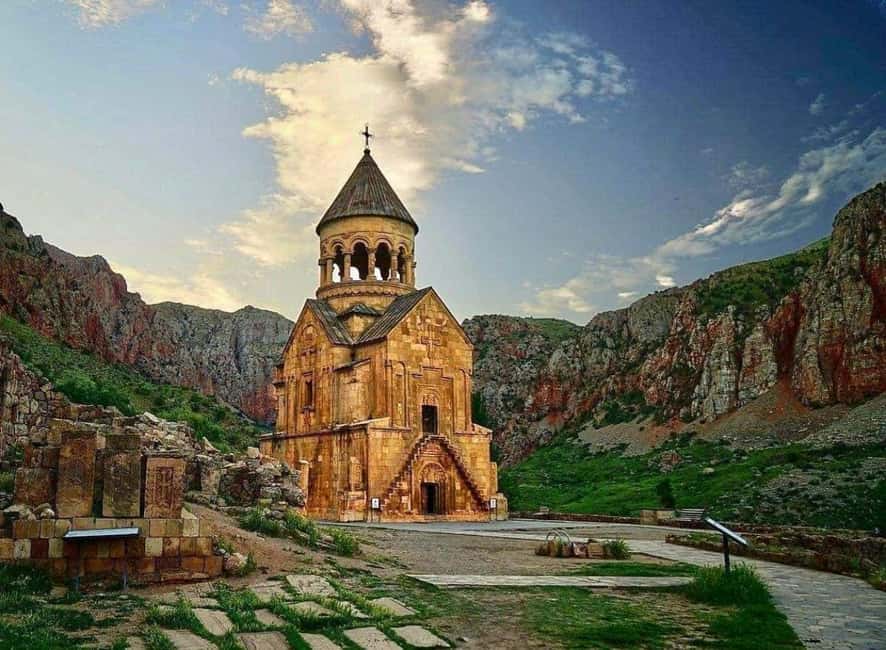
- Noravank in its red-rock canyon
- Shaki Waterfall
- Tatev Monastery and Wings of Tatev
- What the $288 price includes, and what it does not
- Comfort, pacing, and practical preparation
- Who should book this Armenia tour?
- Should you book it?
- FAQ
- Is hotel pickup included?
- Is this a private tour?
- Is a guide included?
- What entrance fees are extra?
- How long is the tour?
- Is the tour suitable for wheelchair users?
Key points to know before booking
- Mount Ararat from Khor Virap: The monastery offers one of Armenia’s most important religious settings and its famous view toward biblical Mount Ararat.
- Four UNESCO-linked sites: Etchmiadzin Cathedral, Saint Hripsime Church, Zvartnots Cathedral, and Geghard bring major Armenian architecture into one trip.
- Tatev by cable car: The 5,752-meter Wings of Tatev is recorded by Guinness World Records as the longest reversible cableway in the world.
- A private vehicle matters: You travel by car, minivan, or minibus according to group size, with hotel pickup and drop-off included.
- A serious historical stop: Tsitsernakaberd gives the first day a solemn close at Armenia’s Genocide Memorial.
- Bring walking shoes: Garni, Geghard, Noravank, monasteries, waterfalls, and cableway stops all require some walking.
Why this three-day route works
Armenia is compact on a map but slow to cross once monasteries, mountain roads, and scenic stops enter the picture. This tour works because it groups sights by direction instead of sending you back and forth at random. You begin west of Yerevan, head east toward Garni and Lake Sevan, then make the long southern run to Noravank and Tatev.
I like the private setup for this route. You can travel with family or friends, and the vehicle changes to suit the party: a car, minivan, or minibus. The tour includes a professional English-speaking driver, and a guide is available if you select the guided option and request your preferred language.
The difference between a driver and a guide matters here. A driver can get you efficiently between the sights, while a guide adds fuller explanations inside the churches and at the archaeological sites. If history and architecture are central to your trip, I would choose the guide option and specify the language when booking.
Several people have singled out the driving service. Hamlet was praised for being kind and helpful, while Artyom received especially strong marks for punctuality, safe driving, a clean vehicle, and careful attention to pickup times. One especially useful detail: Artyom reportedly spotted the group before they noticed him and adjusted plans to avoid crowds when possible.
More History Tours in Yerevan
Day 1: Khor Virap and Armenia’s Christian heart
Your first day links Khor Virap, Etchmiadzin, Saint Hripsime, Zvartnots, and Tsitsernakaberd before returning to Yerevan. It is a full day, but it introduces the religious and historical themes that shape much of Armenia.
Khor Virap and the view of Mount Ararat
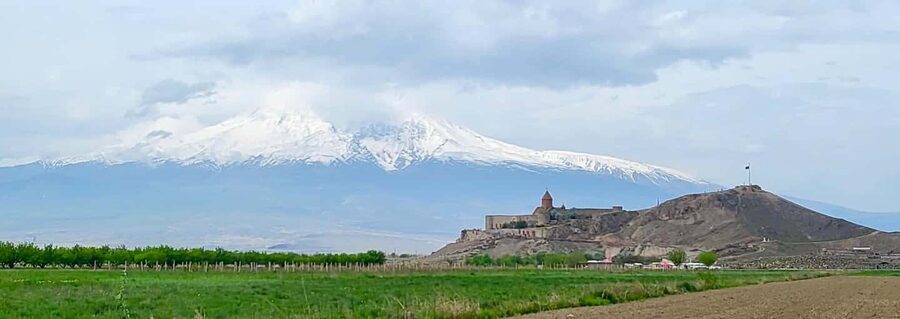
Khor Virap is one of Armenia’s most important sanctuaries. Its location at the foot of Mount Ararat gives it unusual power: you are looking at a biblical mountain from a monastery that is central to Armenian Christian identity.
The view depends on weather, so do not treat Mount Ararat as guaranteed. On a clear day, it is the image many people carry home from Armenia. The monastery itself adds meaning beyond the view, making this more than a quick photo stop.
Wear shoes with a good grip. Religious sites call for respectful clothing, and comfortable footwear helps at old stone complexes.
Etchmiadzin Cathedral, Saint Hripsime, and Zvartnots
Etchmiadzin Cathedral is the religious center of the Armenian Apostolic Church. Armenia adopted Christianity as its state religion in 301, making it the first country to do so, and the cathedral reflects that early Christian role.
The cathedral was added to the UNESCO World Heritage list in 2000. Even if you are not deeply interested in church history, the site helps explain why Armenia’s monasteries and churches are so central to national life.
Saint Hripsime Church offers a different architectural experience. Built in 618 by order of Catholicos Komitas, it is also part of the UNESCO designation. Its design is austere and strongly geometric, with the thick stone construction that gives many Armenian churches their calm, powerful character.
Zvartnots brings the first day into the medieval period. The cathedral was built in the seventh century, but you see it today mainly as ruins. That is part of its appeal. Fallen columns and surviving stonework let you picture the scale of a building that once dominated the surrounding plain.
Entrance fees are not included. The listed charges are 1,500 AMD for Zvartnots and 1,500 AMD for Garni, with the other site fees listed separately below. Carry Armenian dram so small admissions do not slow you down.
A completely different kind of day:
- Group Tour: Garni, Symphony of Stones, Geghard, Lavash Baking
★ 5.0 · 1,042 reviews - Group Tour: Lake Sevan (Sevanavank), Dilijan (Goshavank, Haghartsin)
★ 5.0 · 1,036 reviews - Khor Virap, Noravank and Birds’ Cave Trip with Wine Tasting
★ 4.8 · 845 reviews - Yerevan: Garni, Geghard, Symphony of Stones & Lavash Baking
★ 4.8 · 758 reviews
Tsitsernakaberd and a difficult chapter
The day ends at Tsitsernakaberd, Armenia’s Genocide Memorial. This is not a light sightseeing stop, and it should not be treated as one. The memorial honors the victims of the Armenian Genocide and preserves a painful part of the country’s collective memory.
I appreciate its place on the route because it keeps the day from becoming a string of pretty buildings. Armenia’s culture cannot be understood through churches alone. This visit asks you to pause and consider the losses that still shape the country.
Day 2: Garni, the Symphony of Stones, and Lake Sevan
Day 2 combines pre-Christian Armenia, a natural rock formation, a carved monastery, and the country’s largest lake. The stops are varied, which keeps the day from feeling repetitive.
Garni, the only preserved pagan temple
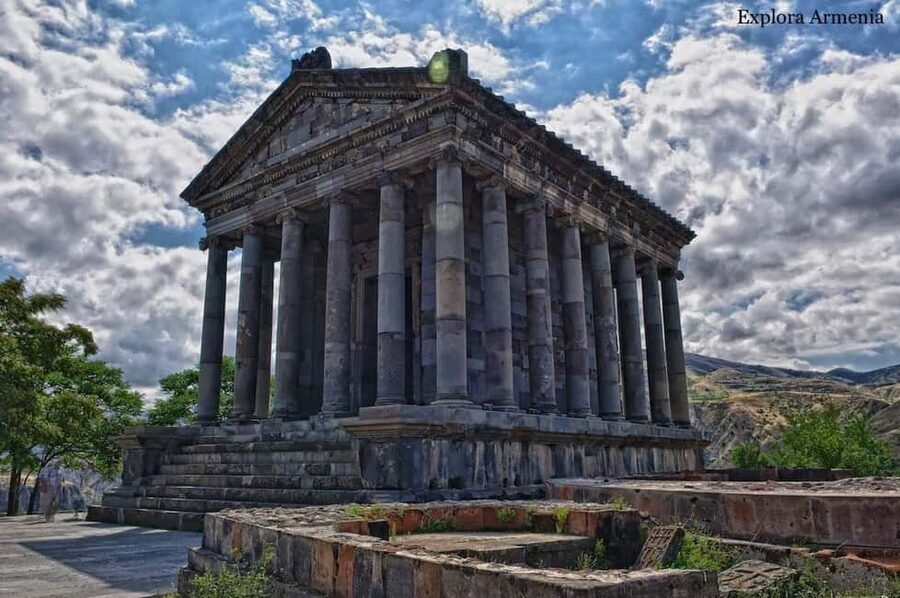
Garni is the only preserved pagan temple in the Caucasus. Built in the second half of the first century and dedicated to the Sun God, it offers a sharp contrast to the Christian churches on Day 1.
After Armenia adopted Christianity, the temple served as a royal residence. That later use helps explain why it survived while so many other ancient structures disappeared. Look closely at the columns and the setting rather than rushing straight to a photo.
The entrance fee is 1,500 AMD. The temple is one of the few stops on this tour where you see a clearly pagan monument, so it deserves more than a quick stop between monasteries.
The Symphony of Stones
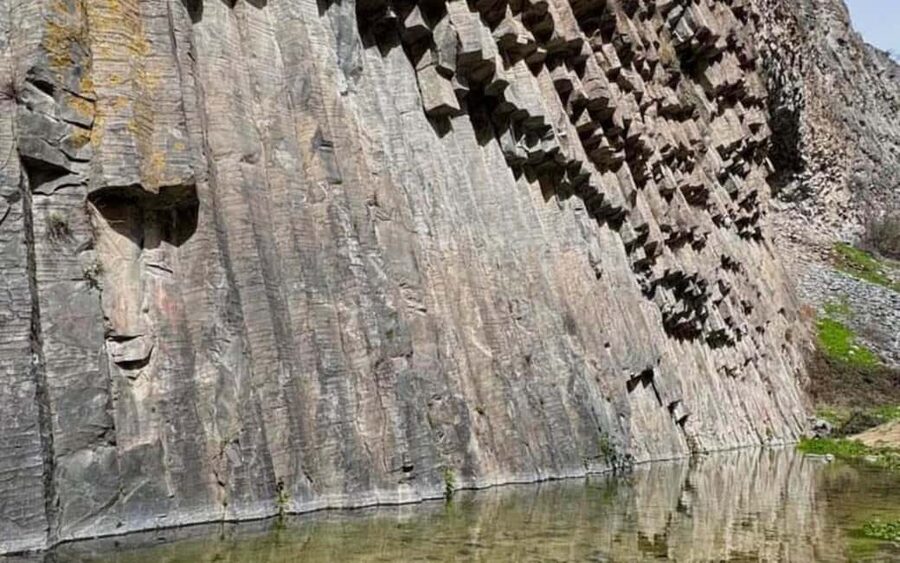
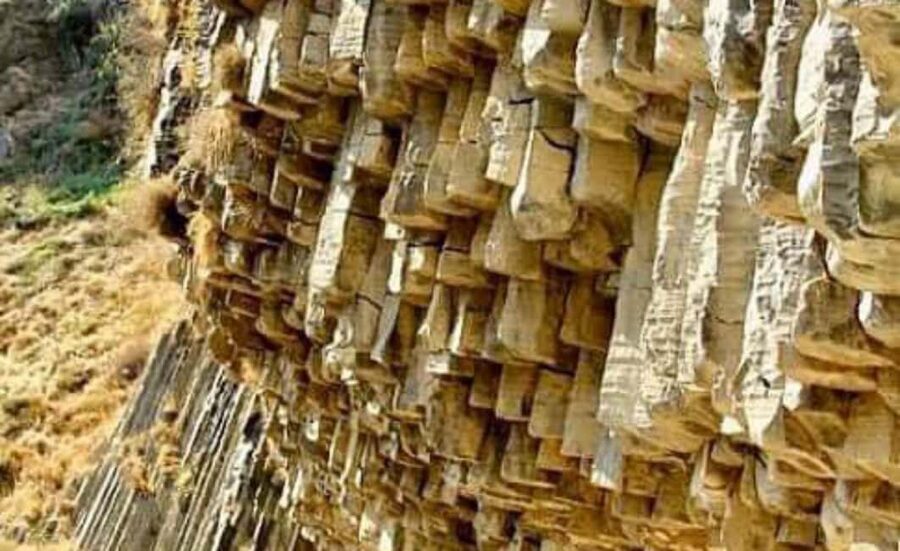
The Symphony of Stones is a protected natural monument near Garni. Its tall, regular basalt formations create a striking visual pattern, and the stop gives your legs a change from church interiors and stone courtyards.
The entrance fee is 300 AMD. The path and footing can vary, so comfortable shoes are useful. If you have limited mobility, note that this tour is not suitable for wheelchair users.
Geghard and the canyon setting
Geghard is one of Armenia’s most memorable monasteries. According to tradition, Saint Gregory founded it in the fourth century near a sacred spring. The complex is partly cut into rock, with a severe, simple character that fits the surrounding canyon.
The UNESCO-listed monastery feels different from Etchmiadzin or Saint Hripsime. Here, the cliffs and carved spaces are part of the architecture. You are not just looking at a building in a field. You are seeing a religious site shaped by rock, shadow, and narrow spaces.
The setting is beautiful, but the stone surfaces and uneven ground call for sensible footwear. If you want a quieter visit, ask your driver or guide about the best timing. The private format may make it easier to adjust your stop slightly.
Lake Sevan and Sevanavank
The final major stop is Sevanavank, a monastic complex on the peninsula above Lake Sevan. From here, you can look across the lake and understand why Sevan is called the pearl of Armenia.
The lake provides one of the tour’s broadest views. After the tighter spaces at Geghard, the open water and high setting feel like a reset. The complex itself is another example of Armenia’s preference for dramatic religious sites, with churches placed where the surrounding scenery becomes part of the visit.
Day 2 returns to Yerevan, so you do not need to change hotels during the tour based on the information provided. Meals and drinks are not included, so plan to pay for lunch along the route.
Day 3: Noravank, Shaki Waterfall, and Tatev
Day 3 is the toughest and most rewarding day for road time. You head south from Yerevan to Syunik Province, visit Noravank and Shaki Waterfall, then reach Tatev before returning to the capital.
If you dislike long drives, this is the day to consider carefully. If you want to see Tatev without arranging a separate southern Armenia trip, the long distance is the price of admission.
Noravank in its red-rock canyon
Noravank means New Monastery. The medieval complex sits in an impressive canyon, and its setting is as important as its architecture.
The monastery is one of Armenia’s most attractive religious monuments. Its stonework, location, and sense of isolation create a strong first stop on the southern route. I would allow time to look beyond the main facade and take in the canyon walls around it.
Noravank also shows why a private vehicle is useful. The route is not simply a chain of sites close together. You are moving through a large section of the country, and having hotel pickup, a dedicated driver, and a vehicle sized for your group removes much of the transport planning.
Shaki Waterfall
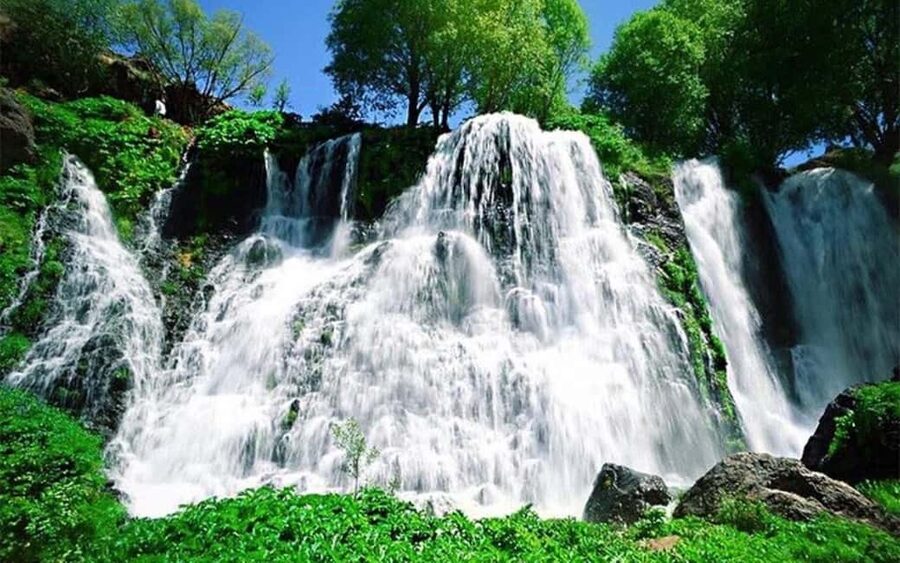
Shaki Waterfall is in one of the quieter corners of Syunik Province. It is a smaller-scale stop than Tatev, but that is part of its charm. The waterfall breaks up the monastery visits and offers a chance to enjoy Armenia’s natural scenery.
The supplied details do not give a separate admission fee for Shaki Waterfall. I would still keep some local cash with you for any unexpected small costs during the day.
Tatev Monastery and Wings of Tatev
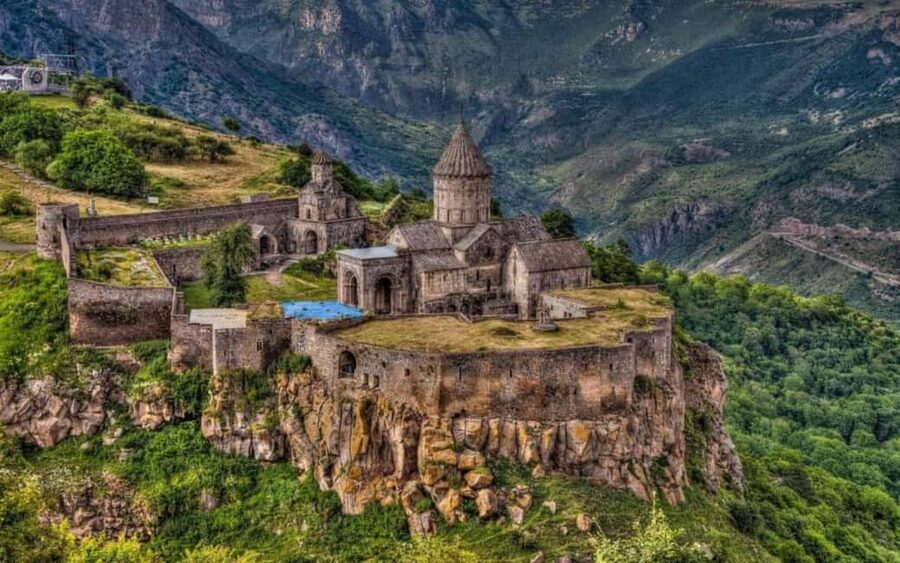
Tatev is the high point of the tour for many people. Founded in the ninth century, the monastery served as a major religious and educational center for centuries. Its position and architecture give it a strong presence, even before you consider how you reach it.
You ride Wings of Tatev, a reversible cableway stretching 5,752 meters. It is recorded in the Guinness Book of Records as the longest reversible cableway in the world. The ride turns the journey to Tatev into part of the attraction rather than a simple transfer.
The round-trip cableway ticket costs 9,000 AMD and is not included. Check operating conditions and availability before setting your heart on the ride, since the tour description does not promise that the cableway operates in every circumstance.
The cableway may be the most memorable transport experience of the three days, but the return to Yerevan can make Day 3 tiring. Start the day ready for a long outing, wear comfortable clothing, and keep water close. One bottle per person is included, but you may want more for a full day on the road.
What the $288 price includes, and what it does not
At $288 per person, this tour is not the cheapest way to see Armenia. The value depends heavily on your group size. A private vehicle, hotel pickup and drop-off, air conditioning, Wi-Fi, an English-speaking driver, a map of Armenia and Yerevan, one bottle of water per person, and 24-hour assistance are included.
A guide is included only if you choose the option with guide. You should also request the language you need in your message. Without a guide, you will have more independence but less built-in explanation at complex sites.
You pay extra for:
- Garni: 1,500 AMD
- Zvartnots: 1,500 AMD
- Symphony of Stones: 300 AMD
- Wings of Tatev round trip: 9,000 AMD
- Lunch and drinks
That makes the tour better suited to people who value convenience and a private schedule than to strict budget visitors. The positive comments about clean vehicles, punctual service, and safe driving support the price, especially for families or friends splitting the cost of a private vehicle.
One piece of feedback described the tour as expensive. That is a fair concern. You should compare the $288 price with the cost of arranging three days of transport, a driver, site planning, and the southern trip to Tatev on your own.
Comfort, pacing, and practical preparation
The vehicle includes air conditioning and Wi-Fi, which matter on the longer road sections. The exact vehicle depends on group size, with a car, minivan, or minibus used as needed.
The strongest practical praise goes to the drivers. Hamlet was described as kind, helpful, and an excellent driver. Artyom was praised for punctuality, a clean and comfortable car, safe driving, and careful attention to the group. That matters on a route where you spend substantial time in the vehicle.
Bring comfortable shoes and clothing suited to the weather. You will walk around monasteries, ruins, a natural monument, a waterfall, and the Tatev complex. Pets are not allowed, and the tour is not suitable for wheelchair users.
Free cancellation is available up to 24 hours before departure for a full refund. You can also reserve now and pay later, which helps if your Armenia plans are still taking shape.
Who should book this Armenia tour?
I would recommend it to first-time visitors who want the major sights without renting a car or working out Armenia’s long-distance transport. It also suits families and small groups who want a private vehicle, hotel pickup, and the flexibility to spend more time at a favorite stop.
The route is especially strong for people interested in Christian architecture, medieval monasteries, ancient sites, and major national memorials. The mix of Garni, Geghard, Etchmiadzin, Noravank, and Tatev gives you a broad introduction rather than one narrow theme.
I would hesitate if you want slow mornings, long meals, or detailed time at every site. Three days is efficient, not leisurely. Day 3 is demanding, and the added entrance fees mean the advertised price is not your final sightseeing cost.
Should you book it?
Book this tour if you want Armenia’s essential monuments in a tightly organized private trip, with Tatev and Mount Ararat high on your list. The strongest reasons are the route, the private transport, and the consistently praised driver service, especially the care associated with Hamlet and Artyom.
Skip it if you prefer to travel slowly or focus on one region. For most first-time visitors with only three days, though, the tour gives you an unusually broad look at Armenia: ancient Garni, Christian Etchmiadzin, solemn Tsitsernakaberd, Lake Sevan, and remote Tatev all fit into one demanding but rewarding plan.
FAQ
Is hotel pickup included?
Yes. Your guide or driver will wait in your hotel lobby, and transfer back to your hotel is also included.
Is this a private tour?
Yes. It is organized for you, your family, or your friends as a private group.
Is a guide included?
A professional guide is included if you select the option with guide. You should specify the language you want in your message. A professional English-speaking driver is included.
What entrance fees are extra?
Garni costs 1,500 AMD, Zvartnots costs 1,500 AMD, Symphony of Stones costs 300 AMD, and a two-way Wings of Tatev ticket costs 9,000 AMD. Lunch and drinks are also extra.
How long is the tour?
The experience lasts three days. Starting times depend on availability.
Is the tour suitable for wheelchair users?
No. The tour is not suitable for wheelchair users. Comfortable shoes and clothing suited to the weather are recommended.
Just added in Yerevan
- YerevanCard: 3-Day City Pass★ 5.0 · 1 review
- Yerevan: Walking Tour With an Architect
- Yerevan: Urban Hike through Aygestan and Old Nork★ 5.0 · 1 review
- Yerevan: Museum of Illusions Entry Ticket★ 5.0 · 3 reviews
- Yerevan: Brandy Tasting Experience with Local Delicacies★ 5.0 · 1 review
- Yerevan City Tour: Discover an Old and New Yerevan★ 5.0 · 2 reviews
- Wine, Jazz and Magic: A Night at Malkhaz Jazz Club★ 5.0 · 2 reviews
- 4 Nights 5 Days in Armenia start from Yerevan★ 5.0 · 1 review
History Tours in Yerevan, compared.
Private tour to UNESCO heritage Haghpat and Sanahin monasteries and Odzun church
Read our review →Explor Kond: A Historic Stroll Through Yerevan’s old Quarter
Read our review →
Private tour to UNESCO heritage Echmiadzin churches, Zvartnots and Sardarapat
Read our review →
Private Day Trip from Yerevan to UNESCO World Heritage Sites
Read our review →Khachkar Crafting Masterclass: Unveiling Armenia’s Heritage
Read our review →
Browse the lists this tour appears in