
Reviewed · CITY TOURS
Soviet Yerevan: Small-Group City Experience
Yerevan wears its Soviet past openly. I like the small six-person group, which keeps the history conversational, and I like the mix of metro rides, markets, housing blocks, and old railways rather than a parade of monuments. The main drawback is its focused route: you will not squeeze in extra sights.
This four-hour tour costs $65 and includes public transport, a Soviet-style van, local snacks, and a guide. I would choose it for a clear look at everyday Soviet life, but not if you want only central Yerevan or a broad introduction to Armenian history.
In This Review
- Key points to know before you book
- Why Soviet Yerevan makes a good half-day tour
- Republic Square and the space once called Lenin Square
- Sasuntsi Davit station and Yerevan underground
- Bangladesh market in Malatia-Sebastia
- Beknazarian Street and the working-class city
- The Children’s Railway beside the Hrazdan River
- What the $65 price really covers
- Timing, transport, and the practical side
- Who will get the most from this experience?
- Should you book Soviet Yerevan?
- FAQ
- How long does the Soviet Yerevan tour last?
- Where does the tour begin?
- Where does the tour end?
- How many people can join the tour?
- Is transportation included?
- What food is included?
- Can I cancel for a full refund?
Key points to know before you book
- Lenin Square becomes Republic Square: Start with the political heart of Soviet Yerevan and see how independence changed its meaning.
- Bangladesh is a real Yerevan neighborhood: Visit the Malatia-Sebastia market, sample perashki and ponchik, and see where local food shopping happens.
- The metro ride is part of the lesson: Sasuntsi Davit station connects the city’s underground system with the railway station.
- Soviet housing gets a close look: Beknazarian Street reveals the apartment blocks built for working families, along with a possible Soviet-style ice cream stop.
- A 1937 children’s railway still survives: The original station building and first locomotive remain at the final stop.
- The pace is deliberate: You get about four hours, with enough time for stories and photos, but the route leaves little room for detours.
Why Soviet Yerevan makes a good half-day tour
Yerevan is often presented through pink stone buildings, cafes, grand squares, and views toward Mount Ararat. Those are worthwhile, but they do not explain how the city functioned for much of the 20th century.
This tour looks at Yerevan through public transport, housing, food, work, and childhood. That is its strength. You move from a formal state square to a metro station, then out toward a market district and ordinary apartment streets. The result feels less like a monument checklist and more like a lesson in how a city was organized.
The experience is offered in English and is limited to six people. That small size matters here. Soviet history can become dry when delivered to a large group, but a compact group gives the guide room to explain local details and answer questions.
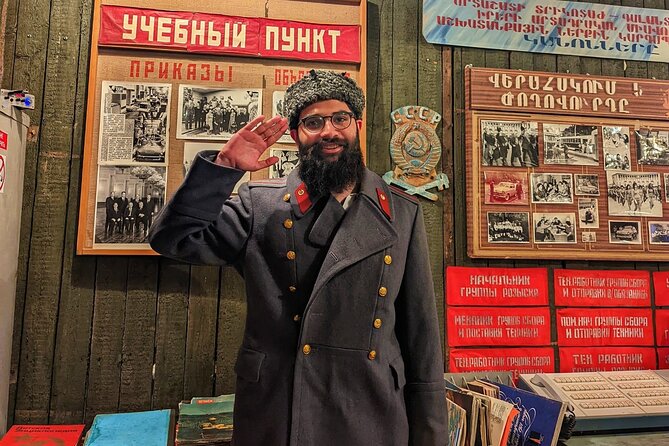
One guide named in the feedback is Marine, who mixed personal stories with Soviet-era facts and used Soviet jokes to keep the afternoon light. That personal element is important. The best parts of this tour are not just dates and building styles, but the sense of how people lived through the system.
More city tours in Yerevan:
- Yerevan city tour with drinks in a classic car with photography
★ 5.0 · 41 reviews - Private Yerevan City Tour: Erebuni, Matenadaran & Tsitsernakaberd Museums
★ 5.0 · 34 reviews - City Tour in Yerevan with local guide
★ 4.8 · 25 reviews
Republic Square and the space once called Lenin Square
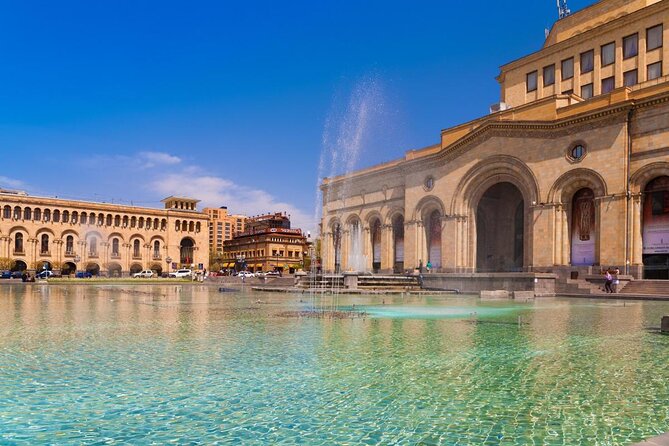
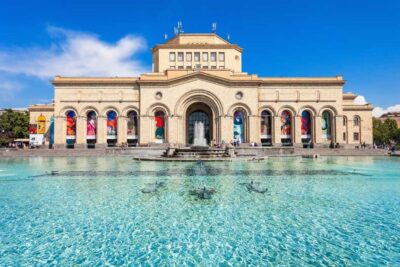
Begin at the Ministry of Foreign Affairs near Government House No. 2 on Republic Square. The opening stop lasts about 15 minutes, so think of it as a short orientation rather than a long architectural visit.
During the Soviet period, the square was called Lenin Square. A statue of Vladimir Lenin once occupied the space, and Soviet parades and public celebrations took place here twice a year, after an earlier period when they were held three times annually.
The statue disappeared after Armenia became independent, and the square received its current name. That change gives you a useful starting point for the whole tour. You are not simply looking at a plaza. You are looking at a public stage whose symbols changed when the country changed direction.
I like beginning here because the contrast is easy to understand. The square represents official power and ceremony, while later stops show the daily routines beneath that grand political surface.
You should not expect a long guided walk around every building. The time is brief, and the tour soon shifts toward transport and neighborhood life. If you want a detailed architectural study of Republic Square, allow time to return on your own.
Sasuntsi Davit station and Yerevan underground
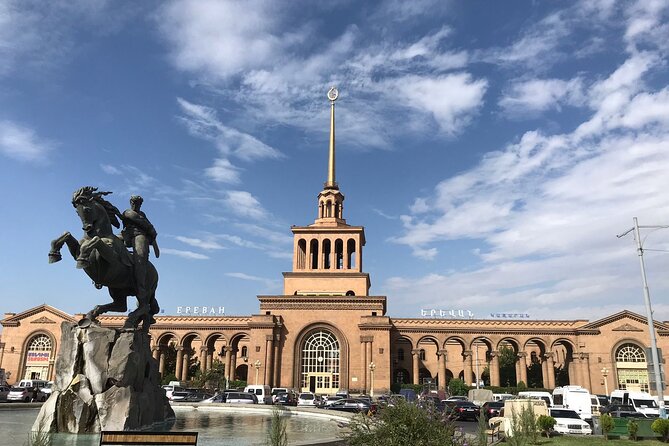
The next stop takes you to Sasuntsi Davit Street for roughly 35 minutes. This is one of Yerevan’s original metro stations, opened to the public on March 7, 1981.
The station connects with Yerevan railway station through a pedestrian tunnel. Its name comes from David of Sassoun, the Armenian folk hero whose statue stands outside the railway station. Here the tour links Soviet infrastructure with Armenian cultural identity, a pairing you will see again in other parts of the city.
The metro ride is included, and it is more than a practical way to move around. Public transport shows the scale and priorities of a planned city. A metro station is built for movement, but it also tells you about population growth, industrial planning, and the importance placed on getting workers across town.
This stop should suit you if you enjoy seeing how a city works. It is less useful for anyone hoping for ornate interiors or a long list of famous sights. The appeal is in the connection between the station, the railway, and the wider Soviet system.
The pedestrian tunnel also gives the stop a practical edge. You can see how the metro and railway were designed to work together, rather than as isolated pieces of infrastructure.
Bangladesh market in Malatia-Sebastia
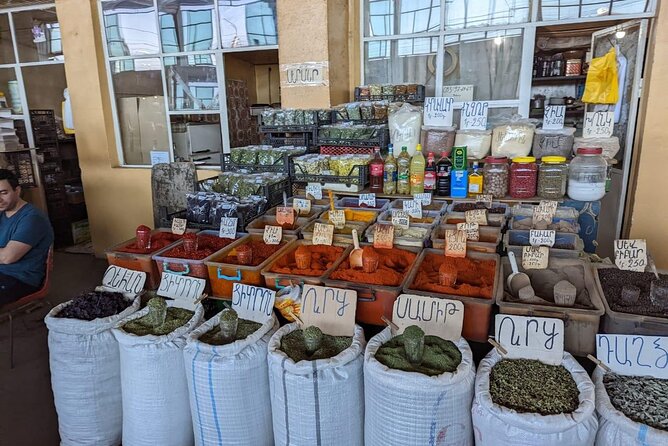
The tour then leaves the polished center for Malatia-Sebastia, where an area known as Bangladesh is famous for agricultural products. The name alone adds a bit of local character, and you have to visit to learn why Yerevan uses it.
You spend about an hour in the market area. This is the longest stop, and rightly so. A market gives you more than a place to buy food. It shows what people eat, how produce reaches the city, and how ordinary shopping fits into the rhythm of daily life.
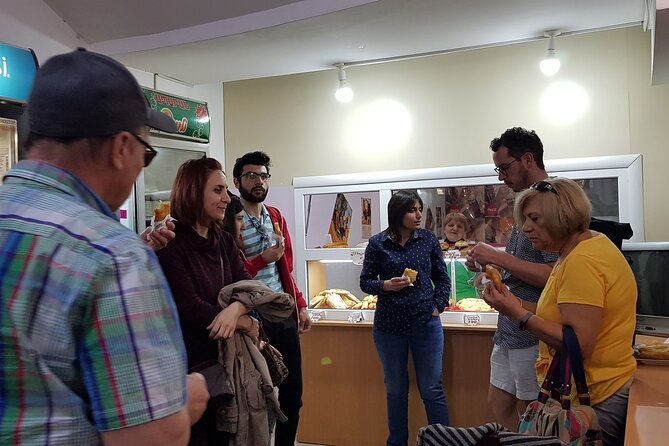
You will sample local snacks, including perashki and ponchik. A sweet local treat is also included. These small tastings add value to the tour because they connect the political story to something you can actually see and taste.
The market stop is also where the route feels most grounded. Instead of hearing only about Soviet citizens in the abstract, you get a look at a district where agricultural products are sold and bought. The setting may feel less polished than central Yerevan, but that is part of the point.
Give yourself room to pay attention rather than rushing from stall to stall. The tour description says you will walk around the market, but it does not promise a full shopping excursion or a set amount of free time. The hour is best treated as a guided neighborhood visit with food sampling.
If you have dietary restrictions, ask the operator before booking. The included foods are specifically named, but no alternative arrangements are stated.
More things to do in Yerevan:
- Group Tour: Garni, Symphony of Stones, Geghard, Lavash Baking
★ 5.0 · 1,042 reviews - Group Tour: Lake Sevan (Sevanavank), Dilijan (Goshavank, Haghartsin)
★ 5.0 · 1,036 reviews - Khor Virap, Noravank and Birds’ Cave Trip with Wine Tasting
★ 4.8 · 845 reviews - Yerevan: Garni, Geghard, Symphony of Stones & Lavash Baking
★ 4.8 · 758 reviews
Beknazarian Street and the working-class city
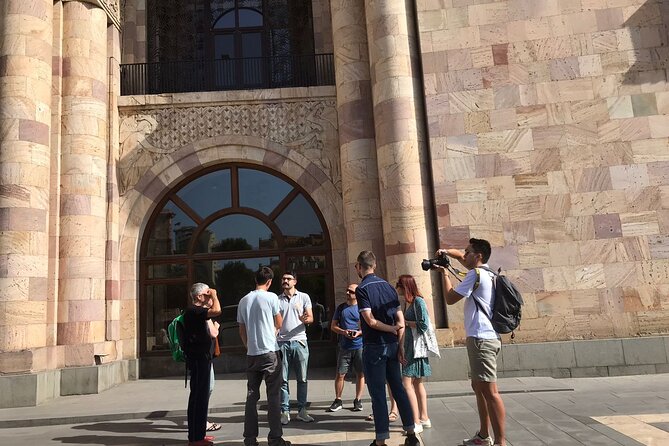
Beknazarian Street brings you into the part of Yerevan often missed on a standard city tour: Soviet apartment housing. You spend about 30 minutes exploring what is described as a CCCP or USSR district, with apartment buildings designed to house the proletariat.
The buildings are useful evidence of how the Soviet city was planned. Grand squares told the official story, while apartment blocks handled the practical business of housing a growing urban population. Here, the focus shifts from public ceremony to the shape of domestic life.
You will learn about the last buildings constructed during the Soviet period. That detail gives the stop a sense of an era coming to an end. The architecture is not presented as a collection of isolated curiosities. It forms part of a timeline, from early Soviet planning to the final phase before independence.
This is a good place to take photographs, but you should keep expectations sensible. You are viewing residential buildings, not entering a preserved museum. The interest comes from the layout, age, and story attached to them.
The stop may include Soviet-style ice cream, although one account describes it as something you get if you are lucky. That uncertainty is worth noting. Treat the ice cream as a pleasant bonus, not a guaranteed part of the food package.
The Children’s Railway beside the Hrazdan River
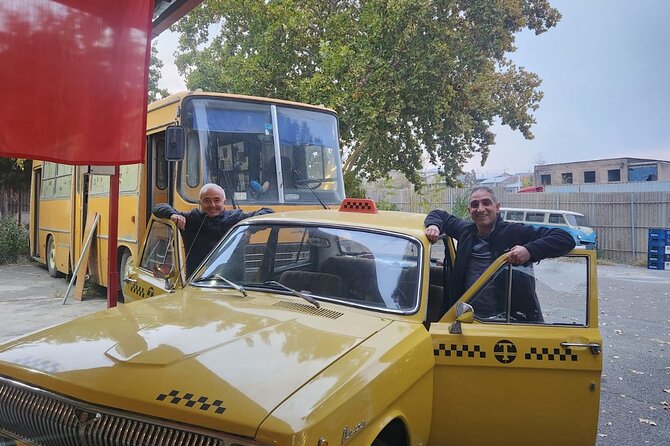
The final major stop is the Children’s Railway, located between the Hrazdan River and the Hrazdan water canal. You spend about 40 minutes here, and admission is included.
Built in 1937, it was one of many children’s railways created in the Soviet Union. These railways gave children a place to learn about trains and railway work. The Yerevan line continued operating after the Soviet Union broke apart, which makes it especially interesting for anyone curious about what survived the political change.
The original main station building remains, along with the first locomotive from 1937. Those details give the stop a physical link to the past that is easier to grasp than a plaque or a date. You can look at the station and locomotive and understand that this was not simply a themed attraction created for modern sightseeing.
For me, this is likely to be the most unexpected stop. It adds a human and playful note to a tour that otherwise deals with state power, transport systems, food supply, and housing. The story of children learning about trains also shows how the Soviet system shaped education and leisure.
The setting near the river and canal offers a change of pace, too. Still, do not expect a full train journey unless the tour details specifically confirm one. The information provided promises access to the site and its surviving features, not a guaranteed ride.
What the $65 price really covers
At $65 per person, this is not the cheapest way to see Yerevan. The value depends on how much you want interpretation and local access rather than independent sightseeing.
The price includes a local expert guide, metro transport, a Soviet-style van, perashki, ponchik, and a local sweet from the market. Admissions are free at the first four stops, while the Children’s Railway admission is included. You are paying mainly for the guide’s route, explanations, transport connections, and food stops.
That is a fair arrangement for a four-hour experience with a maximum of six people. Recreating the same route alone would require working out the metro, reaching the outer districts, finding the market, and understanding what you are seeing once you arrive. You could spend less, but you would lose the structured story that ties the stops together.
The price makes less sense if you only want to photograph Republic Square or ride the metro. Those pieces are easy to handle separately. It becomes better value if you want the context behind the ordinary places and prefer a small group over a large coach.
The tour is booked, on average, about 48 days ahead, so I would reserve early if your Yerevan dates are fixed. The schedule shown is Monday from 10 a.m. to 2 p.m. for the listed operating period, from November 12, 2025, through January 13, 2027.
Timing, transport, and the practical side
The experience begins at the Ministry of Foreign Affairs, Government House No. 2, on Republic Square. It ends at Diana Abgar Park on Arami Street, so you finish in a different central location rather than returning to the starting point.
That ending point can be useful if you plan to continue exploring central Yerevan. You should still check your plans against the finish time, since the published duration is approximately four hours and the route includes several transfers.
The mix of metro and Soviet-style van is a major part of the experience. You are not simply driven from one photo stop to another. You get to see how different parts of Yerevan connect, with the metro providing one kind of city view and the van reaching areas beyond the standard center.
The route is described as methodical and well planned. That is a benefit, but it also means the schedule is not loose. The guide has a set sequence, and the first feedback specifically warns against expecting extra stops. If you like a clean route with a clear beginning and end, you should appreciate this. If you prefer to wander, shop, or change plans on the spot, you may find it restrictive.
Most people can participate, according to the supplied details. No special accessibility information is provided, so ask Envoy Tours directly if you need specific arrangements.
Free cancellation is available if you cancel at least 24 hours before the start time. Cancellations made later are not refunded, and the operator requires a minimum number of bookings to run the experience.
Who will get the most from this experience?
I would recommend it first to anyone interested in Soviet history, urban planning, public transport, or the daily life of ordinary families. You do not need to be a specialist. The route is designed to make the subject understandable through places you can see and food you can taste.
It also suits you if you have already visited Yerevan’s central sights and want a different side of the city. The move into Malatia-Sebastia and the housing districts gives the afternoon a local focus that a standard center-only walk cannot provide.
The tour can work well for curious families, too, especially because the Children’s Railway adds a clear story about childhood and trains. The small group size should make it easier to ask questions than on a large bus tour.
I would hesitate to recommend it if your main aim is medieval Armenian history, religious architecture, or a sweeping overview of the whole country. The focus is firmly Soviet Yerevan, with only the necessary Armenian context around it.
I would also think twice if you dislike public transport or neighborhood walks. The metro and van are not background conveniences. They are part of the lesson.
Should you book Soviet Yerevan?
Book it if you want to understand Yerevan beyond its central squares and famous views. The strongest parts are the small group, the personal storytelling, the market visit in Bangladesh, and the surviving Children’s Railway with its 1937 locomotive.
The tour’s best quality is its restraint. It does not try to show every corner of Yerevan. Instead, it follows one clear idea: how Soviet power shaped public space, transport, housing, food shopping, and childhood.
Skip it if you want a flexible sightseeing day or a guarantee of every possible extra stop. For everyone else, $65 buys a focused half-day with transport, snacks, and a route you would be unlikely to assemble as easily on your own.
FAQ
How long does the Soviet Yerevan tour last?
The experience lasts approximately four hours, from 10 a.m. to 2 p.m. on the listed Monday schedule.
Where does the tour begin?
It begins at the Ministry of Foreign Affairs, Government House No. 2, on Republic Square in Yerevan.
Where does the tour end?
The tour ends at Diana Abgar Park on Arami Street in Yerevan.
How many people can join the tour?
The experience has a maximum of six travelers.
Is transportation included?
Yes. The price includes a public transportation metro ride and travel in a Soviet-style van.
What food is included?
The tour includes perashki, ponchik, and a local sweet sampled at the market. Soviet-style ice cream may also be available, but it is not guaranteed.
Can I cancel for a full refund?
Yes, if you cancel at least 24 hours before the experience start time. Cancellations made less than 24 hours in advance are not refunded.
Just added in Yerevan
- YerevanCard: 3-Day City Pass★ 5.0 · 1 review
- Yerevan: Walking Tour With an Architect
- Yerevan: Museum of Illusions Entry Ticket★ 5.0 · 3 reviews
- Yerevan: Urban Hike through Aygestan and Old Nork★ 5.0 · 1 review
- Yerevan: Brandy Tasting Experience with Local Delicacies★ 5.0 · 1 review
- Yerevan City Tour: Discover an Old and New Yerevan★ 5.0 · 2 reviews
- Wine, Jazz and Magic: A Night at Malkhaz Jazz Club★ 5.0 · 2 reviews
- The Stalin car Yerevan city tour Armenia★ 5.0 · 2 reviews
City Tours, compared.

Yerevan city tour with drinks in a classic car with photography
Read our review →
Walking Yerevan City Tour with 5 Wine & 10 years-old brandy
Read our review →
Walking City Tour in Yerevan with 10 yo Brandy & 5 Wines
Read our review →
Private tour to Tsaghkadzor city (Ropeway), Lake Sevan, Sevanvank, Dilijan
Read our review →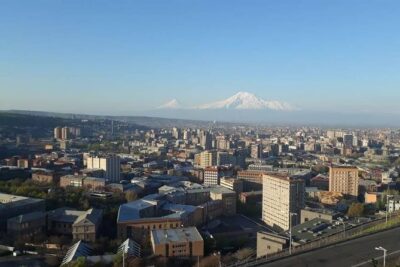
Browse the lists this tour appears in