Reviewed · YEREVAN TOURS
Soviet Yerevan in Motion: Streets, Metro & Local Life
Soviet Yerevan still runs beneath the modern city. This four-hour experience is interesting because it treats the capital as a living place rather than a collection of monuments. I like the mix of walking, metro travel, and a Soviet-style vehicle, and I like the small group of no more than six people. The main drawback is value: at $49, it is fair for a personal experience, but one review felt the price was high for a tour lasting about four hours.
You will look at transport, public spaces, residential districts, markets, and the industrial side of Yerevan. The snacks are a nice touch, especially perashki and ponchik, foods tied to everyday memories rather than formal Armenian cuisine. I would choose this tour for a Monday, when Yerevan’s museums are closed, but I would confirm the exact duration before booking because the activity details refer to both four hours and 4.5 hours.
In This Review
- Key points to know before booking
- Why Soviet Yerevan works best as a living city
- Meeting at the Ministry of Foreign Affairs
- Walking through public spaces and residential districts
- Riding the Yerevan metro
- Seeing Yerevan from a Soviet-style vehicle
- Perashki, ponchik, and a market sweet
- What the guide adds to the experience
- Is $49 a fair price?
- Who should book this four-hour experience?
- Should you book Soviet Yerevan in Motion?
- FAQ
- Where does Soviet Yerevan in Motion begin?
- Where does the tour finish?
- How long does the experience last?
- What languages are available?
- How many people can join the group?
- What transportation is included?
- Are snacks included?
- Is lunch included?
- Is the experience suitable for wheelchair users?
Key points to know before booking
- Small group of six: This is built for questions and conversation, not a large group following a flag through the city.
- Three ways to see Yerevan: You walk, ride the metro, and travel in a Soviet-style vehicle to compare how the city works at street level.
- Everyday Soviet life: The focus is transport, housing, markets, public places, and industry rather than only famous buildings.
- Old-fashioned snacks: Perashki, ponchik, and a market sweet connect the history lesson to food people still enjoy.
- Useful Monday option: The tour can fill a day when Yerevan’s museums are closed.
- Some physical mobility required: It is not suitable for wheelchair users, and the mix of walking, metro travel, and vehicle transfers may be tiring for some people.
Why Soviet Yerevan works best as a living city
Yerevan is often presented through grand squares, pink stone buildings, churches, and sweeping views. Those sights matter, but they do not fully explain how people lived during the Soviet period or how that era still shapes the city.
This experience takes a different route. You look at the systems behind daily life: how people moved around, where they bought food, how residential areas were arranged, and how public spaces reflected the priorities of the Soviet state.
That approach gives the tour a useful sense of purpose. You are not simply checking off old buildings. You are asking why the city looks and functions as it does.
The tone also seems more personal than formal. With a maximum of six people, you have room to stop for questions and follow a point that catches your attention. If you enjoy conversation and context, that is a major advantage. If you prefer a fast list of sights, it may feel less direct.
The subject has an unusual emotional edge. One review described the experience as melancholic and nostalgic, noting that the Soviet legacy remains real in Yerevan even though it can feel less obvious than in some other former Soviet capitals. That is a useful warning. This is not a theme-park trip into the past. The period is recent, and its effects remain part of ordinary Armenian life.
More things to do in Yerevan:
- Group Tour: Garni, Symphony of Stones, Geghard, Lavash Baking
★ 5.0 · 1,042 reviews - Group Tour: Lake Sevan (Sevanavank), Dilijan (Goshavank, Haghartsin)
★ 5.0 · 1,036 reviews - Khor Virap, Noravank and Birds’ Cave Trip with Wine Tasting
★ 4.8 · 845 reviews
Meeting at the Ministry of Foreign Affairs
The starting point is the Ministry of Foreign Affairs. You should look for the guide holding a Soviet Armenia flag.
That meeting detail is simple but important. The flag gives you a clear visual marker in a city where a busy public starting point can otherwise be confusing. You do not receive hotel pickup, so plan your route to the meeting place ahead of time.
The first section helps set the frame for the rest of the morning or afternoon. A review describes beginning around Republic Square, with history and local details before moving into less familiar parts of the city. The exact route may vary, but the structure is clear: begin with a central reference point, then use the streets and transport network to see how Soviet Yerevan extended beyond the postcard center.
I would arrive with a few questions ready. Ask about housing, work, transport, food, or what changed after independence. A small group makes these questions more useful because the guide has time to answer properly.
Walking through public spaces and residential districts
The walking section is where the tour moves from broad history to physical evidence. You may see public areas, residential districts, and places where Soviet planning remains easy to read.
The value here is not only architectural. Residential zones reveal how ordinary life was organized. Public spaces show how the city encouraged people to gather, pass through, or use shared facilities. Industrial buildings and infrastructure point to the economic ambitions of the period.
The tour description uses the phrase industrial might, and that gives you a good sense of its mood. You are not being led only toward polished façades. You are looking at the scale and purpose of a city built under a system that valued production, transport, public services, and collective life.
One Italian review praised the move from familiar central sights into less obvious areas, including popular districts with a clear Soviet character. That is likely to be the most rewarding part for anyone who has already seen Republic Square and wants something less predictable.
The tradeoff is that the route may not provide a conventional sightseeing checklist. You might pass places that are meaningful because of their function rather than their beauty. Keep your expectations in the right place. This is a city-reading tour, not a grand monument tour.
Wear comfortable shoes and bring cash. The experience includes walking and food stops, but lunch is not included. The supplied information does not give a detailed walking distance, so anyone with mobility concerns should ask for more route information before reserving.
Riding the Yerevan metro
The metro ride is one of the strongest ideas in the experience. A transport system tells you how a city connects its neighborhoods, workplaces, public institutions, and markets.
Here, the metro is not just a quick way to get from one sightseeing stop to another. It helps you understand how people moved through Soviet Yerevan and how that network still forms part of ordinary routines.
The contrast between walking above ground and riding below it should make the city easier to understand. On foot, you notice streets, buildings, markets, and public spaces. On the metro, you experience the practical system that links them.
The activity includes the metro ride, but it does not state which stations you will use or how many stops are involved. That means you should think of the ride as part of the tour’s wider lesson, not as a specialized metro architecture visit.
The metro also adds a little practical variety. Four hours of walking can feel long, especially if the weather is poor. A train journey breaks up the pace and gives you a different view of the city’s structure.
A completely different kind of day:
- Yerevan: Garni, Geghard, Symphony of Stones & Lavash Baking
★ 4.8 · 758 reviews - From Yerevan: Garni, Geghard, & Symphony of Stones Day Trip
★ 4.8 · 687 reviews - Group tour: Khor Virap, Noravank, Areni Winery and Cave
★ 5.0 · 651 reviews - Yerevan: Garni, Geghard, Symphony of Stones & Lavash Baking
★ 5.0 · 589 reviews
Seeing Yerevan from a Soviet-style vehicle

The vehicle section adds another layer. The tour includes transport in a Soviet-style vehicle, allowing you to experience the city in a way that matches its theme.
The available details do not identify the make, model, or exact route, so I would not book this expecting a guaranteed collector’s-car display. Its real purpose is to connect the past with movement through the present-day city.
Traveling by car also lets you cover ground that would be difficult on foot. You can compare the central city with residential and industrial areas without turning the whole experience into a long walk.
For me, this combination is more useful than a tour conducted entirely inside a vehicle. Walking gives you contact with the streets. The metro shows public transport in action. The car supplies the scale and atmosphere of a city shaped by large infrastructure.
The vehicle may be less comfortable than a modern tour van, especially for anyone who needs extra room. Since the group is limited to six, ask the operator about seating if that matters to you.
Perashki, ponchik, and a market sweet
The food stops are small, but they give the tour warmth. You taste perashki, ponchik, and a sweet from a local market.
These are not presented as a full meal. They are simple snacks with strong connections to memory and routine. That makes them a good fit for a tour about daily life. Food can explain a period in a way that dates and political terms often cannot.
Perashki and ponchik are also a practical choice for a short city experience. You get a taste of familiar local foods without losing a large part of the schedule to a restaurant lunch.
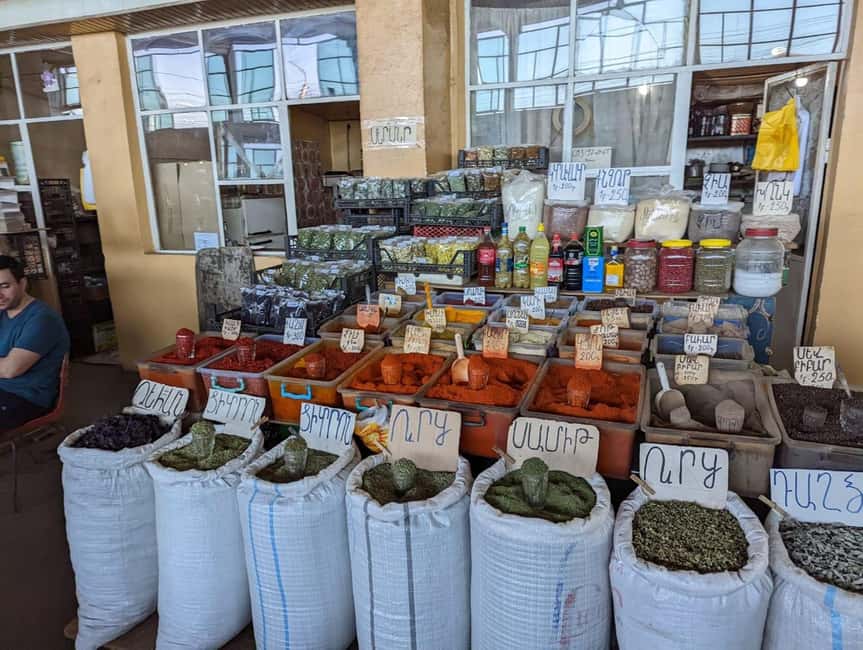
The market stop should be especially useful if you want to see how food shopping fits into the story of the city. The details do not identify the market or specify the sweet, so keep expectations open. The point is the setting and the continuity of the habit, not a formal tasting menu.
Bring cash. It is specifically listed as something to carry, and it is sensible for market purchases or anything beyond the included tasting.
If you have dietary restrictions, ask before booking. The supplied information does not list ingredients or substitutions.
What the guide adds to the experience
A tour about recent history depends heavily on the guide. The guide needs to explain the facts, but also handle memory, nostalgia, and the gap between official history and ordinary experience.
The guide speaks English, and the format is conversation-led. That matters because the best questions on this subject are often personal and practical: How did people commute? What did a typical food stop look like? Which parts of the city changed most? What remains familiar?
One review specifically praised Gevorg as prepared and passionate. That review described the tour as well structured, moving from central Yerevan into more authentic areas, then toward the train station and period-style snacks. Since the assigned guide may vary, you should treat Gevorg’s name as useful feedback about the team rather than a guarantee that he will lead your date.
Another review called the experience informative, fun, and engaging. That combination is important. Soviet history can become dry if it stays at the level of dates and ideology. It can also become shallow if it relies only on nostalgia. The strongest version of this tour appears to connect facts with places, transport, and food.
The six-person limit protects that style. In a larger group, a thoughtful question can slow everything down. Here, it should be easier to talk, ask follow-ups, and reflect on what you are seeing.
Is $49 a fair price?
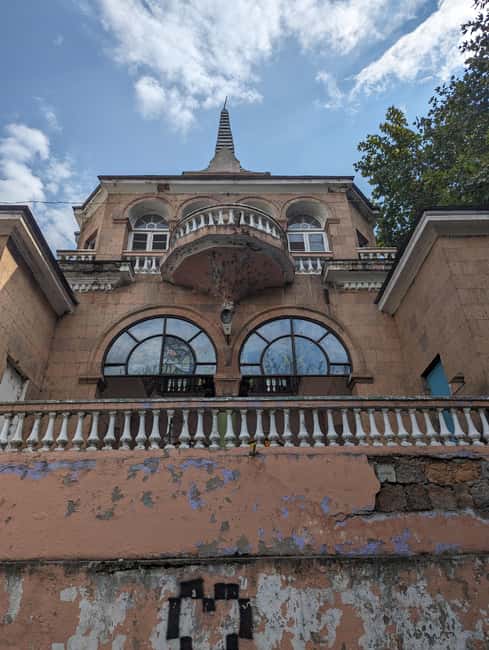
At $49 per person, the price includes a local expert guide, entry fees, three local snack tastings, the Soviet-style vehicle, and the metro ride.
That is a reasonable package if you value interpretation and small-group access. You are paying for the guide’s time, transport variety, and a route designed around a specific idea, not simply admission to a single attraction.
The price looks less attractive if you measure value by the number of major sights visited. This is not a full-day tour, and lunch is not included. One booking description apparently showed eight hours, while the actual tour was reported as four hours. The published activity information describes four hours, with the itinerary also indicating 4.5 hours, so check the starting time and expected finish before you pay.
I would compare it with the cost of arranging metro travel, snacks, and transport yourself. You could spend less independently, but you would not automatically get the route, historical explanation, or access to the same conversation. The tour makes the most sense if Soviet urban life is a central interest, not a minor extra.
Free cancellation up to 24 hours before the start and reserve-now, pay-later booking make the decision less risky. The tour needs a minimum number of participants, and if that number is not reached, you should be contacted with a choice to reschedule or receive a full refund.
Who should book this four-hour experience?
I would recommend it to anyone curious about modern Armenian life, Soviet urban planning, public transport, or the way recent history remains visible in a capital city.
It suits repeat visitors who have already seen Yerevan’s central sights. It also works well for first-time visitors who want a social and practical introduction rather than another museum.
The Monday schedule is useful. Museums in Yerevan are closed on Mondays, so this tour can fill that gap with an experience based outdoors and in the city’s working spaces.
I would be more cautious if you want grand scenery, detailed museum collections, or a long food tour. You should also think twice if you use a wheelchair, since the activity is not suitable for wheelchair users. Anyone uncomfortable with walking, metro travel, or older-style vehicle transport should ask for route details before booking.
Should you book Soviet Yerevan in Motion?
Book it if you want to understand how Yerevan functioned, not just photograph its best-known buildings. The combination of streets, metro, car travel, markets, and nostalgic snacks gives the tour a clear purpose, and the small group should make the experience personal.
Skip it if your main goal is a classic highlights tour or if $49 feels too high for four hours. For the right audience, though, this is one of the more distinctive ways to connect Soviet history with present-day Yerevan. I would choose it on a Monday, carry cash, wear practical shoes, and confirm the exact duration before setting the rest of the day’s plans.
FAQ
Where does Soviet Yerevan in Motion begin?
The experience begins at the Ministry of Foreign Affairs in Yerevan. Look for the guide holding a Soviet Armenia flag.
Where does the tour finish?
The tour finishes at Diana Abgar Park.
How long does the experience last?
The advertised duration is four hours. The itinerary information also refers to 4.5 hours, so confirm the precise timing when checking availability.
What languages are available?
The tour is conducted in English with a live guide.
How many people can join the group?
The group is limited to a maximum of six participants.
What transportation is included?
The experience includes a metro ride and travel in a Soviet-style vehicle. Walking is also part of the route.
Are snacks included?
Yes. The tasting includes perashki, ponchik, and a sweet from a local market.
Is lunch included?
No. Lunch is not included.
Is the experience suitable for wheelchair users?
No. The activity is listed as not suitable for wheelchair users.
Just added in Yerevan
- YerevanCard: 3-Day City Pass★ 5.0 · 1 review
- Yerevan: Walking Tour With an Architect
- Yerevan: Museum of Illusions Entry Ticket★ 5.0 · 3 reviews
- Yerevan: Urban Hike through Aygestan and Old Nork★ 5.0 · 1 review
- Yerevan City Tour: Discover an Old and New Yerevan★ 5.0 · 2 reviews
- Yerevan: Brandy Tasting Experience with Local Delicacies★ 5.0 · 1 review
- Wine, Jazz and Magic: A Night at Malkhaz Jazz Club★ 5.0 · 2 reviews
- The Stalin car Yerevan city tour Armenia★ 5.0 · 2 reviews
Yerevan Tours, compared.
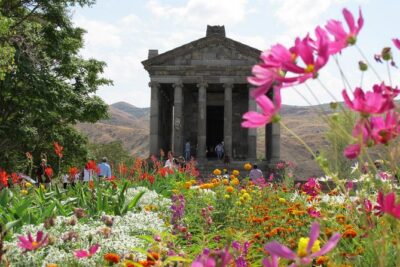
Garni, Symphony of Stones, Geghard, Lavash Baking
Read our review →
Lake Sevan (Sevanavank), Dilijan (Goshavank, Haghartsin)
Read our review →
Khor Virap, Noravank and Birds’ Cave Trip with Wine Tasting
Read our review →
Garni, Geghard, Symphony of Stones & Lavash Baking
Read our review →
Garni, Geghard, Symphony of Stones & Lavash Baking
Read our review →