Reviewed · TOURS
Multi-Day Winter Sightseeing Tour in Armenia
Winter gives Armenia a quieter face. This two-day private tour links pagan temples, cliffside monasteries, a ski resort, Lake Sevan, Mount Ararat viewpoints, wine country, and ancient caves in one well-planned route. I especially like the chance to see Garni and Geghard with fewer crowds, and I like the freedom to adjust the plan with guide Hayk, who is praised for his energy, humor, patience, and strong grasp of Armenian culture.
The main drawback is the pace. You cover a great deal of ground in about two days, and the route includes cold outdoor stops, stairs, and uneven surfaces. Accommodation and meals are not included, so the $380 price covers the private vehicle, guide, transport, WiFi, heating, water, and wine tasting rather than a complete holiday package.
In This Review
- Five useful things to know before booking
- What $380 buys you in two winter days
- Day one begins with Garni Temple
- Geghard explains Armenia in stone
- Tsaghkadzor brings a change of pace
- Sevanavank closes the first day with a view
- Khor Virap puts Mount Ararat in view
- Noravank contrasts red rock and snow
- Areni adds wine to the route
- The Bird Cave connects archaeology and wine
- Why the guide may shape your whole trip
- Winter planning, pace, and physical effort
- Who should book this Armenia tour?
- Should you book it?
- FAQ
- How long does the tour last?
- What is included in the $380 price?
- Are meals and accommodation included?
- Can I add stops or change the route?
- Are skiing and other winter sports included?
- What physical fitness level is required?
Five useful things to know before booking
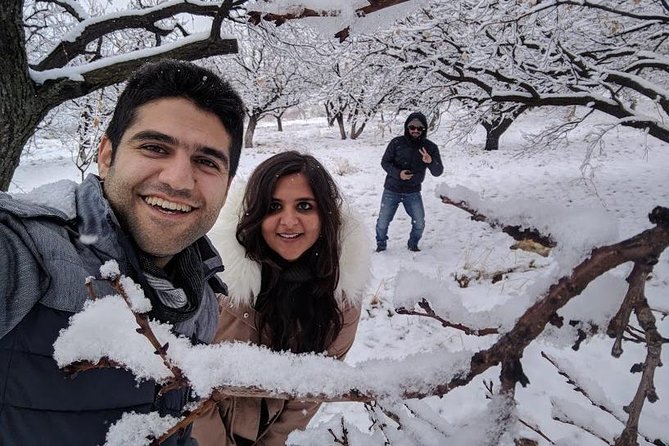
- Garni and Geghard begin the cultural side of the trip: One is Armenia’s only surviving pagan temple in the region, while the other is a UNESCO-listed monastery partly carved from rock.
- Tsaghkadzor adds winter fun: You can use this stop for sightseeing or discuss skiing and other winter activities, though those costs are extra.
- Lake Sevan gives you the postcard view: Sevanavank sits above the lake on the Sevan Peninsula, with a fine winter setting around it.
- Day two shifts south into wine country: Khor Virap, Noravank, Areni, and the Bird Cave create a strong mix of faith, scenery, archaeology, and food culture.
- Hayk is a major part of the appeal: His warm style, punctuality, flexibility, stories, music, and jokes have earned an unusually strong record of five-star feedback.
- The private format helps with a busy route: Only your group participates, and you can ask about adding stops or changing the start and end point.
What $380 buys you in two winter days
At $380 per person, this is not the cheapest way to see Armenia. It is also not a simple transfer between monuments. The price pays for a private, air-conditioned vehicle, private transport, an English-speaking guide, onboard WiFi, heating, bottled water, and a wine tasting.
That matters in winter. You may be crossing several parts of Armenia in cold weather, and having a warm vehicle waiting at each stop is far more useful than it sounds. WiFi can help with messages, maps, and photos, while a private car gives you more control than a fixed group coach.
The tour does not include meals, lodging, ski equipment, ski passes, or other winter sports. You need to arrange your own accommodation and food. Since the tour can begin and end anywhere in Armenia, it may work well as part of a wider trip, but you should confirm the exact route and meeting plan before booking.
The value is strongest for a small group that wants a guide and private transport. If you are happy using buses, arranging separate day trips, and researching every site yourself, you could spend less. If you want two full days with the practical work handled for you, the price is easier to justify.
More winter trips in Yerevan:
- Tsaghkadzor & Lake Sevan։ Winter Day Tour from Yerevan
★ 5.0 · 50 reviews - Winter Private Tour – Tsaghkadzor Ropeway, Lake Sevan – 5-6 hours
★ 5.0 · 1 review - Tsaghkadzor & Lake Sevan։ Winter Day Tour from Yerevan
★ 4.7 · 3 reviews
Day one begins with Garni Temple
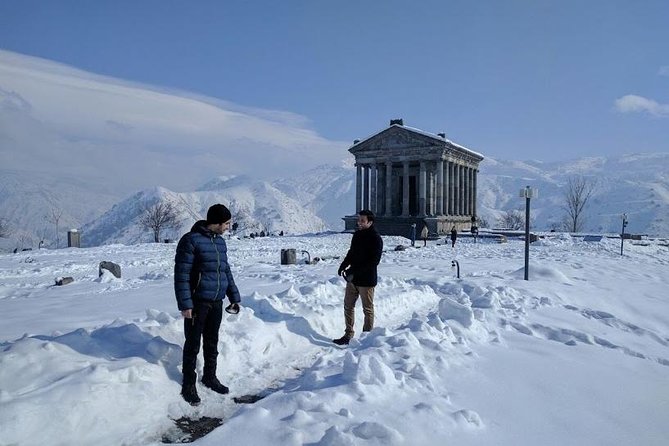
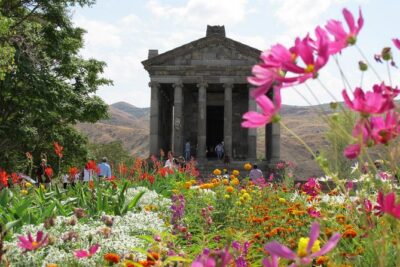
The first stop is Garni Temple, the only surviving pagan temple in the whole region from the first century. Its compact size makes it easy to visit in about 40 minutes, but its setting gives it more weight than the visit time suggests.
Winter is a good season for Garni. The grounds are likely to feel calmer, and snow or bare hills can give the stone columns a sharp, clean look. The temple is not included in the admission price, so bring a little extra for entry.
I would ask Hayk to explain how Garni fits into Armenia’s older religious story before the country adopted Christianity. That context helps you see the site as more than a photogenic building. You are looking at a rare survivor from a very different period of Armenian culture.
Forty minutes is enough for the main visit, but not for a long walk or a slow photo session. If Garni is your top priority, ask about extending the stop and trimming time somewhere else.
Geghard explains Armenia in stone
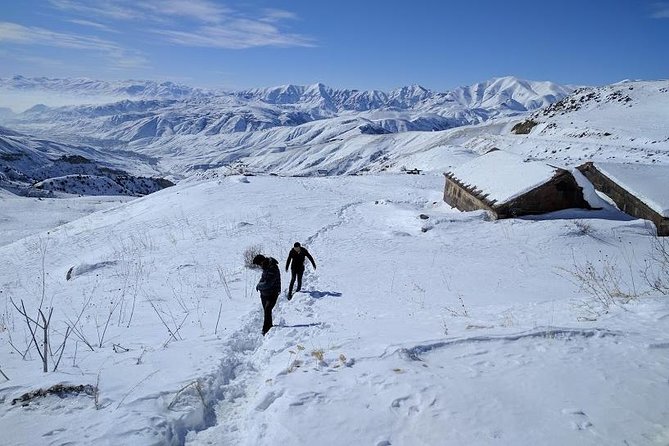
From Garni, the route continues to Geghardavank, also called the Spear Monastery. The visit lasts about 50 minutes, and admission is free.
Geghard is one of Armenia’s UNESCO-listed sights. Parts of the monastery were cut directly into the rock, giving the complex a powerful, enclosed feeling. It is easy to make loose comparisons with Petra, but that would miss what makes Geghard distinct. The site is tied to Armenian Christian tradition, and the rock-cut chambers feel closely connected to the surrounding cliffs.
Winter can make the visit especially striking. Snow against dark stone brings out the shape of the monastery, though cold weather also means you should wear shoes with a good grip. The route requires a moderate level of fitness, and the ground may be slippery.
This is one of the places where a guide adds real value. Hayk’s role is not just to point at walls and name dates. His reviews describe a guide who explains culture, history, music, and local customs in a relaxed way. That style should help make a complex religious site easier to understand.
Tsaghkadzor brings a change of pace
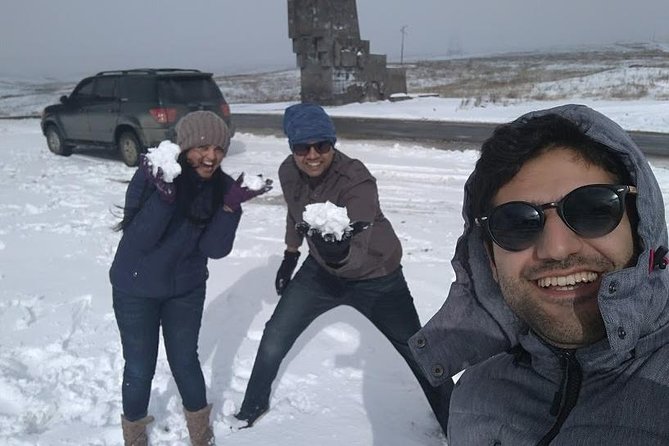
After two major cultural sites, Tsaghkadzor gives the first day a different rhythm. The stop lasts about an hour and a half in Armenia’s best-known ski resort town.
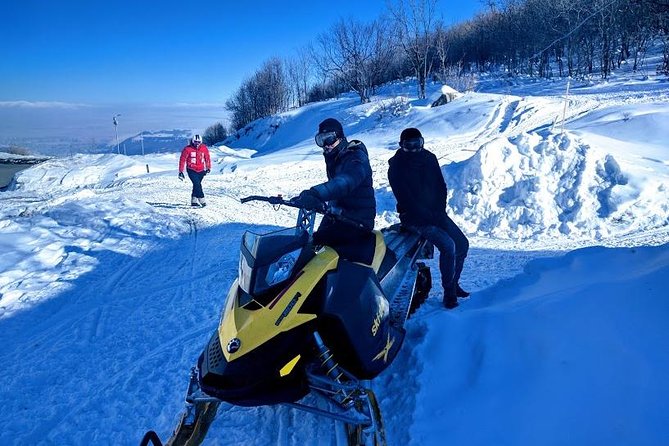
The tour includes the town visit, but skiing and winter sports are not included. That distinction is important. You can use the time for winter scenery and a break from church interiors, or you can discuss adding ski time and pay the related costs yourself.
Tsaghkadzor may be the most flexible stop of the day. If you want active winter fun, it is the obvious place to ask about it. If you do not ski, the stop still gives you a chance to enjoy a mountain resort atmosphere, take photos, and warm up before continuing.
The tradeoff is time. A full ski session would not fit neatly into the listed schedule without changing the day. Tell Hayk before departure if skiing is a priority, because the route is explicitly customizable.
More things to do in Yerevan:
- Group Tour: Garni, Symphony of Stones, Geghard, Lavash Baking
★ 5.0 · 1,042 reviews - Group Tour: Lake Sevan (Sevanavank), Dilijan (Goshavank, Haghartsin)
★ 5.0 · 1,036 reviews - Khor Virap, Noravank and Birds’ Cave Trip with Wine Tasting
★ 4.8 · 845 reviews - Yerevan: Garni, Geghard, Symphony of Stones & Lavash Baking
★ 4.8 · 758 reviews
Sevanavank closes the first day with a view
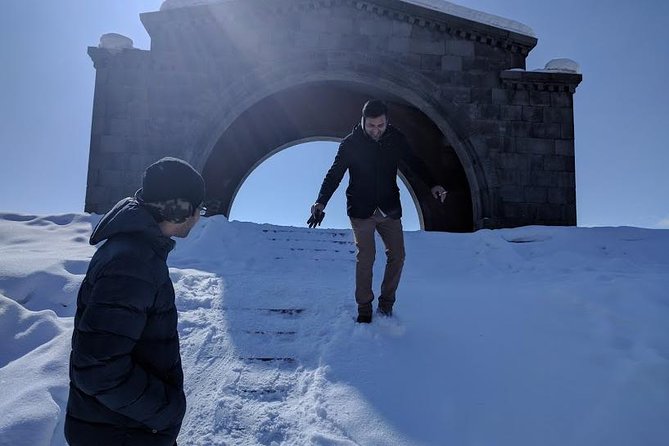
The final stop on day one is Sevanavank, a monastery on top of the Sevan Peninsula. The visit lasts about 50 minutes and admission is free.
The reward here is the view. From the monastery, you see Lake Sevan spreading beyond the peninsula, with winter weather often giving the scene a spare, dramatic quality. The famous image is the monastery above the lake, but the setting is just as important as the buildings.
Expect stairs and outdoor walking. In winter, wind near the lake can make the stop feel colder than the temperature suggests, so keep gloves and a warm layer handy. The visit is not difficult for most people with moderate fitness, but it is not a stay-in-the-car viewpoint either.
This is a fine place to end the first day because it offers a broad natural view after a day focused on monuments. If the weather is poor, visibility may limit the payoff. The private format helps here, since you can ask whether a little flexibility is possible.
Khor Virap puts Mount Ararat in view
Day two heads south to Khor Virap, one of the best places to see Mount Ararat. The stop lasts about 40 minutes and admission is free.
Khor Virap is also known as the cradle of Armenian Christianity. That gives the site both religious importance and visual power. On a clear day, the mountain view can be the image you remember longest, but conditions are never guaranteed. Cloud, haze, or winter weather can hide Ararat.
Keep your expectations practical. Forty minutes gives you time for the monastery, the main viewpoint, and photos, not an unhurried study of every part of the complex. The stop is still well chosen because it begins the second day with a strong sense of place.
A guide can help connect the monastery to Armenia’s conversion to Christianity and explain why Mount Ararat carries such weight in Armenian identity. This is a stop where a few well-told stories can make the visit far more meaningful.
Noravank contrasts red rock and snow
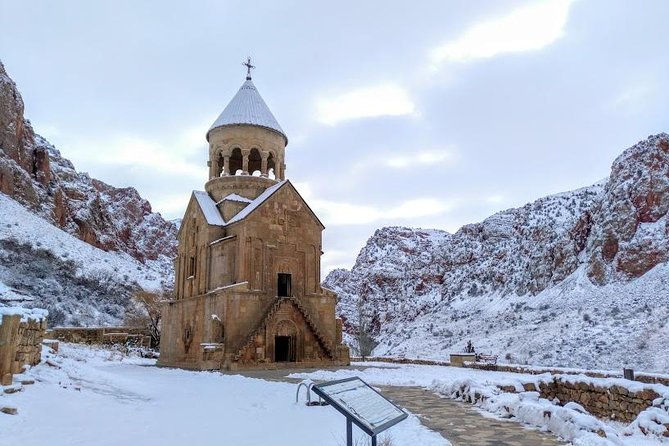
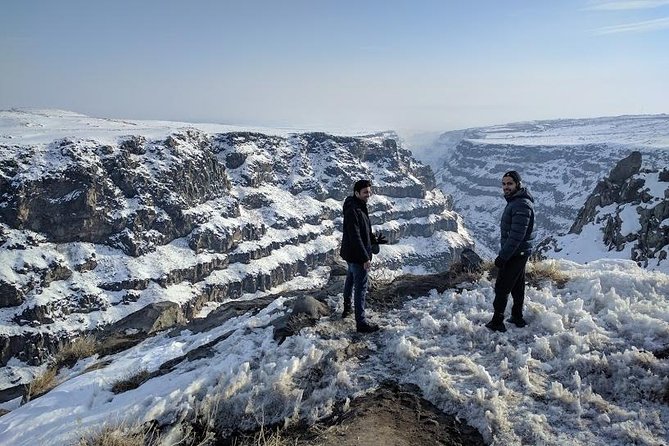
Noravank is one of the most attractive stops on the route. The monastery sits amid red mountains, and in winter the contrast between pale snow and warm-colored rock can be striking.
The visit lasts about 40 minutes and admission is free. The setting does much of the work, but the monastery itself deserves attention. Look closely at the carved stone and the way the buildings fit the narrow surroundings.
The short visit means you should stay focused. Take time for the view, then ask Hayk to explain the site rather than trying to absorb every detail alone. His reputation for making stops entertaining and personal is particularly useful on a compact schedule.
Noravank also shows why winter is not simply an off-season compromise. Snow changes the color and mood of the area, and fewer people can make the monastery feel more peaceful. The downside is that winter roads and weather may affect comfort, so warm clothing and sensible footwear are essential.
Areni adds wine to the route
Areni Wine Factory is a cozy stop after the monasteries and mountain roads. The visit lasts about 40 minutes, and the wine tasting fee is included.
This is a simple but smart part of the plan. Armenia’s religious sites can feel solemn, while Areni gives you time to sit, taste local wine, and talk with your guide about food and drink. It also provides a warm indoor pause when the weather outside is cold.
The tasting is included, but meals are not. Do not treat the winery visit as lunch unless you have confirmed that separately. If you want more food time, ask Hayk about adding a meal stop as part of the custom plan.
The winery is best for people who enjoy local products and a relaxed cultural stop. If you do not drink wine, ask in advance what alternatives may be available. The supplied details confirm the tasting, but not other drink choices.
The Bird Cave connects archaeology and wine
The final listed stop is T’rchuneri, or Bird Cave, in the Areni area. The visit takes about 30 minutes. Admission is not included.
This cave is important because excavations uncovered the oldest leather shoe and a wine press dating back 6,100 years. Those finds give the day a strong ending: after seeing a modern winery, you visit a place linked to some of the oldest known evidence of winemaking and footwear.
Thirty minutes is enough for an introduction, but this is not a long archaeological expedition. You should expect a short visit rather than a full museum-style presentation. Ask about the current access conditions and entry fee when you arrange the tour.
The cave also reinforces the range of this two-day route. You are not simply checking off churches. You are moving through Armenia’s pagan past, Christian traditions, mountain recreation, lake scenery, wine culture, and early human history.
Why the guide may shape your whole trip
The strongest praise connected to this tour centers on Hayk. The feedback describes him as punctual, accommodating, funny, highly energetic, and deeply attached to Armenia. People also valued his help with restaurants, music, history, and trip planning.
One especially useful quality is flexibility. Hayk has helped people build longer trips around their interests, and this two-day route can be adjusted with added stops or changes. That is valuable because the standard plan is full. You need someone who can judge when to linger and when to move on.
His personal style also matters. Several people describe feeling as if they were traveling with a friend rather than following a formal guide. He is praised for keeping children engaged, sharing jokes, and even joining in music games such as antakshari.
That warmth will not suit everyone equally. If you prefer silent drives and independent sightseeing, a highly involved guide may feel like too much. If you want conversation, local stories, and help making decisions on the road, Hayk appears to be a major reason to choose this tour.
The information also names Rima in connection with a very positive multi-day experience. If more than one guide may operate the tour, confirm who will lead your specific departure.
Winter planning, pace, and physical effort
Start time is 9:00 a.m. Pickup is offered, and the tour can begin and end anywhere in Armenia. Confirm the exact pickup point and return arrangement before you go, especially if you are not staying in central Yerevan.
The private vehicle has air conditioning, heating, and WiFi. Those features are practical rather than decorative. You will spend significant time moving between stops, and a warm car can make a cold-weather sightseeing day much more pleasant.
Pack sturdy shoes, a warm coat, gloves, and layers. The route includes temple grounds, monastery steps, viewpoints, and a cave visit. A moderate fitness level is required, and winter surfaces may be uneven or slippery.
The schedule is active. You should be ready for four stops on the first day and four on the second. The listed stop times are useful guides, but driving time between locations is not provided, so you should not assume every stop can be extended without changing the plan.
Who should book this Armenia tour?
I would choose this tour if you have limited time, want to see several major sights, and value a private guide over independent transport. It suits couples, families, and small private groups that want a flexible route with both cultural sites and winter scenery.
It is also a good fit if you want more than churches. Garni supplies pre-Christian Armenia, Geghard and Khor Virap bring Christian heritage, Tsaghkadzor adds winter activity, Sevanavank supplies the lake view, and Areni connects wine with archaeology.
I would think twice if you want long hikes, leisurely meals, extensive skiing, or a slow visit at each monument. The route is ambitious, and food, lodging, admission at Garni and the Bird Cave, and winter sports require extra planning and payment.
With free cancellation up to 24 hours before the start time, you have some flexibility if plans change. If the minimum number of participants is not met, the operator offers another date or experience, or a full refund. Since this is a private activity for your group, confirm the exact party size and arrangements before paying.
Should you book it?
Book this tour if you want a well-filled winter introduction to Armenia with private transport and a personable guide. The best reasons are the quiet seasonal setting, the range of sights, the included wine tasting, and Hayk’s record of warm, flexible service.
Do not book it expecting an all-inclusive holiday or a slow retreat. You will need to arrange meals and accommodation, pay some entrance fees, and accept a brisk pace. For a small group that wants Armenia’s major winter highlights in two days, the $380 price offers solid value, especially when comfort and local guidance matter.
FAQ
How long does the tour last?
The tour lasts approximately two days. Day one includes Garni, Geghard, Tsaghkadzor, and Sevanavank. Day two includes Khor Virap, Noravank, Areni Wine Factory, and T’rchuneri Bird Cave.
What is included in the $380 price?
The price includes an air-conditioned vehicle, private transportation, WiFi, heating, an English-speaking guide, a wine tasting fee, and a bottle of water.
Are meals and accommodation included?
No. You arrange and pay for accommodation and meals yourself.
Can I add stops or change the route?
Yes. The tour is customizable, and you can discuss additional stops or changes with the guide. It can also begin and end anywhere in Armenia.
Are skiing and other winter sports included?
No. Skiing, equipment, and other winter sports are not included. Tsaghkadzor is included as a sightseeing stop, and you can discuss winter activities with the guide.
What physical fitness level is required?
A moderate level of physical fitness is recommended. The route includes outdoor sightseeing, monastery steps, and uneven winter surfaces.
Just added in Yerevan
- YerevanCard: 3-Day City Pass★ 5.0 · 1 review
- Yerevan: Walking Tour With an Architect
- Yerevan: Urban Hike through Aygestan and Old Nork★ 5.0 · 1 review
- Yerevan: Museum of Illusions Entry Ticket★ 5.0 · 3 reviews
- Yerevan: Brandy Tasting Experience with Local Delicacies★ 5.0 · 1 review
- Yerevan City Tour: Discover an Old and New Yerevan★ 5.0 · 2 reviews
- Wine, Jazz and Magic: A Night at Malkhaz Jazz Club★ 5.0 · 2 reviews
- The Stalin car Yerevan city tour Armenia★ 5.0 · 2 reviews
Tours, compared.
Garni, Symphony of Stones, Geghard, Lavash Baking
Read our review →
Lake Sevan (Sevanavank), Dilijan (Goshavank, Haghartsin)
Read our review →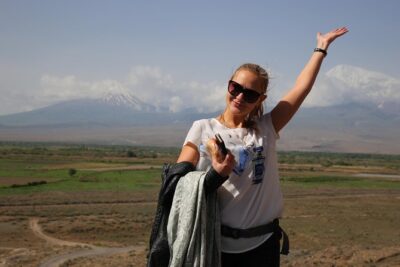
Tsaghkadzor (Kecharis, Ropeway), Lake Sevan, Trout barbecue treat
Read our review →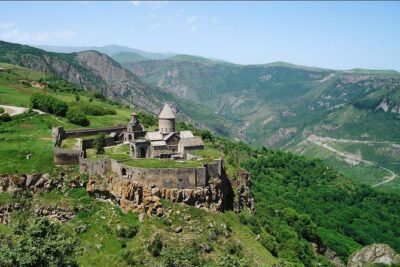
Khor Virap, Noravank, Tatev monasteries (wayback on Ropeway)
Read our review →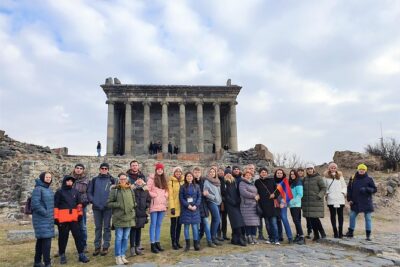
Garni pagan temple, Geghard monastery, Lake Sevan, Sevanavank
Read our review →
Amberd, Aragats, Lake Kari, Saghmosavank, Alphabet
Read our review →