
Reviewed · 2-DAY EXPERIENCES
Group Tour: Must see of Georgia in 2 days from Yerevan
Two countries, one packed weekend. This tour makes Georgia practical from Yerevan without a rental car, combining Tbilisi, ancient Mtskheta, Jvari Monastery, Rabati Castle, and Vardzia in two demanding days. I like the air-conditioned transport and the fact that a 4-star hotel, breakfast, lunch, water, pastries, guide, and admission tickets are included.
I also like the variety. You move from Georgian church architecture and old capital cities to a cave monastery and a restored fortress with Christian and Islamic features. The main drawback is the pace: this is a full program with border formalities, long road sections, and limited time at each sight.
The tour costs $186 per person, which is a fair package price when you count the hotel, two lunches, breakfast, transport, guide service, and entrance to Vardzia. Still, you should treat this as a highlights trip, not a slow cultural stay in Georgia.
In This Review
- The five details that shape the experience
- Why this Yerevan to Georgia trip is useful
- Jvari Monastery and the view over Mtskheta
- Mtskheta, Georgia’s first Christian capital
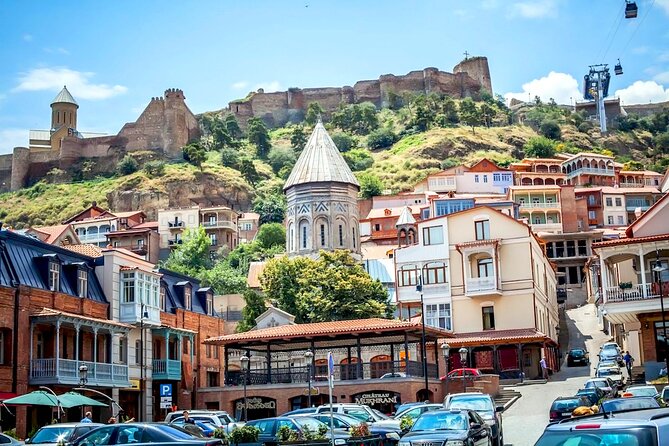
- Tbilisi Old Town in a single hour
- Rabati Castle and Akhaltsikhe’s borderland story
- Vardzia, the tour’s most unusual stop
- Meals, hotel, and what the $186 covers
- The pace, coach, and border practicalities
- Who will enjoy this two-day Georgia tour?
- Should you book it?
- FAQ
- Where does the tour start?
- What time does the tour begin?
- Where does the tour end?
- How long does the tour last?
- Is hotel accommodation included?
- Which meals are included?
- Is transportation provided?
- Are entrance tickets included?
- Do I need to check visa requirements?
The five details that shape the experience
- Jvari and Mtskheta come first: You begin with Georgia’s religious center and first Christian capital before reaching Tbilisi.
- Tbilisi gets a focused walking tour: The Old Town visit lasts about one hour, enough for an introduction but not a full city tour.
- Vardzia is the dramatic finale: The 12th-century cave town includes tunnels, carved rooms, a monastery, and remains of a large former settlement.
- One night is included in a 4-star hotel: Breakfast is covered, but dinner is your responsibility.
- The group may reach 49 people: This keeps the price down, though movement and guide access may feel less personal.
- Visa rules need checking before departure: Some nationalities may need a Georgian visa or an additional entry visa to return to Armenia.
Why this Yerevan to Georgia trip is useful
Georgia is close to Armenia, but crossing the border and reaching the main sights can be awkward without your own vehicle. This two-day trip solves the transport problem in one sweep. You meet at Hyur Service, 96 Nalbandyan Street in central Yerevan, at 8:00 a.m., then travel in an air-conditioned vehicle with a guide.
That arrangement matters because the route is not simply Yerevan to Tbilisi and back. The tour reaches western and southern parts of Georgia as well, including Akhaltsikhe and Vardzia. Organizing that route independently would require careful transport planning and at least one overnight stay.
The group size can reach 49 people, so you should expect a coach-style outing rather than a private tour. The guide provides English and Russian consecutively, and the tour may operate with a multilingual guide. If you prefer quiet, flexible sightseeing, this may feel busy. If you value a fixed route and a lower all-in price, the format works well.
The schedule is also weather-proof in spirit. The tour operates in all weather, so bring suitable clothing and shoes. You will want to be ready for outdoor viewpoints, historic stone surfaces, and the walking required at Vardzia and the old towns.
More things to do in Yerevan:
- Group Tour: Garni, Symphony of Stones, Geghard, Lavash Baking
★ 5.0 · 1,042 reviews - Group Tour: Lake Sevan (Sevanavank), Dilijan (Goshavank, Haghartsin)
★ 5.0 · 1,036 reviews - Khor Virap, Noravank and Birds’ Cave Trip with Wine Tasting
★ 4.8 · 845 reviews
Jvari Monastery and the view over Mtskheta
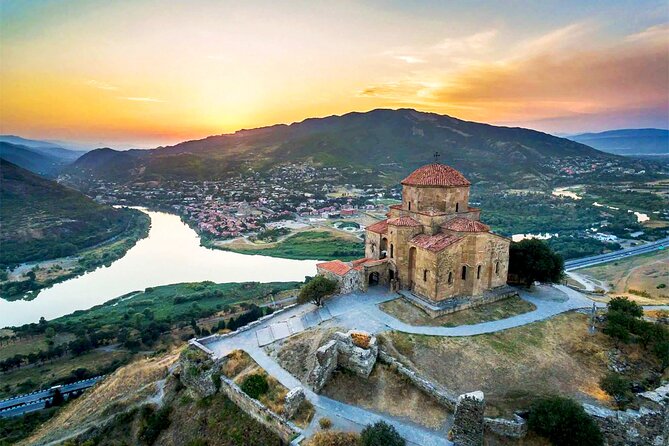
Your first stop is Jvari Church, a 7th-century monastery above Mtskheta. The site belongs to the UNESCO-listed Historical Monuments of Mtskheta, and its location gives you a useful first look at the old Georgian capital and the meeting point of the Kura and Aragvi rivers.
The religious story here reaches back to Saint Nino, the preacher traditionally associated with Georgia’s conversion to Christianity. A cross was erected on this spot, and the monastery later took its name from the Holy Cross.
You have about 40 minutes at Jvari. That is enough to see the church, take in the setting, and hear the main historical explanation from the guide. It is not enough for an unhurried study of every architectural detail, so stay close to the guide’s meeting instructions and use the short visit wisely.
The strongest part of Jvari is its setting. The monastery is not presented as an isolated building. Its position above the rivers helps explain why Mtskheta became such an important religious and political center. This is one of the tour’s best early stops because it gives meaning to the next visit.
Mtskheta, Georgia’s first Christian capital
From Jvari, the group continues to Mtskheta, described as the first capital of Christian Georgia. The town sits where the Kura and Aragvi rivers meet and is also part of the UNESCO-listed historic area.
You have about an hour here. I would use it to listen carefully to the guide first, then spend the remaining time looking at the town’s historic core and religious monuments. The stop is short, but it adds essential context: Georgia’s Christian identity is not just a modern theme for museums and churches. It is tied to the country’s earliest capital and to places still used and visited today.
Mtskheta is a good contrast with Tbilisi. Instead of a large capital, you get a smaller historic setting where the relationship between rivers, settlement, and religion is easier to understand. The tradeoff is that an hour passes quickly. You should not expect a detailed tour of every monument or much free time for wandering.
The morning also establishes the tour’s rhythm. Each stop has a clear purpose, but the schedule keeps moving. That is helpful if you want to see a lot in a short stay. It is less suitable if you like to linger over lunch, photographs, or quiet church interiors.
Tbilisi Old Town in a single hour
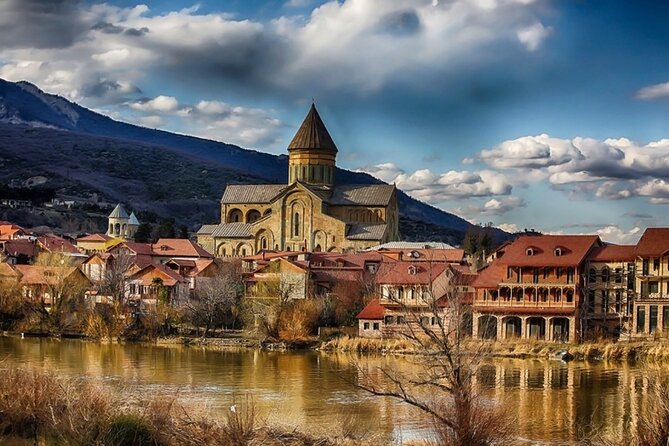
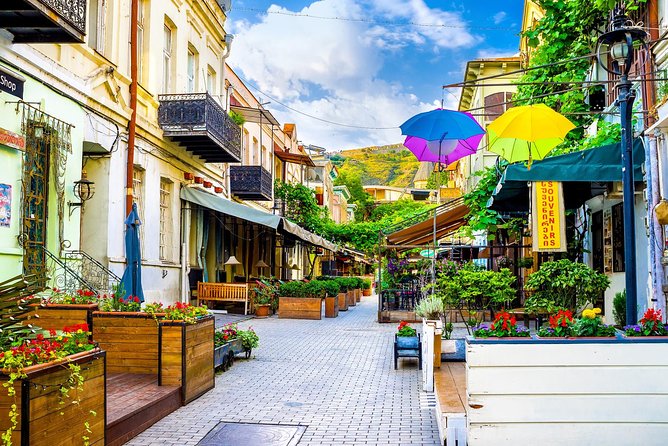
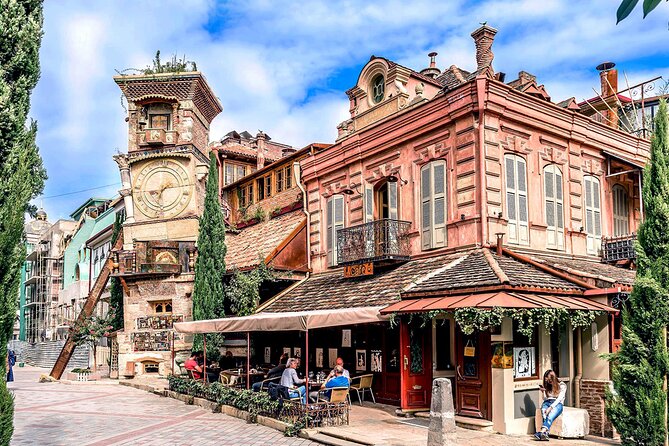
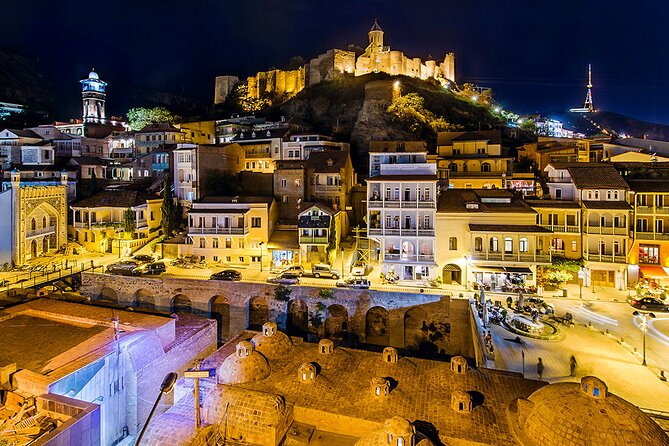
The first day ends with a walking visit through Old Town Tbilisi. The scheduled time is about one hour, and the emphasis is on seeing the area and learning about its history from the guide.
That short walk gives you an introduction rather than a full city experience. Tbilisi has enough layers to occupy several days, but this tour uses the capital as one part of a wider Georgia sampler. You will get a sense of the old streets and the city’s heritage, then return to the hotel for the night.
The bilingual guide format is worth keeping in mind here. Information is delivered in English and Russian consecutively, which means explanations may take longer than on a one-language tour. That is useful for a mixed-language group, but it can reduce the time available for walking and independent exploration.
You should also be realistic about what one hour can do. This is not a chance to cover all of Tbilisi, visit several museums, or settle into the city’s evening life. It is a compact orientation. If Tbilisi is your main reason for visiting Georgia, you will probably want a separate longer stay later.
Still, the stop has value. You see the capital after visiting the country’s religious center, so the guide can connect old Georgia with modern urban life. The contrast between Mtskheta and Tbilisi is one of the most effective parts of the first day.
A completely different kind of day:
- Yerevan: Garni, Geghard, Symphony of Stones & Lavash Baking
★ 4.8 · 758 reviews - From Yerevan: Garni, Geghard, & Symphony of Stones Day Trip
★ 4.8 · 687 reviews - Group tour: Khor Virap, Noravank, Areni Winery and Cave
★ 5.0 · 651 reviews - Yerevan: Garni, Geghard, Symphony of Stones & Lavash Baking
★ 5.0 · 589 reviews
Rabati Castle and Akhaltsikhe’s borderland story
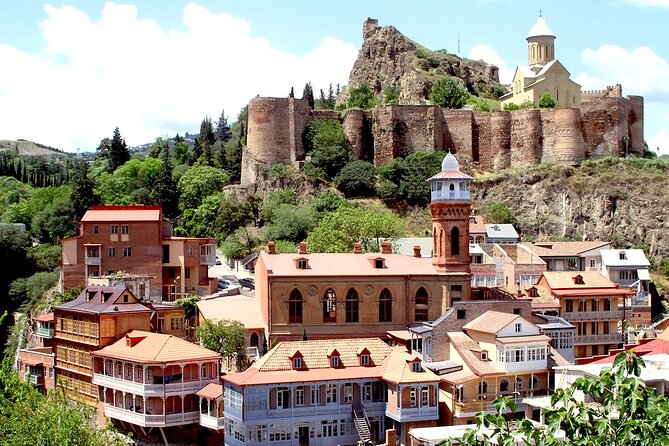
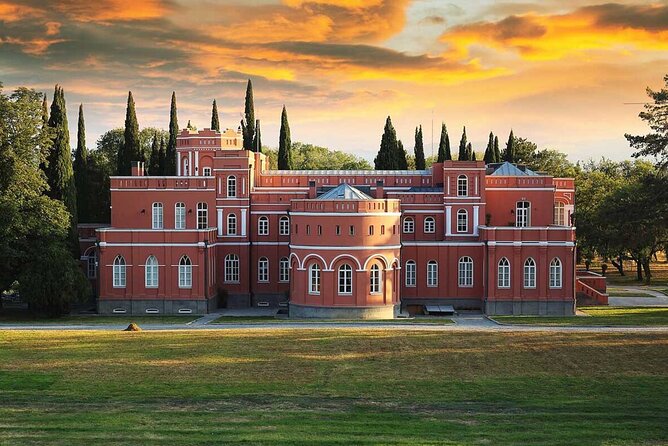
Day two moves toward southern Georgia and the town of Akhaltsikhe. Rabati Castle sits beside the Potskhovi River and dates back to the 9th century. The fortress was built on high ground as a defensive site, making it visible from much of the town.
The name Akhaltsikhe means new fortress, and the settlement first appears in medieval chronicles in the 12th century. Rabati later expanded under the Jaqeli dynasty and served as its residence. The complex includes more than defensive walls. Nearby features include a history museum, an Orthodox church, a mosque, restaurants, cafés, hotels, and a marriage hall.
This mix is what makes Rabati especially useful on a short tour. You are not looking only at a castle. You are seeing how power, religion, and regional defense overlapped in southern Georgia. The presence of both a mosque and an Orthodox church also reflects the area’s changing rulers and cultural connections.
The castle underwent large-scale renovation in 2011 and 2012. That is important to know before you arrive. Parts of the site may feel restored rather than untouched, so visitors looking for a completely raw medieval ruin should adjust their expectations. The benefit is a more accessible complex that can be explored during the one-hour stop.
As with Mtskheta, the time is enough for a guided overview and basic exploration. You will need to choose what interests you most: the fortress setting, the religious buildings, the museum area, or the general town view.
Vardzia, the tour’s most unusual stop
Vardzia is the strongest reason to choose this particular route. The 12th-century cave town is built into the slopes of Erusheti Mountain at about 1,300 meters above sea level, with the complex rising roughly 100 meters above the foothills.
At its height, Vardzia had as many as 13 floors linked by tunnels. The settlement included living quarters, refectories, barns, wine storage rooms called marani, and libraries. It also had a potable water system and sewerage, details that show this was once a functioning community rather than a small isolated monastery.
You have about 1 hour and 10 minutes at the site, with admission included. That is the longest scheduled visit on the second day, and it needs to be. Vardzia is spread across the rock face, so the visit involves walking and looking carefully at the carved spaces. Wear practical shoes and expect uneven historic surfaces.
The site is now part of the Vardzia Historical Architectural Museum Reserve. Its scale is difficult to appreciate from a quick photograph. You need to look across the mountain face and then examine the rooms and passages up close. The guide can help explain how the complex was organized and why the tunnels mattered.
There is also a physical limit to the visit. Vardzia is not a flat museum with every room reached by an easy path. If you have difficulty with uneven ground or stairs, ask the operator for current practical details before booking. The supplied information confirms that most people can participate, but it does not provide a detailed accessibility description.
The short visit means you should not wander far from the group. Listen for the return time, especially if the guide divides explanations between English and Russian. Vardzia rewards attention, but the schedule does not leave room for getting lost in the rock-cut corridors.
Meals, hotel, and what the $186 covers
At $186 per person, this is best judged as a bundled two-day border-crossing trip rather than a simple sightseeing transfer. The price includes one night in a 4-star hotel, breakfast, two lunches, bottled water, pastries, admission tickets, air-conditioned transportation, and professional guide service.
That is a solid list of inclusions. Hotel and meals remove several costs that can add up quickly during a short international trip. The included lunches also fit the route well, since stopping for a separate meal plan could make the already full schedule even tighter.
Traditional Georgian food is part of the experience, though the available details do not specify the restaurant menus or exact dishes. You should not assume that every meal will suit a particular dietary need. If you have restrictions, ask the operator before departure.
Dinner is not included. Plan for that cost and remember that the schedule may make a long independent evening difficult. The tour also does not include pickup or drop-off at your Yerevan accommodation. You need to reach the Nalbandyan Street meeting point yourself and return there at the end.
The accommodation is a practical feature rather than the main attraction. A 4-star hotel gives you a more comfortable base after a long day, but the hotel’s name and exact location are not provided. Confirmation should include the relevant details.
The pace, coach, and border practicalities
The tour starts at 8:00 a.m. and lasts approximately two days. Exact timings can shift because the stated duration is approximate, and cross-border travel adds variables that a city tour does not have.
Seats are not assigned in advance. If sitting near the front or beside a particular companion matters to you, the booking information does not promise that arrangement. The maximum group size of 49 also means boarding, restroom stops, and regrouping may take time.
The transport is air-conditioned, which is a real advantage on a route covering several Georgian regions. You also receive bottled water and pastries, small provisions that are useful when the schedule is tightly packed.
Check visa rules early. Residents of some countries may need a visa to enter Georgia and possibly another entry visa to return to Armenia. The operator specifically advises checking these details at its office. This is the most important practical issue because a missing document can stop the trip before the sightseeing begins.
Children must be accompanied by an adult. The tour is described as suitable for most people, but the amount of walking at Vardzia and the long two-day schedule should still guide your decision for younger children or anyone who needs frequent rest.
Free cancellation is available if you cancel at least 24 hours before the start time. Changes or cancellations made less than 24 hours before departure are not accepted for a refund.
Who will enjoy this two-day Georgia tour?
I would choose this trip if you are based in Yerevan, have only a weekend, and want a broad first look at Georgia without renting a car. It suits people who prefer a planned route, included meals, and a guide who can connect the sites.
It is especially good for first-time visitors interested in churches, medieval fortifications, old capitals, and unusual historic sites. Vardzia gives the route a memorable centerpiece, while Jvari and Mtskheta add religious and national context.
I would hesitate if your priority is slow travel. One hour in Mtskheta, one hour in Old Town Tbilisi, and one hour at Rabati leave little room for spontaneous stops. The group may also be large, and explanations in two languages can stretch the schedule.
The trip received a 5 out of 5 rating from 73 reviews, with 100 percent marked as recommended. The strongest praise centers on the full program, hotel, meals, and the way a mixed-nationality group can come together during the journey. That feedback matches the tour’s main strength: it packs a great deal into a route that would otherwise take planning.
Should you book it?
Book this tour if you want maximum Georgian history in minimum time and accept a busy schedule. For $186, the combination of transport, hotel, meals, guide, and entrances offers good value, especially without a car.
Skip it if Tbilisi alone deserves your full attention, or if you dislike large groups and fixed departure times. Before paying, confirm your visa requirements, ask for the hotel details, and prepare for walking at Vardzia. If those points work for you, this is a practical and unusually varied way to add Georgia to an Armenia trip.
FAQ
Where does the tour start?
The tour starts at Hyur Service, 96 Nalbandyan Street, Yerevan 0010, Armenia.
What time does the tour begin?
The scheduled start time is 8:00 a.m.
Where does the tour end?
The activity ends back at the meeting point in Yerevan.
How long does the tour last?
The tour lasts approximately two days.
Is hotel accommodation included?
Yes. The package includes one night in a 4-star hotel.
Which meals are included?
Breakfast and two lunches are included. Dinner is not included.
Is transportation provided?
Yes. Transportation is provided in an air-conditioned vehicle.
Are entrance tickets included?
Admission tickets are included, including the ticket for Vardzia.
Do I need to check visa requirements?
Yes. Residents of some countries may need a visa for Georgia or an additional entry visa to return to Armenia. Check your requirements with the operator before departure.
Just added in Yerevan
- YerevanCard: 3-Day City Pass★ 5.0 · 1 review
- Yerevan: Walking Tour With an Architect
- Yerevan: Museum of Illusions Entry Ticket★ 5.0 · 3 reviews
- Yerevan: Urban Hike through Aygestan and Old Nork★ 5.0 · 1 review
- Yerevan: Brandy Tasting Experience with Local Delicacies★ 5.0 · 1 review
- Yerevan City Tour: Discover an Old and New Yerevan★ 5.0 · 2 reviews
- Wine, Jazz and Magic: A Night at Malkhaz Jazz Club★ 5.0 · 2 reviews
- The Stalin car Yerevan city tour Armenia★ 5.0 · 2 reviews
2-Day Experiences, compared.
Tour to Yerevan Sevan Dilijan Armenia from Tbilisi 2 days
Read our review →
2 days and 1 night private tour to Khor Virap, Areni, Noravank, Goris, Tatev.
Read our review →
Garni, Geghard, Sevanavank, Noravank, Tatev, Karahunj/ 2 day tours from Yerevan
Read our review →
2 Day private tour: Khor Virap, Areni, Shaki waterfall, Khndzoresk, Tatev
Read our review →
Browse the lists this tour appears in