Reviewed · TOURS
From South to North: 6-days tour package in Armenia
Armenia rewards curious road-trippers. This six-day private journey links Yerevan, biblical views, medieval monasteries, wine country, mountain towns, and the forested north in one sweeping route. I like the excellent range of sights, from Garni’s pagan temple to Tatev and Lake Sevan, and I like having hotel pickup, an air-conditioned vehicle, WiFi, water, and snacks included.
The route also has a human touch. Driver Tigran received especially warm praise for his care, while another guest highlighted punctual timing, polite service, thoughtful gifts, hotels, food, and the overall smooth running of the trip. The main caution is simple: the schedule is full, and guide service is not included, so you should be comfortable spending long periods on the road and arranging guiding separately if you want detailed commentary at every stop.
In This Review
- Key points at a glance
- Why this route works so well
- Yerevan begins the journey with an easy introduction
- Garni and Geghard show two sides of Armenian faith
- Khor Virap and Areni bring faith, wine, and archaeology together
- Syunik packs waterfalls, a bridge, and Tatev into one day
- Jermuk offers a slower mountain pause
- Lake Sevan and Noratus reveal Armenia’s high country
- Dilijan adds woods, water, and medieval stone
- Haghpat and Sanahin explain Armenia’s medieval scholarship
- Gyumri brings art, urban life, and a Russian fortress
- The alphabet and Saghmosavank close the route
- What the practical details mean for you
- Who should book this Armenia tour?
- Should you book it?
- FAQ
- Where does the tour start and finish?
- How long does the tour last?
- Is this a private tour?
- What is included in the price?
- Is a guide included?
- Is the cable car to Tatev included?
- What level of fitness is needed?
Key points at a glance

- A true south-to-north route: You move from Khor Virap, Areni, Noravank, and Syunik to Lake Sevan, Dilijan, Lori, and Gyumri.
- Private transport for your group: Only your party participates, with hotel pickup and drop-off from Yerevan.
- Armenia’s greatest religious sights: Geghard, Tatev, Sevanavank, Haghartsin, Haghpat, Sanahin, and Saghmosavank all appear.
- More than monasteries: The plan adds wine tasting, a cave, a waterfall, a swinging bridge, a spa town, a lake, a fortress, and Gyumri’s museums.
- A strong value at $940 per group: The price includes transport, taxes, water, snacks, tea or coffee, WiFi, and essential medicine, though guide service and drinks are extra.
- Moderate fitness helps: Expect walking at ruins, steps around monasteries, uneven ground, and a 160-meter swinging bridge.
Why this route works so well
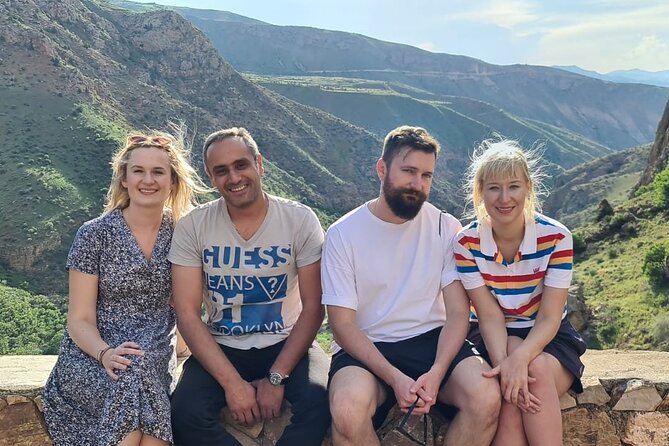
Many Armenia tours focus on Yerevan and a few nearby churches. This one gives you a much wider view of the country. You see the dry, dramatic south, the mountain roads of Syunik, the high waters of Lake Sevan, the woods around Dilijan, the Debed valley, and the cultural character of Gyumri.
That variety matters. Armenia is not one single postcard. The country changes noticeably as you go north, and the route lets you feel that change rather than simply checking off a few famous monuments.
The private format is another real advantage. You are not tied to the pace of a large coach group, and pickup and drop-off at your Yerevan hotel make the first and last parts easier. The vehicle is air-conditioned, with WiFi, bottled water, snacks, and tea or coffee available. Those small comforts count on a route with many hours in the car.
At $940 per group, the value depends on the number of people in your party. The stated price is for a group of up to one person, so you should confirm the exact price for your own group before booking. Since transportation, taxes, water, snacks, and vehicle costs are covered, the package can be practical for someone who wants one organized road trip instead of arranging separate drivers and day tours.
The missing piece is guiding. Guide service is not included, although the feedback refers warmly to drivers and guides and specifically praises Tigran. If you want detailed explanations inside every church and museum, ask Jan Armenia Tours whether a guide can be added and at what cost.
More things to do in Yerevan:
- Group Tour: Garni, Symphony of Stones, Geghard, Lavash Baking
★ 5.0 · 1,042 reviews - Group Tour: Lake Sevan (Sevanavank), Dilijan (Goshavank, Haghartsin)
★ 5.0 · 1,036 reviews - Khor Virap, Noravank and Birds’ Cave Trip with Wine Tasting
★ 4.8 · 845 reviews
Yerevan begins the journey with an easy introduction
The sightseeing tour in Yerevan lasts about two hours, beginning at the Jan Armenia Tours and Travel office and ending near the Singing Fountains. That is a sensible opening. You get a short orientation to one of the world’s oldest cities before leaving for the countryside.
The city visit is not presented as a long museum program. Instead, it is a compact look at major sights, history, and daily city life. I like that arrangement at the start of a six-day trip because it gives you your bearings without using an entire day.
The Singing Fountains provide a natural finish. You may want to keep this first stop relaxed, since the following days are much more road-focused. The tour starts in Yerevan, and hotel pickup is included, which removes one common source of stress.
Garni and Geghard show two sides of Armenian faith
Garni Temple is one of the most unusual stops in the country. Built in the second half of the first century by King Trdat III, it is described as the only preserved pagan temple in Armenia. It is linked with the worship of Mitra, the Sun God, and later served as a summer residence for Khosorovdukht, the king’s sister, after Christianity took hold.
You have about 40 minutes here. That is enough for a close look at the classical columns and the setting, though not a long archaeological visit. The temple is listed as a UNESCO World Heritage Site in the tour description, and admission is included.
A short visit to Garni Gorge follows. The natural formation known as the Symphony of Stones consists of huge basalt columns rising about 50 meters along the gorge. You get only about 20 minutes, so this is a quick viewpoint and photo stop rather than a full walk through the gorge.
Geghard Monastery adds a completely different mood. Founded in the fourth century at a sacred spring in a cave, much of the complex is cut directly into rock. Its cave chambers make the visit feel intimate and unusual, especially after the open stonework of Garni.
You have about 40 minutes at Geghard, with no separate admission charge listed. The complex is included on the UNESCO World Heritage List. I would wear shoes with a firm sole here, since old monastic sites can include uneven surfaces and steps.
Khor Virap and Areni bring faith, wine, and archaeology together

Khor Virap is one of Armenia’s most powerful historical stops. The monastery was built in 642 on the site of a royal prison, where Gregory the Illuminator was held for 13 years by the Armenian king. Gregory later became the patron saint and first official head of the Armenian Apostolic Church.
The name Khor Virap means deep hole, a reminder of that prison history. The site is also famous for its view toward Mount Ararat, the biblical mountain visible from the monastery grounds. Conditions can affect the view, so treat the mountain as a gift rather than a guarantee.
Areni Wine Factory changes the pace. Armenia has a long wine tradition, with local grape varieties and wild vineyards, and Areni is presented as the birthplace of winemaking. The stop lasts about 20 minutes and includes admission and wine tasting.
The brief tasting is valuable because it connects the scenery with local food culture. Drinks beyond the included tasting are not covered, so budget for any additional purchases.
Nearby Areni is associated with the Areni-1 cave, where the oldest known shoe and an ancient winery were found. The scheduled stop is also about 20 minutes. It is short, but it gives you a glimpse of Armenia’s importance in early human craft and winemaking.
Noravank is one of the route’s great visual moments. The monastery sits among steep red rocks at the end of a winding gorge. Founded in the 12th century on the site of older buildings, it is admired for both its medieval architecture and its setting.
The visit lasts about 40 minutes. Take time to look closely at the carved stonework, not only the famous facade. Noravank is more rewarding when you slow down for a few minutes and notice how the warm-colored stone echoes the surrounding cliffs.
A completely different kind of day:
- Yerevan: Garni, Geghard, Symphony of Stones & Lavash Baking
★ 4.8 · 758 reviews - From Yerevan: Garni, Geghard, & Symphony of Stones Day Trip
★ 4.8 · 687 reviews - Group tour: Khor Virap, Noravank, Areni Winery and Cave
★ 5.0 · 651 reviews - Yerevan: Garni, Geghard, Symphony of Stones & Lavash Baking
★ 5.0 · 589 reviews
Syunik packs waterfalls, a bridge, and Tatev into one day
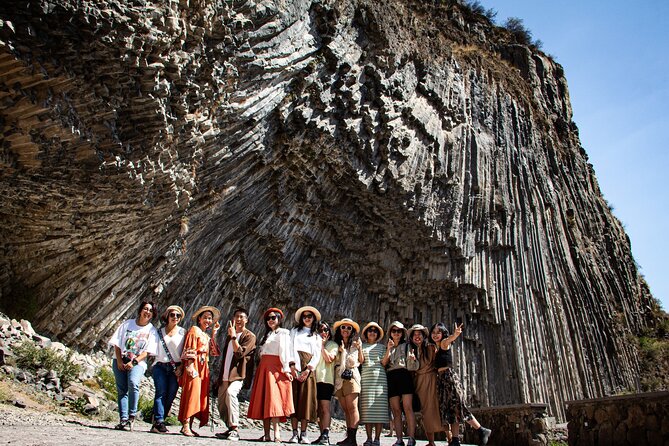
The southern section becomes more adventurous around Sisian and Syunik. Shaki Waterfall is about six kilometers from Sisian and offers a 30-minute stop in a natural setting. It is a welcome break from churches and historical sites.
Khndzoresk adds a little excitement. Its 160-meter swinging bridge crosses an area surrounded by greenery and gives you a direct physical experience rather than another viewpoint from beside the vehicle. The stop lasts about 50 minutes.
If you dislike heights or swinging footbridges, this is worth considering before booking. The tour requires a moderate level of fitness, and the bridge is not just a quick roadside photograph. Sensible footwear will help.
Tatev Monastery is a major highlight. Founded in the ninth century, with its main church built in 895 by Bishop Hovhannes and supported by the princes of Syunik, it is one of Armenia’s most important monastic complexes.
The description says you can reach Tatev by cable car or by car. The aerial route is not listed as included, so confirm whether the cable car is part of your package or an optional cost. One guest specifically praised the cable car, along with the scenery, monasteries, waterfalls, bridge, hotels, and food, so it may be part of the arranged experience, but you should verify this before departure.
Jermuk offers a slower mountain pause
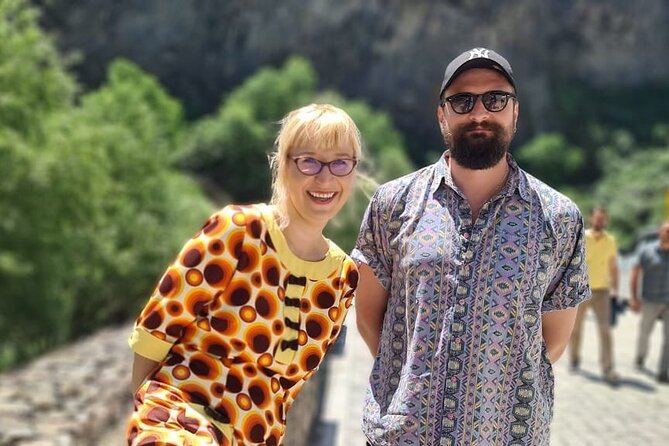
After the intensity of Syunik, Jermuk gives you two hours to slow down. The mountain town is known for forests, hot springs, mineral water, and a waterfall nearby.
This is one of the better-balanced stops in the program because it allows more time than the short monastery visits. You can enjoy the natural setting without rushing from one photo point to the next. The tour does not specify spa treatments or a particular hot spring experience, so do not assume those are included.
Jermuk also helps break up the long driving days. If you value scenery and fresh air as much as monuments, this stop may be one of your favorites.
Lake Sevan and Noratus reveal Armenia’s high country
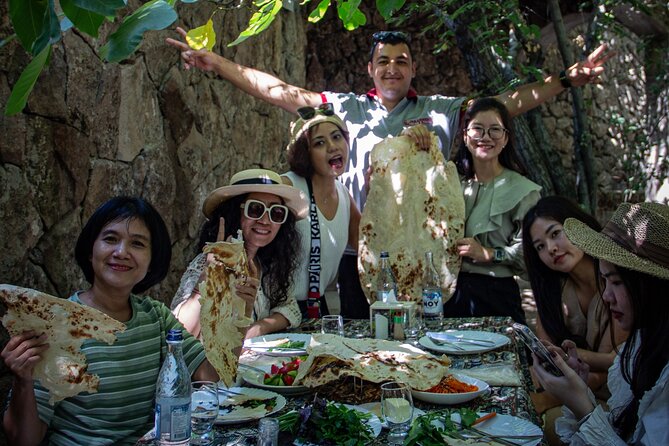
Noratus Cemetery contains medieval khachkars, the carved stone crosses that are among Armenia’s most recognizable art forms. The village cemetery is said to contain the largest collection of khachkars in Armenia, and the visit lasts about 30 minutes.
This is an important cultural stop because the stones are not simply decorative. They mark burial places and preserve centuries of religious art, craftsmanship, and local memory. Take your time looking at the different carvings, since their details can be easy to miss.
Sevanavank sits on a peninsula beside Lake Sevan, Armenia’s largest body of water. The monastery was founded in 305 by St. Gregory the Illuminator on the site of a pagan temple. In the ninth century, the princes of Syunik used Sevan as a point of support, and two churches were built there in 874 by Mariam, wife of the Syunik prince Vasak and daughter of King Ashot Bagratuni.
You have about 50 minutes at Sevanavank. The combination of stone churches and open water makes this a strong visual change from the dry southern valleys. Wind and weather can make the peninsula feel cooler, so a light extra layer is useful.
Dilijan adds woods, water, and medieval stone
Haghartsin Monastery lies about 12 kilometers from Dilijan, surrounded by thick woods and forested mountains. It is known for the way its architecture fits the natural setting, and the site contains more than a hundred inscriptions with information about medieval Armenian social and political life.
The visit is scheduled for about 40 minutes. Haghartsin is a good place to appreciate the relationship between monastery and setting. The approach through the wooded hills is part of the pleasure, not just a transfer between sights.
Lake Parz, in Dilijan National Park, is a smaller and quieter stop. The lake was formed by natural climatic changes and receives about 30 minutes of your time. It is a useful pause after the more formal religious sites, especially if you want a few calm photographs and a change of scenery.
Haghpat and Sanahin explain Armenia’s medieval scholarship
Haghpat Monastery is one of Armenia’s largest and most important monastic complexes. It sits on a high plateau near hills, the Lori fortress, and the Sagidzor canyon, where streams meet.
The 40-minute stop gives you a chance to see a major medieval center in its setting. Haghpat is not only a church complex. It reflects the educational and religious role monasteries once played in Armenian life.
Sanahin, across the Debed River in the village of Sanahin, provides an equally important counterpart. Founded by Ashot III Bagratuni in 966, it later became an administrative center and burial place for the Kurikyan dynasty. In the 10th and 11th centuries, it had a university and a large library.
The tour gives you about 40 minutes at Sanahin. Seeing Haghpat and Sanahin in the same journey is useful because you can compare two major centers of medieval architecture and learning rather than treating either one as an isolated ruin.
Gyumri brings art, urban life, and a Russian fortress
Gyumri receives three hours, the longest city visit after Yerevan. Once an artistic capital and possibly Armenia’s most attractive city, it offers a different experience from the mountain monasteries.
You explore the center and two famous churches, then visit the Dzitoghtsyan House-Museum of Social Life and National Architecture. The museum focuses on Alexandropol social life from the 19th century through the 1920s, giving you a look at homes, customs, and city culture rather than another religious monument.
I like the longer pause here. After several days of historic sites in rural settings, Gyumri lets you see how people lived in an Armenian city. The three-hour schedule should feel less hurried than the 20-minute countryside stops.
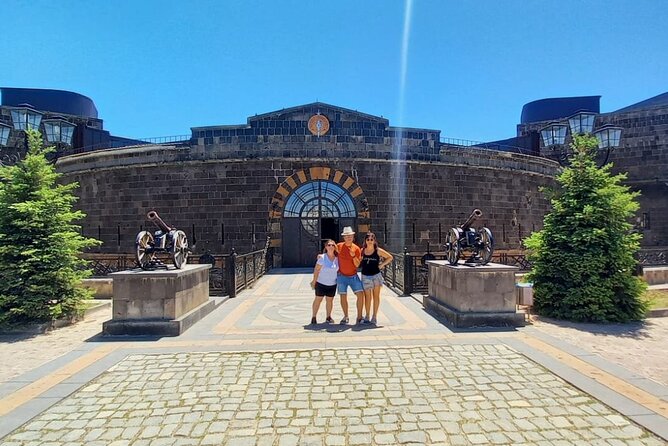
Black Fortress adds a short military-history stop. Built during the Russian-Turkish war, it still serves as a military base. The visit lasts about 20 minutes, so expect an exterior-focused stop unless access arrangements say otherwise.
The alphabet and Saghmosavank close the route
The Armenian Alphabet Monument contains 39 carved Armenian letters and was created in 2005 as a gift marking the alphabet’s 1,600th birthday. You have about 40 minutes here.
This is a small but meaningful stop. Armenia’s alphabet is closely tied to its written culture and identity, so the monument helps explain why script and language matter so much in the country.
Saghmosavank provides a final architectural finish. Located above the Kasakh River in Saghmosavan village, the complex is traditionally linked with Grigor Lusavorich. Its St. Sion Church was built in 1215 by Prince Vache Vachutian, with a cross-shaped interior, a rectangular exterior, a tall cylindrical drum, and a conical dome.
The facades feature Armenian hollows, a distinct decorative treatment. With about 40 minutes here, you can finish the tour among the same kind of stone craftsmanship that appeared at Geghard, Noravank, Tatev, Haghpat, and Sanahin.
What the practical details mean for you
This is a private tour, so only your group participates. That gives you more control than a shared coach, though the provided information does not promise flexible changes to the route or timing.
Hotel pickup and drop-off are included in Yerevan. The vehicle is air-conditioned, and WiFi, bottled water, snacks, tea, coffee, taxes, and transport are covered. Essential medicine is also listed as included, which is a considerate touch on a long road trip.
Drinks are not included, and guide service is not included. The package description says confirmation arrives within 48 hours of booking, subject to availability. The activity is non-refundable and cannot be changed after booking, so check dates, group size, and included services carefully before paying.
The physical demand is moderate. You should expect walking around stone monasteries, natural sites, cemeteries, waterfalls, and city streets. The Khndzoresk bridge may be the most demanding or uncomfortable stop for some people.
Who should book this Armenia tour?
I would choose this tour if you want to see a large share of Armenia in one organized trip and prefer private transport to public buses or separate day tours. It suits first-time visitors who want the major monasteries, but also want wine, nature, Gyumri, Lake Sevan, and the country’s southern border region.
It is less suitable if you prefer slow travel. Twenty to 50 minutes is enough for a clear look at many sites, but not for a deep archaeological visit, a long hike, or unhurried photography. The six-day route is ambitious by design.
At $940 per group, it can be a fair deal for the included vehicle, transfers, road coverage, and many stops. Confirm the price for more than one person, ask about hotels and meals in writing, and clarify the cable car and guide arrangements.
Should you book it?
Book this tour if your priority is maximum variety with minimum planning. You will see Armenia’s best-known religious sites, but you will also encounter Areni wine, the Areni-1 cave, the Khndzoresk bridge, Shaki Waterfall, Jermuk, Gyumri, and the Armenian alphabet.
I would book it with two requests: confirm exactly what lodging and meals are included, and ask whether a professional guide can join the driving team. If you accept a busy schedule and moderate walking, this is a strong introduction to Armenia, with thoughtful transport comforts and a route that reaches well beyond Yerevan.
FAQ
Where does the tour start and finish?
The tour starts in Yerevan, Armenia. Hotel pickup and drop-off are included.
How long does the tour last?
The tour lasts approximately six days. A description from one participant identifies it as a six-day, five-night trip.
Is this a private tour?
Yes. Only your group participates in the activity.
What is included in the price?
The package includes hotel pickup and drop-off, an air-conditioned vehicle, WiFi on board, all fees and taxes, bottled water, transportation with professional drivers, snacks, tea and coffee in the car, photos, and essential medicine.
Is a guide included?
No. Guide service is not included in the package.
Is the cable car to Tatev included?
The tour information says Tatev can be reached by cable car or by car, but it does not clearly state that the cable car cost is included. Confirm this with the tour provider before booking.
What level of fitness is needed?
A moderate level of physical fitness is recommended. The route includes walking at monasteries and natural sites, plus a 160-meter swinging bridge at Khndzoresk.
Just added in Yerevan
- YerevanCard: 3-Day City Pass★ 5.0 · 1 review
- Yerevan: Walking Tour With an Architect
- Yerevan: Museum of Illusions Entry Ticket★ 5.0 · 3 reviews
- Yerevan: Urban Hike through Aygestan and Old Nork★ 5.0 · 1 review
- Yerevan: Brandy Tasting Experience with Local Delicacies★ 5.0 · 1 review
- Yerevan City Tour: Discover an Old and New Yerevan★ 5.0 · 2 reviews
- Wine, Jazz and Magic: A Night at Malkhaz Jazz Club★ 5.0 · 2 reviews
- The Stalin car Yerevan city tour Armenia★ 5.0 · 2 reviews
Tours, compared.
Garni, Symphony of Stones, Geghard, Lavash Baking
Read our review →
Lake Sevan (Sevanavank), Dilijan (Goshavank, Haghartsin)
Read our review →
Tsaghkadzor (Kecharis, Ropeway), Lake Sevan, Trout barbecue treat
Read our review →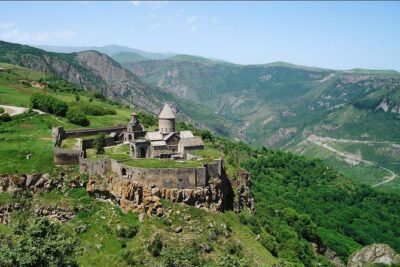
Khor Virap, Noravank, Tatev monasteries (wayback on Ropeway)
Read our review →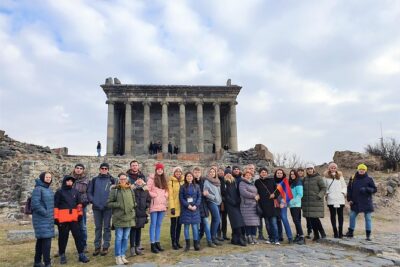
Garni pagan temple, Geghard monastery, Lake Sevan, Sevanavank
Read our review →
Amberd, Aragats, Lake Kari, Saghmosavank, Alphabet
Read our review →