
Reviewed · ARMENIA DAY TRIPS FROM TBILISI
Armenia – Tbilisi 3 days, 2 nights from Yerevan
Cross two countries in one compact trip. This private journey links Lake Sevan, medieval monasteries, and Tbilisi without asking you to arrange border transport or piece together several day trips. I like the personal vehicle, the freedom of traveling with only your own group, and the chance to see both Georgian and Armenian Christian architecture in a single route. The main drawback is the pace: three days cover a lot of ground, and hotel rooms, meals, and drinks are not included in the $827 group price.
The route also has a useful human touch. Drivers named Zaven, Arthur, and Alek have been praised for punctual service, clear communication, patience, safety, and helpful recommendations. You can book with a guide, or, as one guest did, travel with drivers only, but you should confirm exactly what guiding service you will receive before paying.
In This Review
- Key Points to Know Before You Book
- What This Armenia and Georgia Route Does Well
- Day One: Lake Sevan and the Forest Monasteries
- Sevanavank and the Black Tuff Churches
- Haghartsin in Dilijan’s Forested Hills
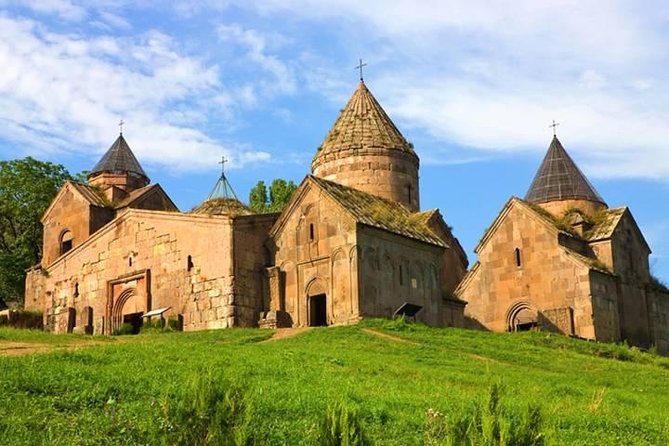
- Goshavank, a Medieval Center of Learning
- Overnight in Tbilisi
- Day Two: Mtskheta and a Close Look at Tbilisi
- Mtskheta at the Confluence of Two Rivers
- Three Hours in Tbilisi
- Overnight in Alaverdi
- Day Three: UNESCO Monasteries and Northern Armenia
- Haghpat, a Monastery Complex Built for Community Life
- Sanahin and the Kyurikyan Bagratids
- Stepanavan Sochut Dendropark
- The Armenian Alphabet Monument
- The $827 Price and What You Still Pay
- Physical Demands, Clothing, and Border Documents
- Who Will Get the Most From This Tour?
- Should You Book the Armenia to Tbilisi Tour?
- FAQ
- Where does the tour begin?
- How long does the experience last?
- Is the tour private?
- Is pickup included?
- Is transportation provided?
- Are hotels included?
- Are meals and drinks included?
- Which UNESCO sites are visited?
- Do I need a passport?
- Can I cancel for a full refund?
Key Points to Know Before You Book
- Two countries in three days: Travel from Yerevan through Lake Sevan and northern Armenia to Tbilisi, then return through Armenia’s Lori region.
- Private transport for up to three people: The $827 price covers the group, not each person, making the cost more reasonable when shared by two or three.
- Seven major sightseeing stops: Sevanavank, Haghartsin, Goshavank, Mtskheta, Tbilisi, Haghpat, Sanahin, plus the Stepanavan botanical garden and Armenian Alphabet Monument.
- UNESCO sites included: Mtskheta, Haghpat, and Sanahin bring major cultural and architectural interest to the route.
- Overnights are not included: You stop in Tbilisi on the first night and Alaverdi on the second, but you must arrange and pay for the hotels yourself.
- A passport is essential: Passport name, number, expiry date, and country are required for every participant, and you must carry a current valid passport.
What This Armenia and Georgia Route Does Well
This is a strong choice if you want variety rather than one narrowly focused tour. In three days, you move from a high mountain lake to forest monasteries, an old Georgian capital, Tbilisi’s urban sights, and the medieval monastic centers of northern Armenia.
I particularly like the fact that the vehicle and pickup are arranged for you. Cross-border travel in the Caucasus can be awkward to organize independently, and a private driver removes much of the planning work. You are not joining a large coach group, so the tone should feel more personal and practical.
The route is also well chosen for architecture. Sevanavank offers a dramatic beginning, Mtskheta gives you Georgia’s most important Christian monuments, and Haghpat and Sanahin close the trip with two of Armenia’s finest monastery complexes. These are not quick photo stops with no context. A good guide can explain how religion, royal families, scholarship, and local building traditions shaped the region.
The trade-off is time in the vehicle. The schedule includes international travel, several monastery visits, two overnight stops, and a city tour. You need a reasonable level of physical fitness, and you should expect a full sightseeing schedule rather than long, lazy afternoons.
More Armenia day trips from Tbilisi:
- Transfer from Yerevan to Tbilisi with 2 sightseeing stops
★ 5.0 · 110 reviews - Tour Transfer to/from Tbilisi with Lake Sevan & Wine tasting
★ 4.8 · 48 reviews - Yerevan to Tbilisi Private car transfer 3 Scenic stops
★ 5.0 · 25 reviews
Day One: Lake Sevan and the Forest Monasteries
Sevanavank and the Black Tuff Churches
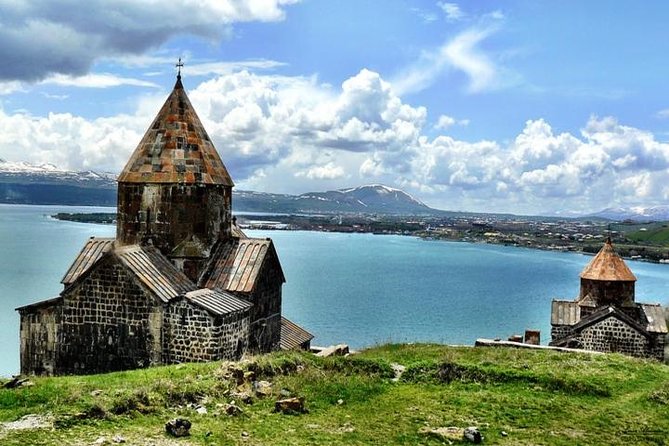
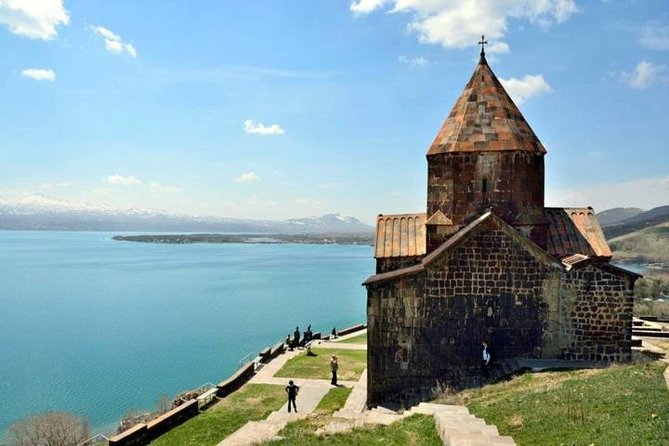
The first major stop is Sevanavank, on the northwest side of Lake Sevan. The lake is often called the Jewel of Armenia or the Geghama Sea, and its broad setting gives the monastery an immediate sense of scale.
Princess Mariam founded Sevanavank in 874. Its churches were built from dark volcanic tuff, which likely explains the name Sevanavank, translated as the Black Monastery. You have about an hour here, enough to examine the medieval church buildings and take in the lake setting without rushing through the visit.
The free admission is helpful, though the real value comes from the setting and the explanation provided by your guide. Ask about the monastery’s foundation and the use of black stone. The combination of water, open sky, and severe dark masonry makes this a memorable first stop.
Haghartsin in Dilijan’s Forested Hills
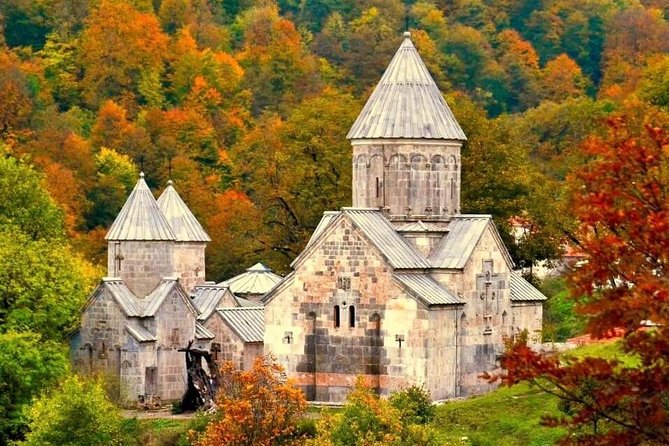
The route then heads toward Dilijan, known in the tour description as Armenian Switzerland. About 13 kilometers northeast of Dilijan, Haghartsin Monastery sits in a wooded setting. Its name means Dance of the Eagles, a fitting name for a complex placed among hills and trees.
Built between the 10th and 13th centuries, Haghartsin includes three churches. You have around an hour to walk through the complex and see how the buildings fit into the surrounding setting.
This stop provides a useful change from Sevanavank. Sevanavank feels open and exposed beside the lake, while Haghartsin is enclosed by forest. I like this contrast because it keeps the first day from becoming a string of similar stone churches.
More things to do in Yerevan:
- Group Tour: Garni, Symphony of Stones, Geghard, Lavash Baking
★ 5.0 · 1,042 reviews - Group Tour: Lake Sevan (Sevanavank), Dilijan (Goshavank, Haghartsin)
★ 5.0 · 1,036 reviews - Khor Virap, Noravank and Birds’ Cave Trip with Wine Tasting
★ 4.8 · 845 reviews - Yerevan: Garni, Geghard, Symphony of Stones & Lavash Baking
★ 4.8 · 758 reviews
Goshavank, a Medieval Center of Learning
Goshavank receives about 40 minutes, making it the shortest monastery visit on the first day. The complex was built from 1188 through the late 13th century and became one of medieval Armenia’s important religious and scholarly centers.
That scholarly role gives Goshavank extra interest. You are not only looking at a place of worship, but also at a center connected with education and religious study. The shorter stop means you will need to listen closely and use your time well.
If you enjoy carved stonework, ask your guide to point out details rather than simply walking around the grounds. The visit is brief, so a focused explanation will help you get more from it.
Overnight in Tbilisi
The first day ends with an overnight stay in Tbilisi. The tour includes transport to the city but does not include hotel accommodation, so you need to arrange your own room.
This is an important planning point. The stated $827 price covers a private group of up to three, but the actual cost rises once you add two nights of hotels, meals, and drinks. Ask the operator for practical advice on where to stay in Tbilisi and Alaverdi, especially if you want your lodging to fit the pickup and departure times.
Day Two: Mtskheta and a Close Look at Tbilisi
Mtskheta at the Confluence of Two Rivers
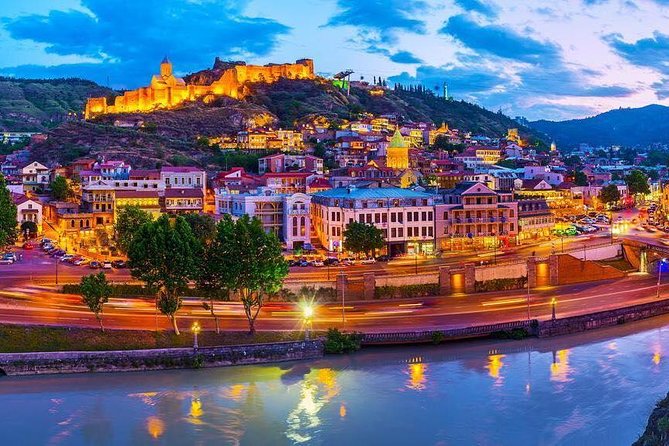
Mtskheta is one of the most important cultural stops on the route. Founded in the 5th century BC, the old city sits where the Mtkvari and Aragvi rivers meet. The setting is part of the appeal, but the major draw is its Christian architecture.
You visit Svetitskhoveli Cathedral, an 11th-century building, and Jvari Monastery, dating from the 6th century. Both are among the key monuments of Georgian Christian architecture, and Mtskheta, Svetitskhoveli, and Jvari are listed together as a UNESCO World Heritage site.
The planned visit lasts about two hours. That is enough to see the main monuments, but not enough for a slow, detailed study of every corner. Wear practical shoes and dress smart casual, as requested for the tour. Religious sites call for respectful clothing, and the route includes plenty of walking and steps.
Mtskheta is valuable because it gives you historical context for the Georgian side of the trip. After seeing Armenian monastic traditions on day one, you can compare them with Georgia’s own church architecture and religious centers.
Three Hours in Tbilisi
The city portion lasts about three hours and is described as an observation tour of Tbilisi’s main attractions. The supplied details do not name each attraction, so you should ask the operator what the city route will cover before departure.
Three hours is enough for an introduction, not a full city visit. You can expect to get your bearings and see a selection of the central sights, but you will not have time to explore every neighborhood or museum. If you already know Tbilisi, tell the driver or guide which places matter most to you.
The private format is useful here. A large group would have to follow a fixed route, while a private vehicle may allow more room for questions and recommendations. One guest specifically praised the service for good communication, punctuality, safety, and helpful suggestions.
There is also an important distinction between a driver and a guide. One booking was made without a tour guide, with Arthur and Alek providing the driving, conversation, music, and personal care. That arrangement worked well for that guest, but it may not provide the same historical commentary as a licensed guide. Confirm this point if historical explanation is central to your plans.
Overnight in Alaverdi
After Tbilisi, the route returns to Armenia for an overnight stay in Alaverdi. Again, accommodation is not part of the tour price.
Alaverdi is a practical base for the next day’s visits to Haghpat and Sanahin. Still, the second day includes both Mtskheta and Tbilisi before the return to Armenia, so you should be ready for another substantial travel day.
Day Three: UNESCO Monasteries and Northern Armenia
Haghpat, a Monastery Complex Built for Community Life
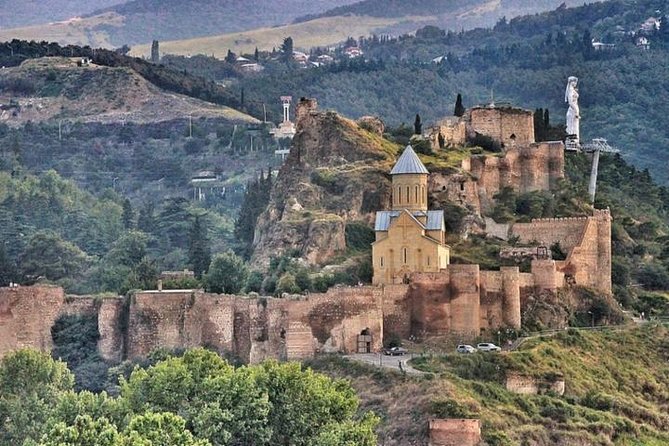
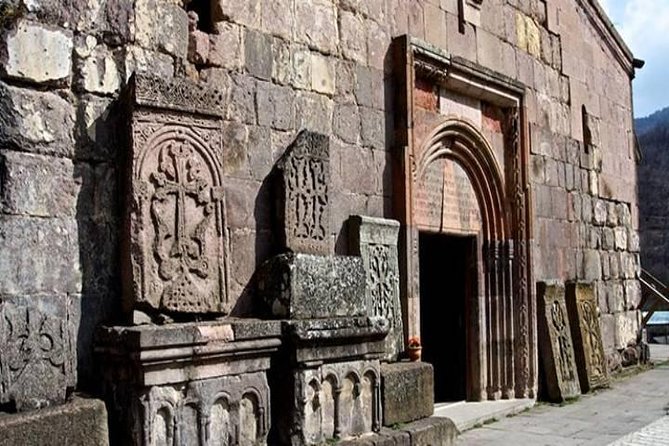
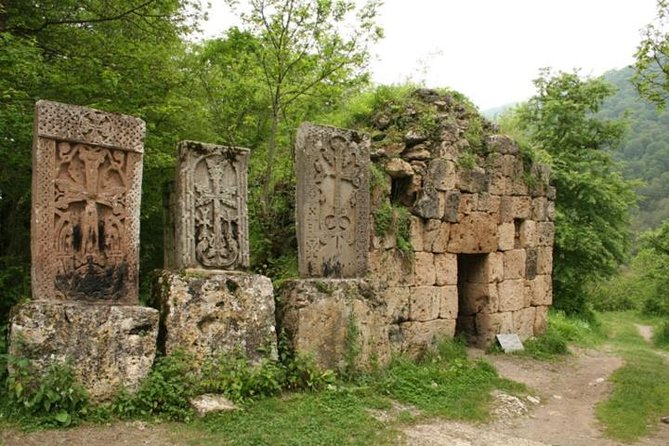
Haghpat was founded in 976 by Queen Khosrovanush, the wife of Armenian King Ashot III. The complex includes a narthex, corridor-sepulchers, a refectory, a scriptorium, the Chapel of Hamazasp, a belfry, chapel-tombs, and khachkars, the carved cross-stones found across Armenia.
You have about an hour here. That sounds short for a complex with so many parts, but it gives you enough time to see the main buildings and understand that Haghpat was more than a single church. It functioned as a religious, educational, and communal center.
The scriptorium is especially worth remembering. It points to the role of monasteries in preserving and producing written works, a subject that connects naturally with the Armenian Alphabet Monument later in the day.
Sanahin and the Kyurikyan Bagratids
The Monastery of Sanahin is another major architectural stop. It served as an administrative center and family burial place for the Kyurikyan Bagratids during the 10th and 11th centuries. It was also the Episcopal residence for the diocese until the 11th century.
Like Haghpat, Sanahin is included on the UNESCO World Heritage List. The two sites work well together because they show how Armenian monasteries could serve royal families, church officials, scholars, and local communities.
You receive about an hour at Sanahin. I would ask your guide to compare the two complexes rather than treating them as separate church visits. Their shared history and different layouts make the comparison more useful than a simple checklist of buildings.
Stepanavan Sochut Dendropark
The Stepanavan Sochut Dendropark changes the mood. This botanical garden was established in 1933 by Polish engineer-forester Edmon Leonovich and contains more than 500 plants.
The visit lasts about an hour, but admission is not included. Bring some local currency or confirm the current entry arrangement before the trip, since this is the only listed stop with a separate admission charge.
This is a good pause after several religious monuments. You can walk among the plant collection and enjoy a quieter hour before the final stop. If gardens are not a priority for you, this may feel less essential than the monasteries, but it adds variety to a very architecture-heavy program.
The Armenian Alphabet Monument
The final stop is the Armenian Alphabet Monument, visited for about 30 minutes. The Armenian alphabet was created by Mesrop Mashtots in 405 to make the Bible accessible to Armenians and help spread Christianity.
That short visit carries more meaning than its timing suggests. After seeing monasteries connected with worship, scholarship, and manuscript work, the alphabet monument provides a clear explanation of how language supported Armenian religious and cultural life.
It is a fitting ending because the trip has repeatedly returned to books, learning, faith, and written tradition. You will not need much time here, but the stop helps tie the earlier visits together.
The $827 Price and What You Still Pay
The listed price is $827 per group of up to three people. Shared by three, that works out to about $276 per person before hotels, meals, drinks, and the dendropark admission. For two people, it is about $413.50 each before those extras. A solo booking carries the full group cost, so this tour makes the most financial sense for a small party.
The price includes hotel pickup and drop-off and an air-conditioned vehicle suited to the number of participants. It does not include accommodation, lunch, food, or drinks. That difference matters because the tour includes two nights away from Yerevan.
I see the value mainly in the private cross-border transport. You are paying for a planned route, a vehicle, and the convenience of combining several difficult-to-link sites. If you were to book separate transfers and day trips, the total could become complicated, even before adding the time spent arranging border travel.
Still, you should request a clear cost outline before departure. Ask which hotels are recommended, what type of guide service is included, and how the vehicle arrangement works at the Armenia-Georgia border. These questions do not change the tour’s appeal, but they prevent surprises.
Physical Demands, Clothing, and Border Documents
The tour calls for moderate physical fitness. You will visit monasteries and historic sites, and the schedule includes walking at several stops. The supplied information does not promise step-free access, so you should be comfortable with ordinary walking around old religious complexes.
Smart casual clothing is requested. That is a sensible choice for visits to churches and monasteries. Carry your current valid passport, and provide the passport name, number, expiry date, and country for every participant when booking.
The route’s timing is another practical concern. Day one moves from Lake Sevan through Dilijan and two monasteries before reaching Tbilisi. Day two includes Mtskheta, a three-hour Tbilisi visit, and the return to Alaverdi. If you prefer slow mornings and long meals, this is not the right format.
If you want to keep the pace manageable, use the overnight stops well. Arrange hotels close to the planned route, keep your day bag light, and confirm pickup times in advance.
Who Will Get the Most From This Tour?
I would recommend this trip to a small group that wants a broad introduction to Armenia and Georgia in very little time. It suits people who value private transport, historic churches, changing scenery, and the ability to ask questions without sharing a coach with strangers.
It is also a good fit for first-time visitors who want to connect Yerevan with Tbilisi. You get a useful sweep of the region: lake, forest, city, old capital, royal monasteries, botanical garden, and national cultural symbols.
I would hesitate to recommend it to anyone who wants extensive free time in Tbilisi or a slow study of each monastery. The three-hour city visit is only an introduction, and the monastery stops range from 40 minutes to one hour.
The driver quality can make a big difference. Zaven was praised for kindness, patience, and helpful service over the full three days. Arthur and Alek were praised for punctuality, communication, safety, recommendations, and friendly conversation. Those are strong signs for the transport side of the experience, but confirm whether your booking includes a guide or drivers only.
Should You Book the Armenia to Tbilisi Tour?
Book it if you want an efficient, private route between Yerevan and Tbilisi, especially with two or three people sharing the $827 price. The strongest reasons are the cross-border convenience, the personal vehicle, and the excellent mix of Armenian and Georgian monuments.
Before booking, budget separately for two hotel nights, meals, drinks, and the Stepanavan garden ticket. Confirm the guide arrangement, hotel recommendations, border requirements, and exact Tbilisi sightseeing plan.
My final call: this is a good-value regional sampler for active visitors with limited time. It is less suitable for anyone who wants a relaxed city break or a slow monastery holiday.
FAQ
Where does the tour begin?
The tour begins in Yerevan, Armenia.
How long does the experience last?
The experience lasts approximately three days and includes two overnight stays.
Is the tour private?
Yes. Only your group participates, with a maximum of three people.
Is pickup included?
Yes. Hotel pickup and drop-off are included.
Is transportation provided?
Yes. Transport is provided in an air-conditioned vehicle according to the number of participants.
Are hotels included?
No. Hotel accommodation is not included, even though the itinerary includes overnight stays in Tbilisi and Alaverdi.
Are meals and drinks included?
No. Food, drinks, and lunch are not included.
Which UNESCO sites are visited?
The route visits Mtskheta, Haghpat Monastery, and Sanahin Monastery, all associated with UNESCO World Heritage listings in the supplied tour information.
Do I need a passport?
Yes. A current valid passport is required on the day of travel, and passport details for every participant are required at booking.
Can I cancel for a full refund?
Yes, if you cancel at least 24 hours before the experience start time. Cancellations made less than 24 hours in advance are not refunded, and changes within that period are not accepted.
Just added in Yerevan
- YerevanCard: 3-Day City Pass★ 5.0 · 1 review
- Yerevan: Walking Tour With an Architect
- Yerevan: Museum of Illusions Entry Ticket★ 5.0 · 3 reviews
- Yerevan: Urban Hike through Aygestan and Old Nork★ 5.0 · 1 review
- Yerevan: Brandy Tasting Experience with Local Delicacies★ 5.0 · 1 review
- Yerevan City Tour: Discover an Old and New Yerevan★ 5.0 · 2 reviews
- Wine, Jazz and Magic: A Night at Malkhaz Jazz Club★ 5.0 · 2 reviews
- The Stalin car Yerevan city tour Armenia★ 5.0 · 2 reviews
Armenia Day Trips from Tbilisi, compared.
From Tbilisi to Armenia: Akhtala, Haghpat & Sanahin Day-Trip
Read our review →
Armenia. Akhpat, Dilijan, Sevan, cascad Yerevan from Tbilisi
Read our review →
Discover Armenia: Tbilisi-Haghpat-Dilijan-Sevan-Yerevan-Tbilisi
Read our review →
Transfer from Yerevan to Tbilisi with 2 sightseeing stops
Read our review →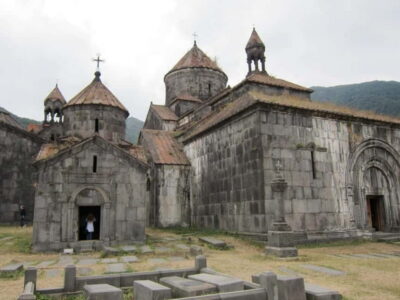
Discover Armenia from Tbilisi, Akhpat-dilijan-Sevan-Yerevan.
Read our review →
1 Day detour to Armenia from Tbilisi & Local family lunch
Read our review →Browse the lists this tour appears in