
Reviewed · 7-DAY EXPERIENCES
7 Day Tour through Armenia
Seven days, one small country, many stories. This tour packs Armenia’s best-known sights into a clear route from Yerevan, with English-speaking guides and admission fees included at most major stops. I like the broad mix: ancient churches, mountain roads, museums, markets, a brandy tasting, and time in both Yerevan and Gyumri.
I also like the care given to Armenian culture, from the country’s alphabet and medieval monasteries to Sergei Parajanov’s strange and wonderful art. The main drawback is the pace. Several days include three or more sites, and Day 6 lists eight stops, so you should expect plenty of time in a vehicle and only about an hour at each place.
In This Review
- Key points to know before booking
- Yerevan begins with views, brandy, and city streets
- Echmiadzin and Zvartnots connect faith with early Armenian history
- Lake Sevan and Dilijan bring water, woods, and monasteries
- Gyumri shows Armenia’s creative and resilient side
- Garni and Geghard make the strongest single pairing
- Day 6 covers eight sites, so plan for a long haul
- Yerevan closes with film, ancient foundations, and handmade goods
- Is $885.13 a fair price for seven days?
- Who will enjoy this Armenia tour most?
- Should you book this seven-day Armenia tour?
- FAQ
- Where does the seven-day Armenia tour begin?
- How long does the tour last?
- What language is the tour offered in?
- How much does the tour cost?
- Are admission tickets included?
- How large can the group be?
- Is the tour suitable for most people?
- Does the tour include a brandy tasting?
- What is the cancellation policy?
Key points to know before booking
- Lake Sevan and Dilijan in one day: Sevanavank, Haghartsin, and Goshavank give you water views, woodland scenery, and three very different monasteries.
- A proper introduction to Armenian architecture: The route includes Zvartnots, Geghard, Amberd, Harichavank, and smaller churches rarely seen on a short city break.
- Brandy tasting at the ARARAT Museum: You taste cognacs of different ages, making this more than a quick photo stop.
- A strong Yerevan finish: Parajanov Museum, Erebuni Museum, and Vernissage offer art, ancient city history, and local crafts.
- The most demanding day is Day 6: Eight stops include Amberd Fortress at 2,300 meters, so this is a full day with little spare time.
- Good value for a guided overview: At $885.13 per person, the price is easier to justify if you want transport, guiding, and many included admissions arranged for you.
Yerevan begins with views, brandy, and city streets
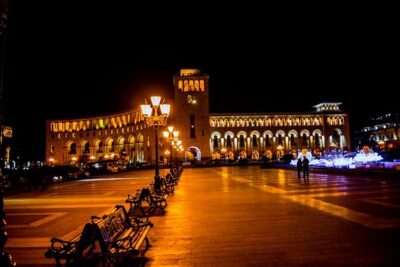
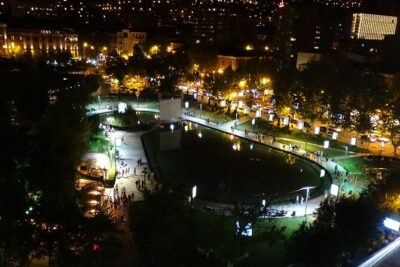
The first day gives you a useful introduction rather than sending you straight into the countryside. At the Cascade Complex, you can climb the broad stairway in front of the Opera House or use one of its seven elevators. The important part is the view from the top, where Yerevan opens out below you.
Allow about an hour here. The Cascade is both an urban landmark and a good way to understand the shape of the city. If you prefer a slower start, the elevators make this stop easier than the long staircase suggests.
The ARARAT Museum follows with a tasting of Armenian cognacs from different aging periods. This is one of the tour’s more distinctive inclusions. You are not simply looking at bottles in a display case. You get a chance to compare the character of different ages and connect Armenian brandy with one of the country’s best-known exports.
The final stop is Mesrop Mashtots Avenue, where you walk through central Yerevan and look at the city’s architecture. It is a modest but useful counterweight to the museum visit. You get street-level time instead of another enclosed monument.
The day lasts around three hours at the listed stops, though the full schedule also depends on pickup and transfers. Pickup is offered, and the tour is conducted in English. The group can reach 30 people, so do not expect a private walking tour.
More things to do in Yerevan:
- Group Tour: Garni, Symphony of Stones, Geghard, Lavash Baking
★ 5.0 · 1,042 reviews - Group Tour: Lake Sevan (Sevanavank), Dilijan (Goshavank, Haghartsin)
★ 5.0 · 1,036 reviews - Khor Virap, Noravank and Birds’ Cave Trip with Wine Tasting
★ 4.8 · 845 reviews
Echmiadzin and Zvartnots connect faith with early Armenian history
Day 2 focuses on two major religious sites. The Holy Archangels Church is described as the main religious and administrative center of the Armenian Apostolic Church. Its setting is linked with Gregory the Illuminator and with the earlier St. Hripsime monastery, built in 618.
This stop matters because Armenian Christianity is not a side note here. It shapes the country’s buildings, art, traditions, and sense of identity. Give yourself time to notice the religious setting rather than treating the church as another quick photograph.
Zvartnots Temple provides a striking change. Construction began in 641 to 643 under Catholicos Nerses III and continued for roughly two decades. The site is connected with ancient Dvin and is recognized on the UNESCO World Heritage list.
Zvartnots is especially valuable if you enjoy ruins. You are seeing the remains of a major early medieval church rather than a fully intact building. Its partial survival requires a little imagination, but the open setting helps you understand the scale of the original structure.
Only two stops are listed for this day, which gives it a calmer rhythm than Day 6. That balance matters. After the dense first day and before the long drives ahead, this is a day where the religious and architectural details have room to register.
Lake Sevan and Dilijan bring water, woods, and monasteries
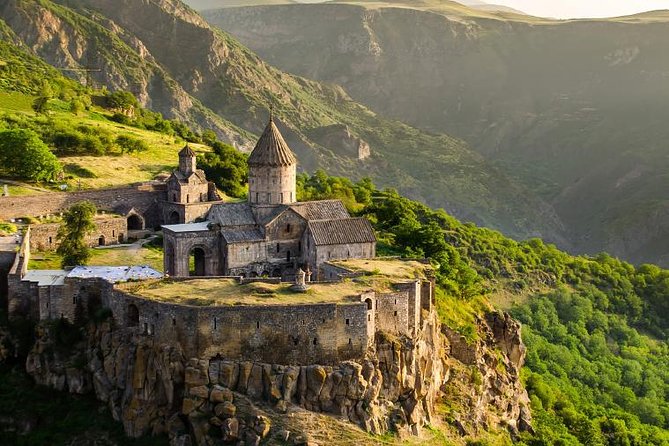
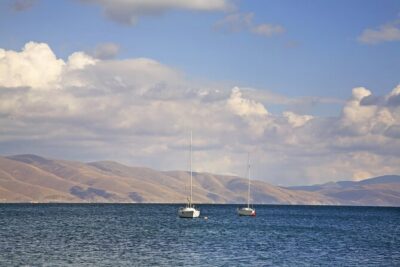
Day 3 heads toward Lake Sevan, called the pearl of Armenia in the tour description. The lake is famous for its high elevation and striking blue water. Sevanavank Monastery sits by the lake and gives you a strong combination of natural scenery and stone architecture.
The monastery stop is listed at one hour. That is enough for a focused visit, though you may wish you had more time if the lake views are clear. Sevan is one of the places where the drive is part of the appeal, so keep your camera ready even between official stops.
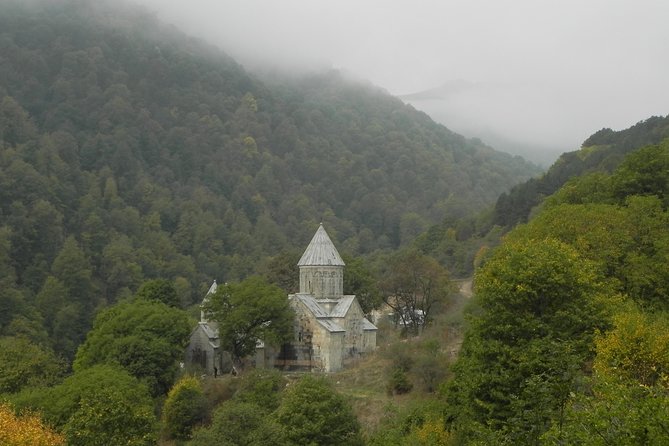
The route then continues to Haghartsin Monastery near Dilijan. This was a religious and educational center in medieval Armenia, active particularly from the 10th through the 13th centuries. Its setting among the wooded surroundings of Dilijan makes it feel very different from Sevanavank.
Goshavank completes the day. In the 12th and 13th centuries, it became a major religious and scholarly center under Mkhitar Gosh, a noted Armenian scholar, legal expert, and scientist. The three monasteries work well together because each adds something different: lake views at Sevan, nature around Haghartsin, and an important intellectual story at Goshavank.
This is a strong day for you if you want Armenia beyond the capital. It is less suited to someone who wants long, unhurried walks, since each main visit is planned for about an hour.
Gyumri shows Armenia’s creative and resilient side
Day 4 takes you northwest to Gyumri. Walking through the old streets, you see houses built from colorful stone, with decorative bas-reliefs and carefully worked facades. Some survived the devastating 1988 earthquake, giving the city’s architecture an added human weight.
Gyumri has long been a center of cultural activity, and this stop gives the itinerary a welcome change from monasteries. You are looking at a living city, not only preserved religious sites. The hour here should be used for slow observation of the streets and buildings.
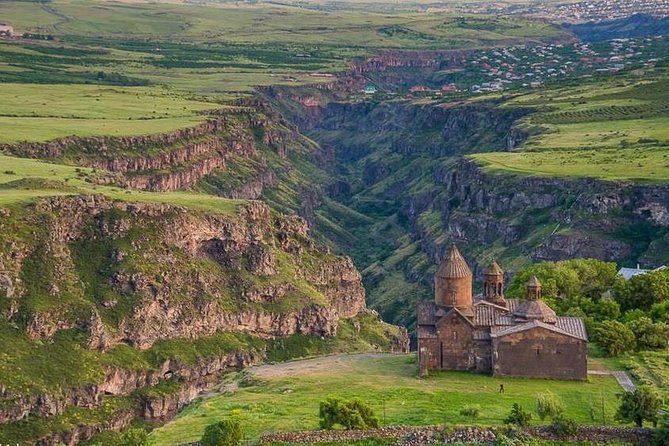
Marmashen Monastery follows on the left bank of the Akhurian River. Built between 988 and 1029, it includes five churches and is considered among the best surviving examples of the medieval Ani school of Armenian architecture.
At Harichavank, the setting becomes more dramatic. The complex began in the seventh century, while its main church dates from the 13th century. In the 19th century, it served as a summer residence for Armenian Catholicoses.
One small chapel deserves special attention. It was built on a piece of rock that split from the cape during an earthquake, leaving the chapel high above the canyon. That detail gives Harichavank a memorable sense of place, even if you know little about church architecture.
A completely different kind of day:
- Yerevan: Garni, Geghard, Symphony of Stones & Lavash Baking
★ 4.8 · 758 reviews - From Yerevan: Garni, Geghard, & Symphony of Stones Day Trip
★ 4.8 · 687 reviews - Group tour: Khor Virap, Noravank, Areni Winery and Cave
★ 5.0 · 651 reviews - Yerevan: Garni, Geghard, Symphony of Stones & Lavash Baking
★ 5.0 · 589 reviews
Garni and Geghard make the strongest single pairing
Day 5 starts with a short stop at Charents Arch. From there, you get a view across the Ararat Valley toward Mount Ararat. The mountain may not always be clear, but the viewpoint gives you the geographical setting for the sites that follow.
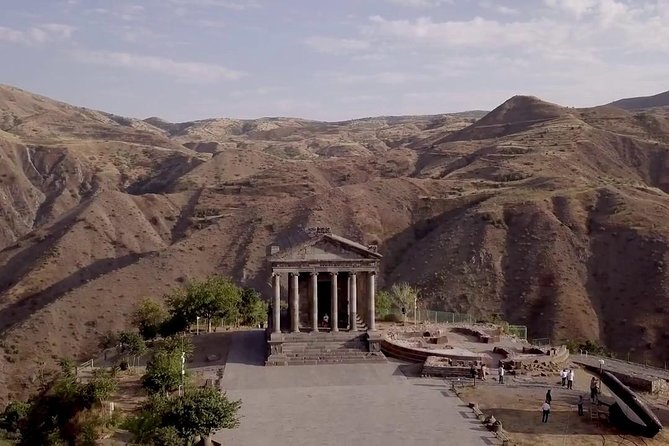
Garni Temple is Armenia’s only surviving pagan temple. It dates to the Hellenistic era and was dedicated to Mithra, the pagan sun god. The building was constructed by Greek slaves in 76 B.C. and served as a summer residence for Armenian kings for more than four centuries.
Garni is a sharp change from the Christian monasteries elsewhere in the tour. Its classical columns and open position show that Armenia’s story did not begin with medieval Christianity. For many people, this is the most visually familiar monument on the route.
Geghard Monastery is the day’s major stop. The complex includes churches and rooms cut into solid rock, with the main church built in 1215 and the Avazan church carved into the stone in 1283. The name Geghard refers to the lance associated with the biblical story of Christ’s crucifixion. The lance was kept here for a long period before being moved to Echmiadzin Cathedral’s museum.
You can also see medieval dwellings, caves, and hundreds of khachkars, or cross-stones, in the surrounding rock. Geghard endured repeated attacks over seven centuries and served as a spiritual and cultural center for scholars.
The one-hour limit is the chief concern. Geghard rewards patient looking, and the carved chambers can take longer than a standard photo stop. Still, Garni and Geghard together form one of the tour’s best cultural pairings.
Day 6 covers eight sites, so plan for a long haul
The Ashtarak and Mount Aragats area receives a very full day. Tsiranavor Church, whose name means apricot-colored church, is a partly ruined fifth-century building at the edge of a gorge. Karmravor Church means red-colored church and dates from the seventh century.
Spitakavor Church of Ashtarak means white-colored church. It is a partly ruined 13th-century building, also positioned near a gorge. Taken together, the three colored church names create a useful way to remember the stops, while their different dates show how long Armenian church building continued.
The 1664 Ashtarak Bridge crosses the Kasagh River on three unequal arches. The area beneath and around it is suitable for a picnic, though the schedule may not leave time for a long break. Saint Gevorg Church adds 17th-century religious frescoes and a connection to Saint George, known as the Slayer of Dragons.
Saghmosavank Monastery dates from the 13th century. Its name refers to spiritual songs sung by Armenian clergy, and its acoustics are part of its appeal. At Oshakan, Saint Mesrop Mashtots Cathedral marks the burial place of Mesrop Mashtots, creator of the Armenian alphabet.
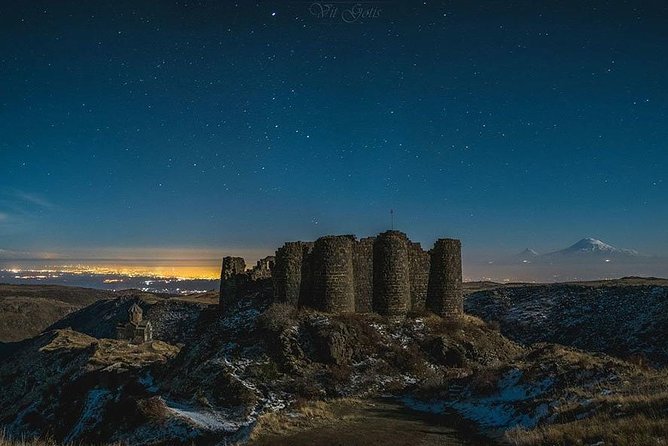
Amberd Fortress is the final stop and one of the most dramatic. The 10th-century fortress sits 2,300 meters above sea level on the slopes of Mount Aragats, where the Arkashen and Amberd rivers meet. Armenian kings used it during wartime.
This day is packed. Eight one-hour stops may sound generous, but driving, parking, and walking between sites will reduce the actual time at several places. You should choose this tour for breadth, not a slow, reflective pace. The high altitude at Amberd is another reason to expect a more tiring day.
Yerevan closes with film, ancient foundations, and handmade goods
The final day returns to the capital and shifts from monuments to museums. The Parajanov Museum celebrates Sergei Parajanov, regarded here as Armenia’s greatest filmmaker. His works include assemblages, flat and three-dimensional collages, drawings, dolls, and film sketches.
This is a good stop for anyone who likes unusual visual art. It adds personality to a route otherwise dominated by churches, ruins, and fortresses.
The Erebuni Museum tells the story of Yerevan’s foundation. It sits at the foot of Arin Berd hill, above which the Urartian fortress Erebouni was built. This gives you an older layer of the city than the central avenues and modern buildings seen on Day 1.
Vernissage Market finishes the tour in a more relaxed way. Local people sell handmade works in this open-air market, so it is the natural place to browse for a small craft or simply watch the exchange between maker and buyer. Admission is free.
The closing day is lighter than the previous one, though all three stops still have their own appeal. I like the order: art first, ancient city foundations next, then a market where you can end the week with something tangible.
Is $885.13 a fair price for seven days?
At $885.13 per person, this is not a budget day tour. Its value depends on what you want included. You receive a seven-day English-language program, pickup is offered, and admission is included at most listed attractions. The itinerary also reaches places that would take planning and several separate journeys to arrange independently.
The strongest value comes from the range. In one week, you see Yerevan, Gyumri, Lake Sevan, Dilijan, Ashtarak, Garni, Geghard, and Mount Aragats. You also receive access to museums, churches, monasteries, a fortress, a market, and a brandy tasting.
The supplied information does not say that accommodation, meals, or every transport cost is included, so check those points before paying. That is especially important because the price may look different depending on what you need to arrange separately.
A maximum group size of 30 is fairly large. You should expect a more social coach-tour feel, with less flexibility than a private trip. On the positive side, the size can help keep the cost below that of a custom itinerary.
Who will enjoy this Armenia tour most?
I would recommend it to you if this is your first visit to Armenia and you want a strong overview without building the route yourself. It suits people who enjoy historic buildings, religious sites, mountain scenery, museums, and a steady stream of new places.
It can also work well for families. The tour’s feedback describes children staying interested, which makes sense because the week includes fortresses, caves, markets, art, lakes, and unusual ruins rather than only formal church visits.
You should think twice if you dislike early starts, long road days, repeated monastery visits, or fixed one-hour stops. Day 6 is particularly demanding, and even the more attractive routes may leave you wishing for extra time.
The tour is offered in English, and most people can participate. Confirmation is provided at booking, and free cancellation is available up to 24 hours before the start time. Changes or cancellations made inside that window are not accepted for a refund.
Should you book this seven-day Armenia tour?
Book it if you want maximum coverage from a Yerevan base and value having the route, guides, admissions, and pickup arranged. The mix of Garni and Geghard, Lake Sevan and Dilijan, Gyumri, Amberd, and Yerevan’s museums gives you a far better sense of Armenia than a capital-only break.
Do not book it expecting a leisurely private journey. The pace is brisk, the group may reach 30 people, and Day 6 asks a lot. For a first look at Armenia, though, the tour offers a thoughtful range of places and strong cultural variety for seven days.
FAQ
Where does the seven-day Armenia tour begin?
The tour is based in Yerevan, Armenia. Pickup is offered.
How long does the tour last?
The experience lasts approximately seven days.
What language is the tour offered in?
The tour is offered in English.
How much does the tour cost?
The listed price is $885.13 per person.
Are admission tickets included?
Admission is included at many listed stops, including the ARARAT Museum, Holy Archangels Church, Zvartnots Temple, the monasteries, Garni Temple, Geghard Monastery, and the museums. Some locations, such as Cascade Complex, Mesrop Mashtots Avenue, and Vernissage Market, are listed as free.
How large can the group be?
The maximum group size is 30 people.
Is the tour suitable for most people?
The tour information says most people can participate. Day 6 includes eight stops, and Amberd Fortress is at 2,300 meters above sea level, so you should consider the pace and altitude when deciding.
Does the tour include a brandy tasting?
Yes. The visit to the ARARAT Museum includes tasting cognacs of different ages.
What is the cancellation policy?
You can cancel up to 24 hours before the experience start time for a full refund. Cancellations or changes made less than 24 hours before the start time are not accepted for a refund.
Just added in Yerevan
- YerevanCard: 3-Day City Pass★ 5.0 · 1 review
- Yerevan: Walking Tour With an Architect
- Yerevan: Urban Hike through Aygestan and Old Nork★ 5.0 · 1 review
- Yerevan: Museum of Illusions Entry Ticket★ 5.0 · 3 reviews
- Yerevan: Brandy Tasting Experience with Local Delicacies★ 5.0 · 1 review
- Yerevan City Tour: Discover an Old and New Yerevan★ 5.0 · 2 reviews
- Wine, Jazz and Magic: A Night at Malkhaz Jazz Club★ 5.0 · 2 reviews
- The Stalin car Yerevan city tour Armenia★ 5.0 · 2 reviews
7-Day Experiences, compared.
The Great Beauty of Armenia: 7-Day Culture and Cuisine Tour
Read our review →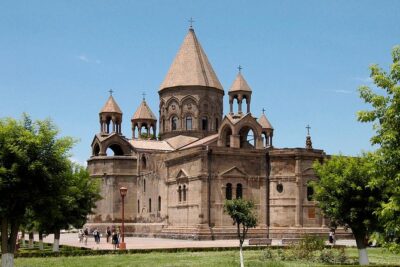
7 Days Armenia Package with Accommodation, Tours and Transfers
Read our review →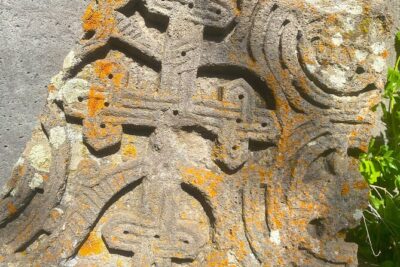
Browse the lists this tour appears in